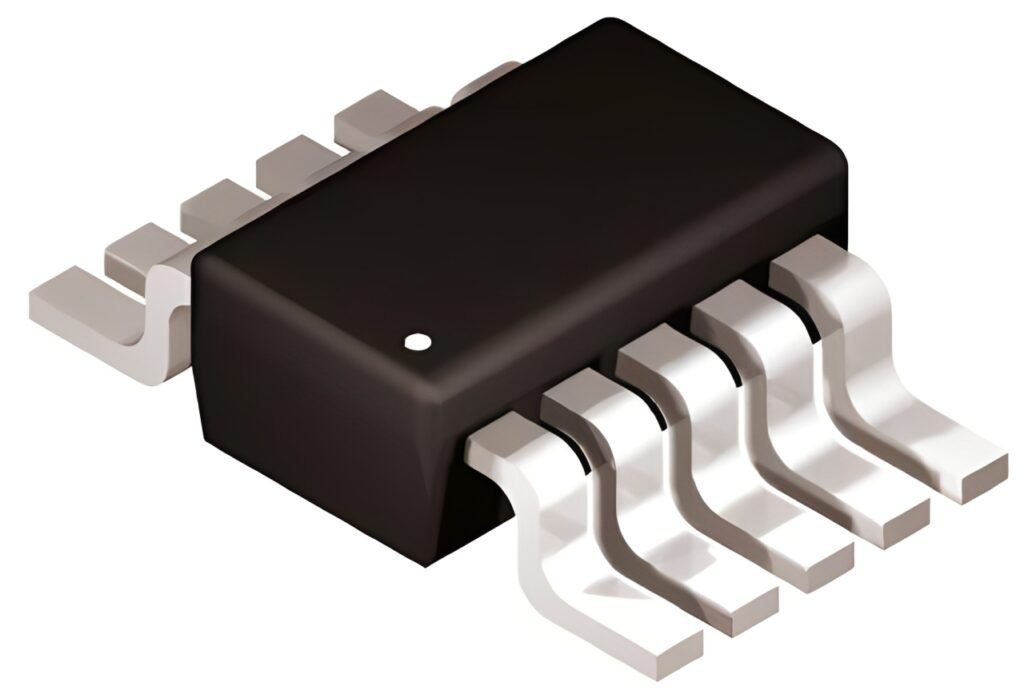
Current Sensing Amplifiers
Current Sensing Amplifiers are becoming increasingly important in electronic systems where accurate power control, operational safety, and energy efficiency must work together. These specialised analogue devices are designed to detect extremely small voltage differences produced by current flowing through a sensing element and convert those differences into a reliable output signal. That signal can then be used by digital controllers, protection circuits, monitoring systems, or power management devices.
Modern electronics no longer operate as simple fixed-power systems. Today’s designs continuously evaluate their own electrical behaviour. They adjust performance, protect sensitive components, estimate energy usage, and respond to changing loads. Current Sensing Amplifiers provide the measurement foundation that makes this intelligent behaviour possible.
Their importance can be seen across industrial control, battery systems, electric mobility, telecommunications, computing, consumer electronics, renewable energy, robotics, and embedded systems. In each of these areas, accurate knowledge of current flow allows engineers to create products that are more efficient, dependable, and responsive.
Why Has Current Measurement Become More Important?
Electronic systems are becoming more powerful while simultaneously being expected to consume less energy.
A modern circuit may contain processors, converters, sensors, communication modules, motors, storage devices, and multiple regulated voltage rails. Each section can draw a different amount of current depending on operating conditions.
Without accurate current monitoring, it becomes difficult to understand how efficiently the system is using power.
Current measurement can reveal information such as:
- How much energy a load consumes
- Whether a motor is operating normally
- Whether a battery is charging correctly
- Whether a circuit is approaching overload
- Whether a semiconductor device is drawing excessive current
- Whether a power converter is operating efficiently
- Whether an unexpected fault has developed
This information makes Current Sensing Amplifiers valuable not only for measurement but also for decision-making.
How Do Current Sensing Amplifiers Fit Into a Power System?
A Current Sensing Amplifier usually operates as part of a wider measurement chain.
A low-resistance sensing element, often called a shunt resistor, is placed in the current path. When current flows through the resistor, a small voltage appears across it. Because the resistance is intentionally very low, the resulting voltage may only be a few millivolts.
The amplifier measures this small differential signal and increases it to a useful level.
The signal can then be processed by:
- Microcontrollers
- Digital signal processors
- Analogue-to-digital converters
- Battery management ICs
- Motor controllers
- Protection circuits
- Power management processors
This measurement chain allows the system to convert electrical current into usable information.
Why Is Measuring Small Voltages Difficult?
Current sensing may appear simple in theory, but practical implementation can be challenging.
The voltage across the shunt resistor is intentionally kept small to reduce power loss. This creates a difficult measurement problem because the useful signal may be close to electrical noise levels.
At the same time, the circuit may operate at a much higher bus voltage.
For example, the amplifier may need to identify a tiny voltage difference while both input terminals sit at a significantly higher electrical potential.
Current Sensing Amplifiers are specifically designed to manage this condition.
Important capabilities may include:
- High common-mode rejection
- Low input offset voltage
- Stable gain
- Low noise
- Wide common-mode voltage range
- Controlled temperature drift
These characteristics help maintain measurement accuracy under real operating conditions.
What Makes a Good Current Sensing Architecture?
A successful current sensing design requires more than selecting an amplifier.
The entire measurement path must be considered.
Engineers need to balance accuracy, energy loss, thermal behaviour, signal range, response time, and cost.
A good design typically considers:
- The maximum expected current
- The minimum current that must be detected
- The value of the sensing resistor
- The required measurement resolution
- Power dissipation in the resistor
- Amplifier gain
- Output signal range
- Noise environment
- Operating temperature
- Fault conditions
The best solution is therefore a system-level decision rather than a single component choice.
How Does the Shunt Resistor Affect Measurement Quality?
The shunt resistor is one of the most important parts of the sensing circuit.
Its value determines how much voltage is produced for a given amount of current.
A larger resistance creates a stronger measurement signal, which can improve sensitivity. However, it also increases voltage drop and power loss.
A smaller resistance reduces energy loss but produces a weaker signal.
This creates an engineering trade-off.
Designers usually evaluate:
- Maximum current
- Acceptable voltage drop
- Power rating
- Thermal rise
- Accuracy
- Resistance tolerance
- Temperature coefficient
The resistor must remain stable enough to provide reliable measurements over the full operating range.
How Do High-Side and Low-Side Sensing Differ?
Current Sensing Amplifiers can be used in several circuit positions.
The two most common methods are high-side sensing and low-side sensing.
High-Side Sensing
High-side sensing places the shunt resistor between the power source and the load.
This configuration allows the load to remain connected directly to ground.
It can provide several advantages:
- Better detection of load faults
- Continuous monitoring of load current
- No interruption of the load ground path
- Improved system diagnostics
However, the amplifier must tolerate the full bus voltage.
High-side sensing is widely used in automotive, industrial, battery, and power distribution systems.
Low-Side Sensing
Low-side sensing places the shunt resistor between the load and ground.
This approach is often simpler because the amplifier operates closer to ground potential.
However, the resistor introduces a small voltage shift in the load ground.
Low-side sensing can be suitable for:
- Low-cost designs
- Lower-voltage systems
- Simple load monitoring
- Applications where ground shift is acceptable
The choice depends on system architecture and protection requirements.
Why Is Common-Mode Performance So Important?
Common-mode voltage is the voltage that appears simultaneously on both amplifier inputs.
In many current sensing applications, the differential signal is tiny while the common-mode voltage is much larger.
The amplifier must reject this common voltage while accurately measuring the small difference between the inputs.
Poor common-mode rejection can introduce measurement errors.
Strong performance becomes especially important in:
- Motor drives
- Battery packs
- Industrial power systems
- Automotive electronics
- High-voltage converters
- Renewable energy equipment
The wider the electrical environment, the more carefully this specification must be considered.
How Do Current Sensing Amplifiers Support Overcurrent Protection?
Current monitoring is closely linked with circuit protection.
When current rises above a safe level, components can overheat or fail.
A Current Sensing Amplifier can detect this increase and send a signal to the control system.
The system may then:
- Reduce output power
- Disable the load
- Shut down a converter
- Stop a motor
- Limit battery current
- Activate a protection relay
- Generate a diagnostic alert
Fast response can make the difference between safe shutdown and permanent damage.
Why Response Time Matters in Dynamic Systems
Some electrical loads change slowly, while others change rapidly.
Motors, switching converters, processors, and power semiconductors can experience fast current transitions.
If the amplifier responds too slowly, the system may miss short-duration events.
Bandwidth and response time therefore influence application suitability.
Higher-speed current sensing is particularly useful in:
- Switching power supplies
- Motor control
- Inverters
- Power factor correction
- Semiconductor protection
- Pulse-based loads
However, excessive bandwidth may also increase sensitivity to noise.
Designers must balance speed with signal quality.
Current Sensing Amplifiers in Battery Management
Battery-powered systems require precise control over charging and discharging.
Current Sensing Amplifiers help battery management systems understand how energy moves into and out of the battery.
This data can support:
- State-of-charge estimation
- Charge current regulation
- Discharge monitoring
- Overcurrent protection
- Energy consumption tracking
- Battery health analysis
- Remaining runtime estimation
In rechargeable systems, bidirectional current sensing is especially useful because current flows in both directions.
Battery systems in electric vehicles, energy storage equipment, portable electronics, and industrial devices all benefit from accurate sensing.
How Do They Improve Electric Vehicle Power Systems?
Electric vehicles require detailed monitoring across many electrical subsystems.
Current Sensing Amplifiers may be used in:
- Traction inverters
- High-voltage battery packs
- On-board chargers
- DC-DC converters
- Auxiliary systems
- Electric steering
- Thermal management equipment
Current measurement helps control motor torque, monitor battery demand, detect faults, and optimise energy use.
Because automotive environments can include temperature extremes and electrical transients, component stability is particularly important.
Current Sensing in Motor Control Systems
Motor current contains valuable information about both electrical and mechanical behaviour.
As mechanical load increases, motor current often rises.
This makes current sensing useful for monitoring performance.
Current Sensing Amplifiers can support:
- Torque control
- Motor phase measurement
- Stall detection
- Overload protection
- Load estimation
- Efficiency monitoring
- Fault detection
This functionality is valuable in robotics, pumps, fans, manufacturing equipment, conveyors, actuators, and electric transportation.
How Can Current Sensing Support Predictive Maintenance?
Industrial maintenance is increasingly moving from scheduled servicing toward condition-based monitoring.
Instead of replacing components according to fixed intervals, operators analyse actual equipment behaviour.
Electrical current can provide useful clues.
A motor drawing progressively more current may indicate mechanical resistance, bearing wear, misalignment, or excessive load.
Current sensing data can help identify:
- Unusual power demand
- Gradual performance degradation
- Mechanical obstruction
- Electrical imbalance
- Excessive starting current
- Unexpected operating patterns
By detecting these changes early, maintenance teams can investigate problems before complete failure occurs.
Why Are Current Sensing Amplifiers Useful in Renewable Energy?
Renewable energy systems rely on continuous power conversion.
Solar installations, energy storage systems, and power inverters constantly move electrical energy between different sources and loads.
Current Sensing Amplifiers can measure these energy flows.
Applications include:
- Solar inverter monitoring
- Battery storage management
- Charge controllers
- DC bus monitoring
- Power conversion stages
- Grid-connected equipment
Accurate current information helps energy management systems optimise performance while maintaining safe operating limits.
How Are They Used in Data Centres and Telecommunications?
Computing and communication systems can contain many power rails and high-current loads.
Servers, networking hardware, telecom equipment, and storage systems must operate reliably while minimising energy consumption.
Current sensing can provide visibility into:
- Processor power demand
- Power supply loading
- Rack-level consumption
- Module faults
- Startup behaviour
- Unexpected current spikes
This information can support both protection and energy optimisation.
As data infrastructure continues to scale, power monitoring becomes increasingly important.
Why Does Input Offset Voltage Matter?
Input offset voltage can create measurement error even when the actual current is very small.
This is especially important when monitoring low current levels.
If the desired sense voltage is only a few millivolts, even a small amplifier offset can become significant.
Low-offset Current Sensing Amplifiers help improve accuracy at the lower end of the measurement range.
This can be important in:
- Battery-powered electronics
- Low-power sensors
- Portable instrumentation
- Precision power monitoring
- Energy metering
Offset drift across temperature should also be considered.
What Role Does Gain Play?
Gain determines how much the amplifier increases the sensed voltage.
For example, a small input signal may need to be increased before it can be accurately read by an ADC.
The correct gain depends on:
- Maximum current
- Shunt resistor value
- ADC input range
- Desired resolution
- Headroom requirements
Too little gain may reduce sensitivity.
Too much gain may cause the output to saturate during higher-current conditions.
The selected value should allow useful resolution across the required current range.
How Does Noise Affect Current Sensing?
Electrical noise can distort small measurement signals.
Switching regulators, digital processors, motors, and power transistors can all generate interference.
Because current sensing signals may be very small, careful design is required.
Noise reduction strategies may include:
- Short sensing traces
- Proper grounding
- Differential routing
- Filtering
- Suitable PCB placement
- Separation from switching nodes
- Kelvin connections
Layout quality can be just as important as amplifier specification.
Why Are Kelvin Connections Recommended?
A Kelvin connection uses dedicated sensing traces connected directly to the shunt resistor terminals.
This helps prevent voltage drops in high-current PCB traces from becoming part of the measurement.
Without proper routing, trace resistance can introduce unwanted error.
Kelvin sensing is particularly valuable when:
- Current is high
- Shunt resistance is very low
- Measurement accuracy is important
- PCB copper carries significant current
This simple layout technique can greatly improve measurement consistency.
How Do Current Sensing Amplifiers Support Low-Power Devices?
Not every application involves large currents.
Portable devices, wireless sensors, wearables, and IoT equipment may operate from very limited battery capacity.
In these systems, the sensing circuit must consume minimal power.
Low-power amplifiers can help monitor current without significantly reducing battery runtime.
Useful features may include:
- Low quiescent current
- Shutdown modes
- Low supply voltage operation
- Small package sizes
- Low offset
These characteristics support energy-efficient embedded designs.
What Should Engineers Consider When Selecting a Device?
Choosing the correct Current Sensing Amplifier requires matching the component to the full system environment.
Important considerations include:
- Common-mode voltage range
- Maximum differential input
- Gain
- Gain error
- Input offset
- Bandwidth
- Supply voltage
- Output range
- Noise
- Temperature range
- Package type
- Power consumption
- Current direction
Engineers should also evaluate startup conditions, transient behaviour, fault states, and PCB constraints.
A device that looks suitable under normal conditions may behave differently during power-up or electrical faults.
Why Is Bidirectional Current Measurement Valuable?
Some systems allow current to flow in either direction.
This is common in rechargeable battery systems, regenerative motor drives, and energy storage equipment.
Bidirectional Current Sensing Amplifiers allow the control system to determine both current magnitude and direction.
This helps identify whether energy is being:
- Consumed
- Stored
- Returned
- Regenerated
- Transferred between subsystems
This capability is becoming increasingly important as energy systems become more dynamic.
Current Sensing Amplifiers and System Reliability
Reliable current measurement provides continuous visibility into electrical behaviour.
This information can improve system reliability in several ways.
It can help:
- Detect abnormal loads
- Identify faults early
- Prevent overheating
- Protect power components
- Monitor operating trends
- Improve diagnostics
- Reduce unexpected shutdowns
In critical systems, these benefits can significantly reduce maintenance costs and downtime.
How Will Current Sensing Amplifiers Shape Future Electronics?
Electronic systems are moving toward greater electrification, automation, and intelligence.
Electric vehicles require precise energy management. Renewable energy systems need accurate power flow monitoring. Industrial automation depends on reliable motor control. Portable products demand efficient battery usage.
Current Sensing Amplifiers support all of these developments.
They provide the electrical feedback required for systems to understand their own power consumption and respond intelligently.
Future designs are likely to demand:
- Higher accuracy
- Wider common-mode ranges
- Lower power consumption
- Faster response
- Smaller packages
- Better integration
- Improved digital connectivity
These improvements will allow current sensing to become even more deeply integrated into modern power architectures.
Final Perspective on Current Sensing Amplifiers
Current Sensing Amplifiers are far more than simple measurement components. They provide the real-time electrical awareness that allows modern systems to operate safely, efficiently, and intelligently.
By converting tiny voltage differences into meaningful signals, they help control systems understand how energy moves through a circuit.
Their applications range from battery management and electric vehicles to industrial automation, data centres, robotics, renewable energy, and portable electronics.
Accurate current measurement supports better protection, improved efficiency, stronger diagnostics, and more precise control.
As electronic systems continue to become more power-aware, Current Sensing Amplifiers will remain essential components for engineers designing reliable and efficient technology. Their ability to combine precision measurement with practical system control makes them a fundamental part of modern electronic design and an increasingly important technology for the next generation of intelligent power systems.