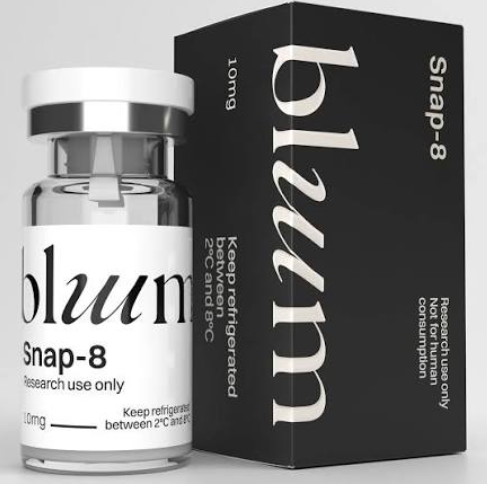
SNAP-8 peptide is a synthetic eight-amino-acid cosmetic peptide commonly identified by the ingredient name acetyl octapeptide-3. It belongs to a category of cosmetic peptides developed around the concept of influencing processes associated with expression lines and facial wrinkles. Interest in this ingredient has grown as consumers and skincare formulators look beyond conventional moisturizers and antioxidants toward specialized peptide technologies. However, understanding what SNAP-8 is and what the available evidence actually demonstrates is important before drawing conclusions about its performance.
Unlike injectable botulinum toxin, SNAP-8 is primarily discussed as a topical cosmetic ingredient. Its proposed activity is connected to the SNARE protein system involved in cellular signaling and neurotransmitter release, giving the ingredient an interesting scientific basis. At the same time, claims surrounding cosmetic peptides can sometimes go beyond the strength of the available evidence. A careful understanding of its molecular identity, proposed mechanism, formulation considerations, and research limitations allows consumers, formulators, and researchers to assess the ingredient more realistically.
What Is SNAP-8 Peptide?
SNAP-8 peptide, also known as acetyl octapeptide-3, is a synthetic peptide containing eight amino acids. It was developed as an extended relative of acetyl hexapeptide-8, commonly known by the trade name Argireline. The name SNAP-8 reflects its relationship to a segment of SNAP-25, a protein involved in the SNARE complex that participates in vesicle fusion and neurotransmitter release. The scientific concept behind the ingredient is that a peptide modeled on part of SNAP-25 may interact with components of this system and potentially influence the molecular events associated with muscle contraction. This concept has made SNAP-8 particularly interesting in cosmetic science focused on expression lines. However, the existence of a plausible biochemical mechanism should not automatically be interpreted as proof of a particular visible result in every finished skincare product. Ingredient performance can depend on concentration, formulation, stability, delivery, skin condition, and application practices.
How Does SNAP-8 Work?
The proposed mechanism of SNAP-8 centers on the SNARE complex, a group of proteins responsible for helping cellular vesicles fuse with membranes and release their contents. SNAP-25 is one component of this system, and SNAP-8 was designed as a short peptide fragment related to that protein. The theory is that the peptide can interfere with aspects of SNARE complex formation, potentially reducing the signaling involved in repeated facial muscle contraction. This is why SNAP-8 is often discussed in relation to dynamic expression lines rather than structural skin concerns such as pigmentation or severe loss of elasticity. It is important to keep this mechanism in perspective, however, because biochemical activity does not necessarily translate directly into the same magnitude of effect when an ingredient is applied to intact human skin. Skin penetration, formulation design, peptide stability, and biological availability all influence what happens after topical application.
SNAP-8 and Argireline: What Is the Difference?
SNAP-8 and Argireline are closely related cosmetic peptides, but they are not identical compounds. Argireline is based on a shorter peptide sequence, while SNAP-8 contains eight amino acids and was developed as an extended version of the earlier concept. The longer sequence is one reason manufacturers and cosmetic formulators have shown interest in SNAP-8, particularly because it may interact differently with the molecular structures involved in its proposed mechanism. Nevertheless, a longer peptide sequence does not automatically establish superior real-world performance. Comparisons between cosmetic ingredients should consider the concentration used, formulation, delivery system, study design, duration, and whether the ingredient was tested independently or as part of a combination formula. Consumers should therefore be cautious with simple claims that one peptide is universally better than another. A meaningful comparison requires evidence generated under comparable conditions.
What Does the Research Say About SNAP-8?
Research surrounding SNAP-8 deserves careful interpretation because the evidence base is not as extensive as marketing language can sometimes suggest. Available information supports a plausible biochemical rationale for studying the peptide, while published human evidence specifically isolating SNAP-8 remains limited. Some cosmetic research has evaluated peptide-containing formulations or delivery systems that include SNAP-8 alongside other ingredients, making it difficult to attribute an observed outcome exclusively to the peptide. This distinction is important because a finished cosmetic product can contain several active components that contribute to its overall effect. Manufacturer testing and technical documentation can provide useful information about an ingredient, but they should be distinguished from independent, peer-reviewed clinical research. For anyone evaluating SNAP-8, the most responsible approach is to separate established chemical information and proposed mechanisms from claims about visible cosmetic outcomes that require stronger direct evidence.
Formulation and Stability Considerations
Peptides present unique formulation challenges because their performance can be affected by factors such as pH, temperature, water content, preservatives, packaging, and interactions with other ingredients. A well-designed cosmetic formula must protect the peptide sufficiently during manufacturing, storage, and normal use while also providing a suitable environment for the finished product. Packaging can matter as well, since repeated exposure to air, light, moisture, or contamination may affect the stability of sensitive ingredients over time. Cosmetic formulators therefore evaluate more than simply whether SNAP-8 appears on an ingredient list. They may also consider the concentration supplied, raw-material specifications, compatibility with other formula components, and stability testing. For consumers, this means that seeing SNAP-8 listed in a serum does not provide enough information by itself to predict performance. The overall formulation and quality-control process are equally relevant.
How to Evaluate a SNAP-8 Skincare Product
Anyone considering a product containing SNAP-8 should examine the entire formula rather than focusing exclusively on the peptide name. Ingredient lists, product instructions, packaging quality, manufacturer transparency, and realistic claims can provide useful information about how thoughtfully the product has been developed. It is also sensible to distinguish cosmetic claims from medical claims. A topical peptide product should not automatically be considered equivalent to an injectable treatment simply because both discussions involve facial expression lines or related biological pathways. Consumers should follow the manufacturer’s directions and consider their individual skin tolerance, especially when using products containing multiple active ingredients. Those with persistent skin problems or concerns about a particular treatment can also seek individualized guidance from a qualified healthcare professional. This approach keeps expectations realistic while allowing users to explore peptide-based skincare within an appropriate cosmetic context.
The Future of Peptide-Based Skincare
Peptide technology continues to attract attention because short amino-acid sequences can be designed to interact with specific biological pathways or support particular cosmetic objectives. Future developments may focus on improved delivery systems, greater formulation stability, more precise targeting, and stronger clinical evaluation. For ingredients such as SNAP-8, better-designed studies could help clarify how much of the proposed laboratory activity translates into meaningful effects when the peptide is incorporated into real skincare products. Advances in encapsulation and delivery technology may also influence how formulators approach topical peptides. As the category develops, consumers can benefit from looking beyond impressive-sounding terminology and asking practical questions about ingredient identity, concentration, formulation, testing, and evidence quality. A more evidence-conscious approach ultimately encourages responsible innovation and makes it easier to distinguish established information from promotional expectations.
Conclusion
SNAP-8 peptide is an interesting cosmetic ingredient with a defined molecular identity, a proposed relationship to the SNAP-25/SNARE signaling system, and a growing place in peptide-focused skincare formulations. Its connection to expression-line research makes it particularly relevant to cosmetic science, but the strength of evidence should be considered carefully rather than inferred from marketing claims or comparisons with injectable treatments. Understanding the difference between a plausible mechanism, manufacturer testing, formulation-level research, and independent human evidence is essential for making informed decisions. For formulators and consumers alike, the most useful approach is to evaluate the complete product, consider formulation and stability, follow appropriate usage instructions, and maintain realistic expectations about what a topical peptide can demonstrate