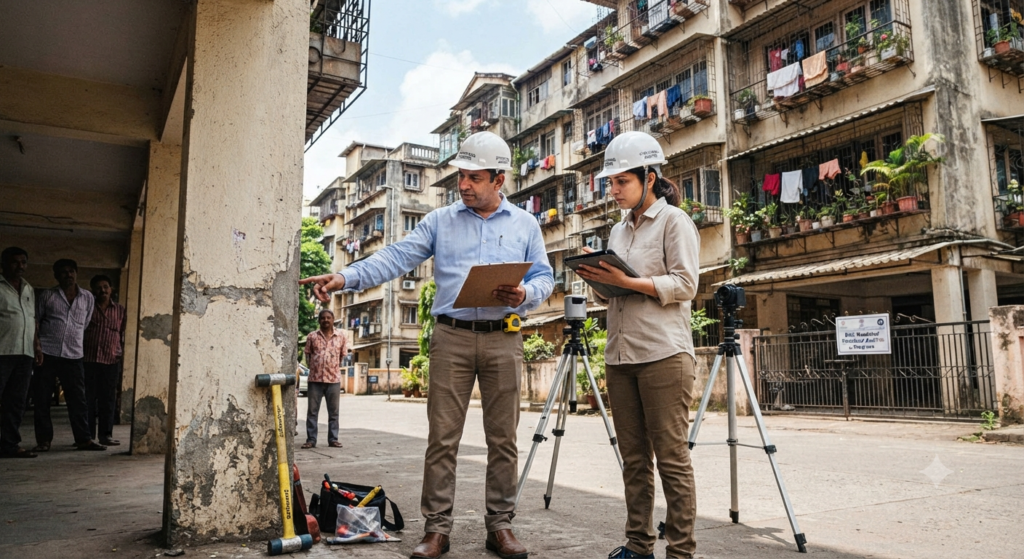
Mumbai is home to thousands of residential buildings, many of which have been exposed to decades of monsoon rains, humidity, corrosion, heavy usage, and natural aging. For housing societies, maintaining the structural condition of a building is therefore an important part of long-term property management. Regular inspections can help identify visible and hidden problems before they become more difficult and expensive to address.
This is where BMC Approved Structural Auditors in Mumbai can play an important role. A professional structural audit provides a systematic assessment of a building’s condition and helps housing societies understand whether repairs, maintenance, rehabilitation, or strengthening may be required.
Understanding Structural Audits for Housing Societies
A structural audit is a technical examination of a building’s structural components. Hiring BMC approved structural auditors in Mumbai can help ensure that the assessment is carried out professionally and covers important areas based on the building’s age, condition, and requirements. The assessment may include columns, beams, slabs, balconies, foundations, terraces, staircases, and other relevant structural elements.
The objective is not simply to identify cracks or visible damage. A qualified structural professional evaluates the available evidence, site observations, construction details, and, where appropriate, test results to understand the condition of the structure.
For housing societies, this assessment can provide useful information for planning maintenance and making informed decisions about future repair or rehabilitation work.
Why Mumbai Buildings Require Regular Structural Assessment
Mumbai’s coastal environment can create challenging conditions for reinforced concrete buildings. Moisture penetration, humidity, chloride exposure, water leakage, and reinforcement corrosion can gradually affect structural components.
Older buildings may also experience deterioration because of prolonged exposure, inadequate maintenance, changes in use, or previous repair work. Small signs such as cracks, dampness, exposed reinforcement, concrete spalling, or unusual deflection should not automatically be considered harmless.
A professional assessment helps determine the possible causes and significance of such observations. This allows housing societies to prioritize maintenance based on technical findings rather than relying solely on visual appearance.
Role of BMC Approved Structural Auditors in Mumbai
BMC Approved Structural Auditors in Mumbai can help housing societies obtain a structured technical assessment of their buildings. The auditor typically examines the available building information, conducts a site inspection, documents observed defects, and evaluates relevant structural elements.
Depending on the circumstances, additional investigation or non-destructive testing may be recommended. Techniques such as rebound hammer testing, ultrasonic pulse velocity testing, and cover meter testing can provide supplementary information about concrete and reinforcement conditions.
The findings are then considered along with engineering judgment and site observations. This broader approach can help create a more meaningful picture of the building’s condition.
Early Identification of Structural Defects
One of the major benefits of a structural audit is the opportunity to identify deterioration at an earlier stage.
Problems such as corrosion of reinforcement, concrete cracking, honeycombing, water-related deterioration, and localized damage may develop gradually. If these conditions are left unexamined, the required repair work may become more complicated over time.
A structural audit by BMC approved structural auditors in Mumbai can document these issues and help the society understand their location, extent, and potential significance. This information can support the preparation of an appropriate repair or rehabilitation strategy.
Helping Housing Societies Plan Repairs
Repair decisions should be based on technical assessment rather than assumptions. Housing societies often need to balance safety requirements with budgets, timelines, resident concerns, and the practical challenges of carrying out work in occupied buildings.
A structural audit by BMC approved structural auditors in Mumbai provides technical information that can support this planning process. Based on the assessment, engineers may recommend localized repairs, concrete restoration, waterproofing-related measures, structural strengthening, rehabilitation, or further investigation where necessary.
The recommendations can then be considered by the society while planning its maintenance program.
Supporting Long-Term Building Maintenance
Structural safety is not a one-time concern. Buildings require ongoing inspection and maintenance throughout their service life.
A housing society can use structural assessment findings to develop a more organized maintenance approach. Areas requiring immediate attention can be prioritized, while less urgent issues can be monitored and addressed through planned maintenance.
This can help reduce the likelihood of unexpected deterioration and make building maintenance more systematic.
Importance of Professional Documentation
A properly prepared structural audit report can serve as an important technical record for a housing society. It may include details of inspected areas, observed defects, test results where applicable, photographs, technical observations, and recommendations.
Good documentation allows society committees to better understand the condition of the property and communicate technical findings to residents, contractors, architects, and other professionals involved in repair work.
It can also provide a reference point for comparing the building’s condition during subsequent assessments.
Structural Audits and Building Rehabilitation
For older housing societies, a structural audit may be an important step before undertaking major rehabilitation or repair work.
A building may have multiple issues occurring at the same time, such as concrete deterioration, reinforcement corrosion, leakage, cracks, and damaged finishes. Treating only the visible symptoms may not address the underlying causes.
A professional structural assessment helps identify the nature of the deterioration and provides a technical basis for determining suitable corrective measures.
Engineering consultancies such as Gopinath Nambiar & Associates provide structural engineering services that can support societies dealing with structural assessment, audits, testing, repair, rehabilitation, and related requirements.
Choosing the Right Structural Auditor
Housing societies should carefully evaluate the credentials and experience of a structural auditor before appointing one. Relevant considerations can include professional qualifications, applicable municipal approvals, experience with similar buildings, technical capabilities, reporting standards, and familiarity with local building conditions.
It is also useful to understand the scope of the proposed inspection and whether additional testing may be required.
The objective should be to obtain an independent and technically sound assessment rather than simply seeking a report for documentation purposes.
How Structural Audits Benefit Society Members
A structural audit by BMC approved structural auditors in Mumbai can provide residents with greater clarity about the condition of their building. Instead of relying on assumptions or individual observations, society members can refer to a professional technical assessment.
The findings can help the managing committee communicate maintenance priorities and explain why certain repairs or investigations may be necessary.
In the long term, proactive assessment and maintenance can contribute to better management of the building’s physical condition and help societies plan expenditure more effectively.
When Should a Housing Society Consider a Structural Audit?
There is no single situation in which every building requires exactly the same inspection approach. However, housing societies should consider professional structural assessment when buildings show signs such as recurring cracks, concrete spalling, exposed reinforcement, persistent leakage, unusual settlement, or other concerning changes.
Older buildings may also benefit from periodic professional assessment as part of their maintenance planning.
Following significant structural modifications, major repair work, or other relevant changes, an engineering professional can also advise whether further assessment is appropriate.
Conclusion
For Mumbai housing societies, structural maintenance is an important part of responsible property management. Environmental exposure, aging, moisture, corrosion, and inadequate maintenance can gradually affect building components, making professional assessment valuable.
BMC Approved Structural Auditors in Mumbai can help societies evaluate structural conditions, document defects, understand repair requirements, and plan appropriate maintenance or rehabilitation measures. A well-conducted structural audit is not merely a formal exercise; it can provide technical information that supports better building management and long-term maintenance decisions.
For housing societies looking for professional structural engineering support, Gopinath Nambiar & Associates offers services related to structural audits, NDT testing, repairs, rehabilitation, strengthening, and structural assessments.
FAQs
Q1. What is a structural audit for a housing society?
A structural audit is a professional technical assessment of a building’s structural condition. It generally involves site inspection, identification of defects, review of relevant building information, and recommendations for repairs or further investigation where required.
Q2. Why are structural audits important for Mumbai buildings?
Mumbai buildings can be exposed to humidity, monsoon moisture, corrosion, leakage, and long-term environmental deterioration. A structural audit can help identify and document potential problems and support appropriate maintenance planning.
Q3. What does a structural auditor inspect?
Depending on the building and scope of work, a structural auditor may inspect columns, beams, slabs, balconies, terraces, staircases, foundations, and other structural components. Additional testing may be recommended when visual inspection alone is insufficient.
Q4. Can NDT testing be included in a structural audit?
Yes. Depending on the condition of the building, non-destructive testing methods such as rebound hammer testing, ultrasonic pulse velocity testing, or cover meter testing may be used to obtain additional information about concrete and reinforcement conditions.
Q5. How can a housing society choose a structural auditor?
A society should consider the professional’s qualifications, applicable approvals, experience, technical capabilities, familiarity with similar buildings, and the scope and quality of the proposed structural assessment. The auditor should provide clear findings and technically appropriate recommendations.