Introduction
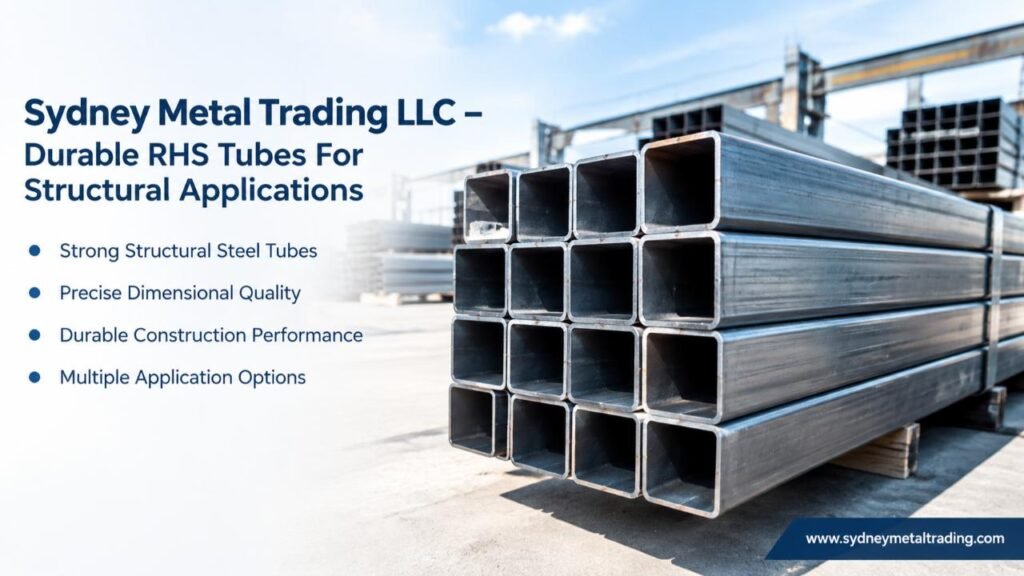
When you dive into a structural build or plan a sturdy framing project, choosing the right steel sections can feel overwhelming because of all the profile options out there. However, if you want something that delivers exceptional balance, neat geometric lines, and reliable structural strength, picking an RHS Tube is often the smartest choice you can make. Builders, fabricators, and DIY enthusiasts rely on these hollow sections to create frame structures that hold heavy loads while keeping overall material weight manageable. Starting your project with a quality RHS Tube sets a strong foundation for any modern building effort.
Building methods have changed drastically over the years. Gone are the days when heavy, bulky solid beams were the only option for supporting significant weight. Modern engineering focuses on smart geometry—using shapes that distribute stress efficiently without adding unnecessary bulk. This is where hollow structural profiles come into play. When you look at raw materials, you might see circular pipes, flat channels, angle irons, and various boxy sections. Among them, rectangular shapes stand out because they fit so neatly into standard building layouts while making joining and welding much easier.
When you start planning a framing structure, you need materials that are easy to cut, align, and assemble. Rectangular profiles fit flat against other surfaces, which means you do not have to deal with awkward curved joints or complex notch cuts during assembly. Whether you are constructing a small backyard pavilion, a heavy-duty storage rack, or the structural skeleton of a commercial facility, using the right structural section ensures your final build stays straight, true, and strong for decades.
Key Features That Set Rectangular Hollow Sections Apart
To truly understand why these steel profiles are so popular, it helps to look at what makes them unique from a design and practical perspective. Unlike open channels or round pipes, rectangular profiles combine flat exterior walls with uniform interior symmetry. This structural balance offers distinct performance benefits across every stage of fabrication.
Superior Resistance to Torsion and Twisting
-
Symmetrical Load Distribution: The four flat walls share torsional forces evenly, preventing the material from twisting under sudden rotational stress.
-
High Strength-to-Weight Ratio: Because the center of the section is hollow, you get maximum structural resistance where it matters most—along the outer walls—without bearing extra dead weight.
-
Uniform Wall Thickness: Consistent manufacturing ensures that there are no hidden thin spots, giving you predictable load performance along the entire length of the beam.
Flat Surfaces for Hassle-Free Joining
-
Simplified Welding: Flat outer edges make fillet welds and butt welds straightforward, saving time and lowering labor costs.
-
Easy Bolting and Fastening: Brackets, plates, and secondary support beams attach flush against the flat faces, eliminating the need for custom curved shims.
-
Neat Alignment: Straight sides make it effortless to line up wall panels, cladding, or drywall framing directly against the metal framework.
Efficient Cleanliness and Maintenance
-
Minimal Dust and Debris Traps: Unlike open I-beams or C-channels, which collect dirt, moisture, and debris inside their open flanges, closed hollow profiles keep outer surfaces clean and accessible.
-
Easier Protective Coatings: Applying paint, powder coating, or galvanizing layers is smooth and uniform, offering better defense against rust and atmospheric corrosion.
Performance Face-Off: Comparing RHS Tube to Common Alternatives
To see why this material is such a powerhouse, let us contrast it directly with other standard building materials you might encounter on a job site.
First, consider traditional open steel profiles like I-beams and angle irons. While I-beams are brilliant at handling heavy loads from a single direction, they are vulnerable to twisting or bending laterally if forces hit them from the side. Angle irons, on the other hand, are convenient for light framing, but they lack the rigidity needed for primary structural supports. A closed rectangular profile resists forces coming from multiple directions equally well, making your frame significantly more rigid without needing complicated cross-bracing.
Next, compare rectangular profiles to round steel pipes. Round pipes are fantastic for fluid transport and offer uniform strength in all directions, but joining them to flat structures requires complex cuts, specialized coping, or custom mounting brackets. When you try to mount flat sheeting or attach secondary supports to a round pipe, you end up wasting time fitting custom adapters. Rectangular sections give you the strength of a closed hollow shape while maintaining flat edges that make assembly fast and seamless.
Finally, compared to solid timber or concrete posts, steel hollow sections offer complete immunity to rot, termites, and warping. Timber changes shape as humidity shifts, causing drywall cracks and misaligned doors. Steel maintains its exact dimensions indefinitely, ensuring that your building remains straight and structurally sound year after year.
Practical Applications for Your Next Build Project
Because these sections are so versatile, you will find them in almost every sector of modern construction and manufacturing. In commercial construction, they form the primary columns, roof trusses, and wall support grids for warehouses, retail spaces, and industrial plants. Their clean, sharp edges also make them a favorite choice for visible architectural features, such as atrium frameworks, decorative staircases, and exposed roof support structures.
In smaller residential and industrial settings, these profiles excel in practical fabrication. They are widely used to build heavy-duty gate frames, trailer chassis, workshop benches, utility shelving, and outdoor pergolas. Because you can choose from a wide range of wall thicknesses and outer dimensions, it is easy to find a profile size tailored precisely to your project’s load requirements.
Working with them is straightforward even for beginner fabricators. Standard metal-cutting saws, angle grinders, and basic welding equipment are all you need to cut and join these sections. Their flat surfaces mean you can easily clamp pieces together firmly before laying down your final welds, resulting in cleaner joints and fewer fitting errors.
Conclusion
Upgrading your construction approach comes down to choosing materials that simplify assembly while delivering long-lasting structural strength. By replacing awkward open channels or hard-to-join round pipes with versatile rectangular hollow profiles, you streamline your fabrication process and ensure your build can withstand demanding structural loads. When you are ready to source premium steel supplies and reliable structural profiles for your next build, partner with Sydney Metal Trading LLC to get the quality materials your project deserves.