Interior paint has a noticeable effect on how your home looks, feels, and functions. A thoughtfully chosen color can brighten a dark room, make a large space feel more comfortable, or create a cleaner appearance throughout your home. However, achieving a professional finish involves more than selecting a color and applying paint. Surface condition, preparation, paint type, sheen, application technique, room usage, and project scheduling all influence the final result.
For homeowners planning an interior update, working with interior painters in Highland Park, IL offers a practical approach to managing the details that often determine painting quality. Professional interior painting involves preparing surfaces correctly, protecting surrounding areas, selecting suitable products, and applying consistent coats. Understanding this process helps you make better decisions before your Highland Park home receives a fresh finish.
Common Interior Painting Problems in Highland Park Homes
Daily household activity gradually affects painted surfaces. Hallways and stairways often develop scuffs, while living rooms accumulate small marks from furniture, children, pets, and regular use. Kitchens face grease and cooking residue, while bathrooms experience frequent humidity and temperature changes.
Older paint also creates challenges. Cracks, peeling sections, patched holes, discoloration, and inconsistent textures often remain visible after a quick repaint. Applying new paint without addressing these issues usually produces a finish that looks uneven rather than refreshed.
Proper Preparation Creates Better Results
Preparation is the foundation of a successful interior painting project. Before painting begins, walls should be inspected for imperfections and cleaned of dust, dirt, and residue. Nail holes and minor surface damage should be filled, while rough areas should be sanded until they are sufficiently smooth.
Caulk is useful around appropriate trim and joint areas where small gaps affect the finished appearance. Primer also has an important role when surfaces are stained, porous, patched, or significantly different in color from the new coating.
For homeowners concerned about indoor air quality, low-VOC paint can be considered where appropriate. Product labels and manufacturer guidance should be reviewed because VOC levels and performance characteristics vary between products.
For homes built before 1978, existing paint should also be evaluated for potential lead hazards before preparation work begins. Lead-safe practices may be required when disturbing painted surfaces, so homeowners should confirm the applicable requirements and verify that the painting professional has the appropriate lead-safety certification before work starts.
Taking time during preparation improves paint adhesion and helps create a more uniform appearance. It also reduces the likelihood that existing imperfections will stand out beneath the new color.
Choosing Paint Based on Room Usage
Paint selection should reflect how each room is used. High-traffic areas need finishes that withstand regular contact and cleaning, while bedrooms and formal spaces often prioritize appearance and atmosphere.
Paint sheen is another important consideration. Flat finishes have limited reflectivity and help reduce attention on minor surface imperfections. Eggshell and satin finishes provide more durability and are easier to clean, making them common choices for frequently used rooms. Semi-gloss finishes are often appropriate for trim, doors, and other surfaces where greater durability and cleanability are important.
Color selection deserves equal attention. Natural and artificial lighting change how paint appears throughout the day, so testing samples in the actual room provides a more reliable impression than viewing a color under store lighting alone.
Paint quantity and color changes also affect the project plan. A significant color change may require additional coats to achieve consistent coverage, depending on the existing color, new color, paint type, and surface condition. Homeowners should also ask about the product’s recommended dry time and understand that dry time is different from full cure time. A surface may feel dry before the coating has fully cured.
Planning the Painting Work Around Your Home
Interior painting does not necessarily require every room to be out of use at the same time. Depending on the scope, rooms can often be scheduled in stages so that household activities can continue elsewhere. Discussing the sequence before work begins helps determine which areas need to be cleared and when each room can be used again.
Homeowners should move smaller furniture and personal items away from walls before painting begins. Larger furniture may need to be moved to the center of the room and covered, depending on the project. Fragile decorations, electronics, artwork, and other items that could be affected by dust or paint should be removed from the work area.
Ask the painting professional how long each room is expected to remain out of use, when furniture can be returned, and when normal cleaning can resume. These details depend on the paint products, number of coats, ventilation, room conditions, and manufacturer recommendations.
Signs It Is Time to Repaint
Look around your Highland Park home for these common warning signs:
A.Faded or noticeably discolored walls
B.Peeling, cracking, or flaking paint
C.Persistent stains and scuff marks
D.Visible nail holes and patched areas
E.Uneven previous touch-ups
F.Outdated colors that no longer suit your space
G.Worn trim, doors, or baseboards
If several of these problems appear at once, repainting the entire affected area often provides a more consistent result than repeated spot repairs.
Managing the Painting Process
A professional approach brings consistency to every stage of the project. Proper preparation helps establish a sound surface, while controlled application reduces common problems such as drips, uneven coverage, excessive brush marks, and visible roller lines.
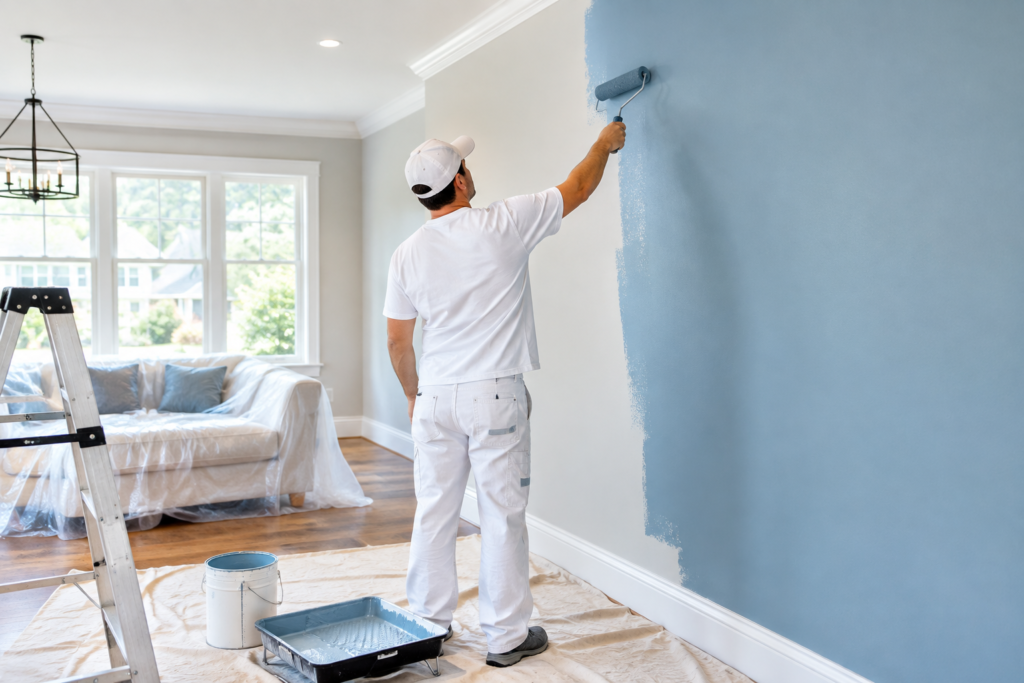
Protecting floors, fixtures, trim, and furniture is another important part of interior painting. Careful masking and covering keep paint confined to the intended surfaces. Detailed work around corners, windows, doors, ceilings, and baseboards also gives rooms a cleaner finished appearance.
Before work begins, homeowners should confirm the rooms included in the project, the preparation required, the products and sheen being used, the expected number of coats, and the anticipated schedule. Clarifying these details helps reduce disruptions and provides a clearer understanding of what to expect throughout the project.
Give Your Highland Park Interior a Fresh Start
A successful interior painting project combines practical preparation with thoughtful product and color choices. Whether your walls show years of everyday wear or you simply want to update your home’s style, the right process makes a significant difference in the finished appearance.
If your home in Highland Park, IL needs a fresh interior finish, schedule a professional painting consultation. Discuss your rooms, surface conditions, preferred colors, desired sheen, preparation requirements, and project schedule before work begins so you have a clear plan for creating a cleaner, more polished living space.