Tesla vehicles are unlike anything else on the road. They are not just cars. They are rolling computers packed with cameras, ultrasonic sensors, and software systems that work together constantly. When one gets into a collision, even a minor one, the damage is not only cosmetic. What many owners miss entirely is what happens to the sensors underneath.
Skipping sensor calibration after a collision repair is not just risky. It can quietly compromise the very systems built to keep you safe.
Tesla Is Not Built Like a Regular Car
Every Tesla carries Autopilot hardware: a suite of cameras spread across the entire vehicle, plus ultrasonic sensors embedded in the bumpers and body panels. These components work as a team. They push real-time data to the onboard computer, which uses it to power Automatic Emergency Braking, Lane Departure Warning, Blind Spot Detection, and Autopilot.
Here is the problem. Each sensor sits at a precise angle on a specific part of the vehicle. When a bumper gets replaced, a fender gets reshaped, or a camera housing shifts a few millimeters, that calibration disappears. The sensor ends up physically misaligned. The car cannot detect that on its own.
What Happens When Calibration Gets Skipped
Your car’s collision avoidance system decides whether to apply the brakes based on what its cameras pick up. When those sensors sit even slightly off-axis after a repair, the system may react too late. It may trigger false alerts. In some scenarios, it may not detect a pedestrian at all.
None of this is theoretical. Miscalibrated ADAS components have caused post-repair collisions, particularly when drivers rely on Autopilot without knowing the sensors were never realigned after body work.
There is also the warranty issue. Tesla’s repair documentation spells out post-collision calibration requirements clearly. Getting work done at a shop that skips this step can create problems with your coverage down the road.
Why This Work Demands Specialized Tools and Training
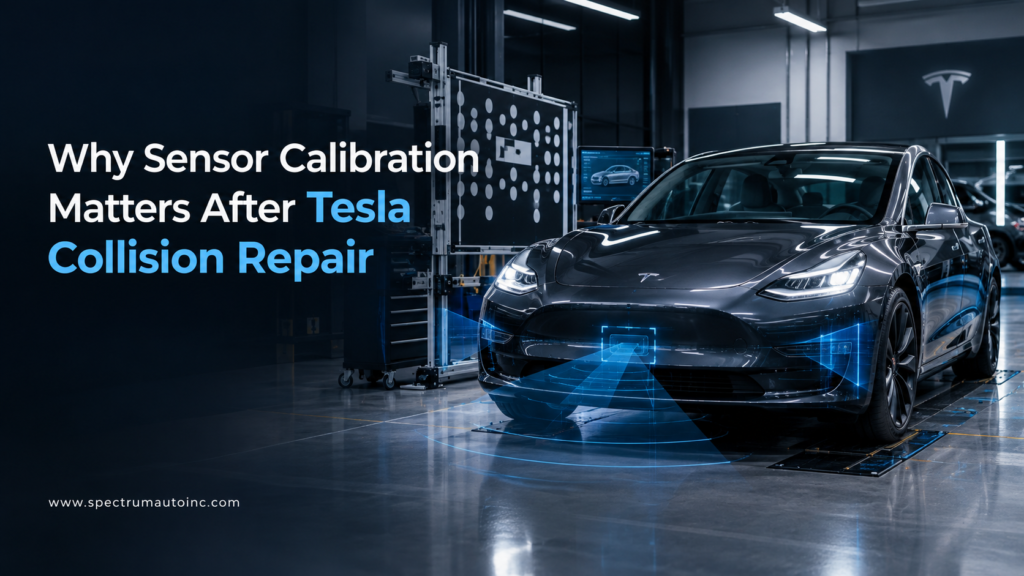
Technicians cannot calibrate a Tesla’s cameras with a generic scanner or a standard alignment rack. The job calls for static calibration first: the technician positions the vehicle in front of target boards, then runs the sequence through Tesla’s software. After that comes dynamic calibration. The car needs to travel at specific speeds on clearly marked roads until the system confirms completion.
This is exactly why working with a certified Tesla body shop carries real weight. Shops without Tesla authorization often run a partial calibration that looks fine on the surface but leaves hidden faults in the system. Drivers would never notice until something went wrong at speed.
The Sensors Most Commonly Affected After a Collision
The location of the impact determines which components need attention.
Front bumper damage sits at the top of the list. Forward-facing cameras and front ultrasonic sensors live in this zone. Even a low-speed hit requiring bumper replacement calls for a full camera recalibration.
Rear bumper damage affects the backup camera and rear ultrasonic sensors. This directly throws off parking assist accuracy and Autopark functionality.
Side panels and mirrors matter too. Autopilot relies on side-repeater cameras running along the vehicle’s sides. A significant side impact that touches the camera mounts requires proper realignment.
Windshield replacement always triggers a recalibration requirement. The forward camera mounts to the windshield header, so any glass swap means the calibration process starts over.
What a Proper Tesla Repair Process Looks Like
A reputable Tesla-approved collision center runs a complete diagnostic scan before any work begins. Technicians pull a full fault code report to capture the baseline condition of every ADAS system. Once repairs finish and panels are back in place, the calibration sequence runs. Depending on the vehicle and the damage, this sometimes includes a highway test drive of several miles to complete dynamic calibration.
The vehicle does not go back to the owner until the system confirms a clean calibration and shows zero active faults. If a shop cannot explain what calibration steps it took after your repair, that is a warning sign.
Tesla’s Sensor Setup Makes Calibration Non-Negotiable
ADAS calibration gaps exist across the industry, but Tesla’s deep reliance on camera-based sensing makes the stakes higher here than with most vehicles. Newer Tesla models have moved away from radar entirely, leaning on cameras to handle nearly everything Autopilot does.
On a typical vehicle, a miscalibrated blind spot sensor might trigger an annoying false alert. On a Tesla running Autopilot, the same problem can affect lane-keeping, following distance management, and stop sign detection. The technology is genuinely advanced. That is exactly why the repair process needs to match it.
Why Spectrum Auto Inc. Is the Right Call for Tesla Repairs
Spectrum Auto Inc. has spent over 30 years serving drivers across West Nyack, Cortlandt, Montrose, and the greater New York area. The shop has built its name on repairs that go past the surface level. As a Tesla-authorized Tesla body shop, the team trains specifically in Tesla’s repair protocols, including the sensor calibration work that many shops are simply not set up to perform.
Every Tesla repair at Spectrum Auto starts and ends with a full diagnostic scan. I-CAR® Platinum certified technicians use genuine OEM parts and follow manufacturer-approved procedures to restore your vehicle’s safety systems completely, not just its appearance. The shop also backs Tesla-certified repairs with a lifetime warranty, handles insurance coordination directly, and provides 24-hour towing. From the moment of impact to the day you drive away, the process is covered.
Frequently Asked Questions
- Does every Tesla collision repair require sensor recalibration?
Not every minor repair touches sensor alignment. But any work involving bumper replacement, windshield replacement, door or side panel repairs, or camera housing damage will need calibration. A pre- and post-repair diagnostic scan will confirm exactly what the job requires.
- Can I drive my Tesla normally if calibration was not completed after a repair?
You can, but your Autopilot and safety features may not behave correctly. A camera sitting slightly off-axis can compromise collision avoidance and lane-keeping without giving you any obvious warning. That is not a risk worth taking.
- How long does Tesla sensor calibration take?
Static calibration runs anywhere from 30 minutes to a couple of hours depending on what is involved. Dynamic calibration typically needs 20 to 50 miles of highway driving. A good shop builds this into the repair timeline from the start.
- Will insurance cover sensor calibration as part of a collision repair claim?
Most major insurers treat calibration as a necessary part of a complete repair, so coverage is typically included. Spectrum Auto works directly with all major insurance providers and manages the documentation to make sure calibration costs are properly included in your claim.