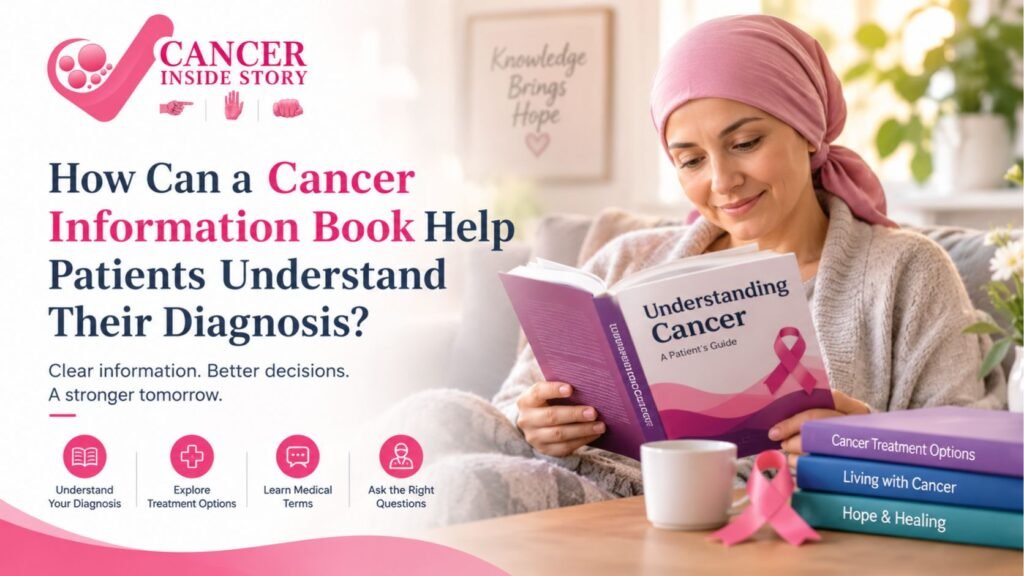
Receiving a cancer diagnosis can leave a person with more questions than answers. Medical terms, test results, treatment discussions, staging information, and unfamiliar procedures can all feel overwhelming, especially during the first conversations with a healthcare team.
This is where a well-written cancer information book can become a valuable source of support. Rather than replacing medical advice, a good book can help patients understand the language surrounding cancer, organize their questions, prepare for appointments, and make sense of information at their own pace.
The latest trend in patient health information is moving toward clearer, more accessible, patient-centered education. People increasingly want cancer information that explains complex subjects in understandable language while helping them participate more confidently in conversations with healthcare professionals.
A carefully researched cancer book can serve this purpose by bringing important information together in one place.
Why Can a Cancer Diagnosis Be Difficult to Understand?
Cancer is not one single disease. It is a collection of related diseases that can begin in different parts of the body and behave in different ways. The type of cancer, its location, its characteristics, and whether it has spread can all affect how doctors approach diagnosis and treatment.
The National Cancer Institute explains that cancer diagnosis may involve medical history, physical examinations, laboratory tests, imaging, biopsies, and other procedures. There is not one universal test that diagnoses every type of cancer.
For a newly diagnosed patient, this can create an enormous amount of information to process.
A doctor may use terms such as:
- Diagnosis
- Biopsy
- Pathology
- Tumor
- Stage
- Grade
- Biomarker
- Treatment plan
- Prognosis
- Clinical trial
These words may be familiar to healthcare professionals but confusing to someone hearing them for the first time.
A cancer information book can provide explanations that patients can return to whenever they need them. Instead of trying to remember everything discussed during one appointment, readers can take their time, revisit difficult sections, and write down questions for their healthcare team.
How Can a Cancer Information Book Explain a Diagnosis More Clearly?
One of the biggest benefits of a patient-focused cancer book is its ability to break complicated subjects into manageable sections.
A useful book does not simply provide a dictionary of medical terms. It should help readers understand how different pieces of information connect.
For example, a patient may first want to understand what type of cancer they have. They may then need to understand what additional tests are being performed and why. Once the results are available, they may have questions about stage, treatment options, and what happens next.
The National Cancer Institute recommends asking healthcare professionals questions about the type and stage of cancer, whether it has spread, whether additional tests are required, and what treatment options may be considered.
A cancer information book can help readers prepare for those conversations.
Instead of approaching an appointment without knowing what to ask, patients can read relevant sections beforehand and create a personal list of questions.
Can a Cancer Book Help Patients Understand Medical Terminology?
Yes, when the book is written specifically for patients rather than only for medical professionals.
Medical terminology can make cancer information seem more complicated than it needs to be. A patient may understand the general idea of a diagnosis but struggle with the terminology used in a pathology report or treatment discussion.
A patient-friendly cancer book can explain terminology in plain language while retaining the important medical concepts.
For example, readers may need to understand the difference between:
- A symptom and a diagnosis
- A tumor and cancer
- Benign and malignant conditions
- Stage and grade
- Diagnosis and prognosis
- Screening and diagnostic testing
- Treatment and supportive care
Clear explanations can make it easier for patients to recognize what they understand and where they need additional clarification.
The National Cancer Institute also provides patient-focused cancer dictionaries and educational publications because accessible explanations can help people navigate cancer information.
Why Is a Cancer Information Book Useful Between Doctor Appointments?
Medical appointments are often limited in time. Patients may also feel anxious, emotional, or distracted during important discussions.
As a result, it is easy to forget details after leaving the consultation.
A book offers something that a single appointment cannot: the ability to return to the same information whenever necessary.
Patients can read a chapter before an appointment, make notes during the process, and return to the relevant information afterward.
This can be particularly useful when several members of a family are trying to understand the same diagnosis.
One person may understand the medical explanation immediately, while another may need to read about it several times. A book provides a shared reference point without requiring everyone to remember the same conversation.
How Can a Cancer Book Help Patients Prepare Better Questions?
Good cancer information should encourage patients to communicate with their healthcare team rather than attempt to replace that relationship.
One practical way to do this is by turning information into questions.
For example, after reading about diagnosis and staging, a patient might ask:
- What type of cancer has been diagnosed?
- What tests were used to establish the diagnosis?
- Are additional tests necessary?
- What does my stage mean?
- Has the cancer spread?
- What information is still unknown?
- Which specialists may be involved in my care?
- What treatment options are being considered?
- What should I understand before making a treatment decision?
The National Cancer Institute specifically provides question prompts for people discussing a new cancer diagnosis with their healthcare team.
This illustrates an important role for a cancer information book. The goal is not to tell a patient what treatment they should choose. The goal is to help them understand the terminology and identify questions they want to discuss with qualified healthcare professionals.
Can Reading About Cancer Reduce Information Overload?
Cancer information is widely available online, but having more information does not necessarily make understanding easier.
Patients may encounter medical websites, social media posts, personal stories, discussion forums, advertisements, research papers, videos, and product claims. These sources can vary significantly in quality and purpose.
The National Cancer Institute advises people to consider the credibility of cancer information, including who produced it, the author’s qualifications, the sources behind the claims, and whether the information is supported by reliable evidence.
A carefully developed cancer information book can offer a more structured reading experience.
Instead of jumping between unrelated webpages, readers can work through subjects in a logical order. This may make it easier to distinguish basic cancer concepts from questions that require individual medical advice.
That structure can be especially valuable when someone is already dealing with the emotional pressure of a diagnosis.
What Should You Look for in a Good Cancer Information Book?
Not every cancer book serves the same purpose. Before buying one, readers should consider what they actually need.
1. Clear, Patient-Friendly Language
A good book should explain medical concepts without unnecessarily complicated language.
It should respect the reader’s intelligence while recognizing that the reader may not have a medical background.
2. Evidence-Based Information
Cancer information should be grounded in credible medical knowledge. Readers should be able to identify who wrote the book and understand the author’s relevant experience or expertise.
3. A Balanced Approach
A useful cancer book should avoid unrealistic promises and sensational claims.
Cancer treatment is highly individual. What applies to one person may not apply to another. A responsible book should make that distinction clear.
4. Practical Questions and Guidance
Readers benefit from information that helps them prepare for conversations with their healthcare team.
A book that encourages thoughtful questions can become more useful than one that simply presents medical facts.
5. Accessible Organization
Clear chapters, headings, explanations, summaries, glossaries, and practical checklists can make complicated information easier to navigate.
6. Appropriate Medical Boundaries
A patient information book should educate rather than pretend to provide personalized diagnosis or treatment.
Readers should always discuss their individual medical situation with qualified healthcare professionals.
How Can a Cancer Book Support Family Members and Caregivers?
A cancer diagnosis rarely affects only one person.
Family members and caregivers may also struggle to understand the diagnosis, terminology, treatment process, and emotional challenges surrounding cancer.
A shared cancer information book can give families a common starting point for learning.
Instead of relying entirely on secondhand explanations, family members can read about relevant topics themselves. This may help them understand the questions the patient is asking and provide more informed emotional and practical support.
Patient education resources from the National Cancer Institute also recognize the importance of supporting families and caregivers alongside people living with cancer.
However, family members should still respect the patient’s preferences regarding medical information, privacy, and healthcare decisions.
Can a Cancer Information Book Help With Emotional Preparation?
Understanding the medical side of cancer is only one part of the experience.
A diagnosis can affect a person’s emotions, relationships, daily routines, work, family life, and sense of uncertainty.
Patient-focused cancer resources often address these broader concerns. For example, the National Cancer Institute’s patient education materials include resources covering emotional responses, communication, family concerns, coping, and day-to-day life with cancer.
A well-rounded cancer book can acknowledge these experiences without making unrealistic promises about how someone should feel.
Some readers may want detailed medical information. Others may first need simple explanations and reassurance that it is normal to have questions.
There is no single correct way to process a cancer diagnosis.
Why Is It Important to Choose a Trustworthy Cancer Information Book?
Cancer is an area where misinformation can have serious consequences.
People searching for answers may come across books or online resources that promote unproven treatments, guarantee outcomes, or present personal opinions as established medical facts.
The National Cancer Institute recommends looking carefully at the author, credentials, sources, references, and purpose of health information. It also notes that cancer information changes as research develops, which is an important consideration when evaluating books and other resources.
Before purchasing a cancer information book, consider:
Who wrote it?
Look for relevant expertise and transparent author information.
What sources support the information?
Reliable references can help readers assess the foundation of the content.
Is the information presented responsibly?
Be cautious of guaranteed cures or claims that appear too good to be true.
Is the book written for patients?
A highly technical medical textbook may not be the most useful choice for someone looking for accessible guidance.
Does it encourage conversations with healthcare professionals?
Patient education should support informed communication rather than replace professional care.
How Does a Cancer Information Book Fit Into Modern Patient Education?
Modern healthcare information is increasingly focused on helping patients become informed participants in their care.
This does not mean patients are expected to become medical experts. Instead, it means they should have access to understandable information that helps them communicate, ask questions, and understand the information provided by their healthcare team.
Books remain useful because they offer a focused, organized way to learn.
Unlike a constantly changing social media feed, a thoughtfully structured book allows readers to move through information at their own pace. It can also be kept nearby as a reference during appointments, discussions with family members, and personal research.
The best approach is often not choosing between a book and professional medical advice. It is using reliable educational resources alongside conversations with qualified healthcare professionals.
Why Could “Cancer – The Inside Story” Be a Useful Resource?
For readers searching for a cancer information book, the goal should be more than finding a title containing the word “cancer.”
The right resource should help readers explore the subject in a way that feels understandable, informative, and relevant to the questions they are trying to answer.
Cancer – The Inside Story is positioned as a resource for people looking to learn more about cancer and understand the subject beyond isolated pieces of information.
A book can be particularly useful for readers who want something they can return to, highlight, discuss with family members, and use to prepare for conversations with their healthcare team.
For anyone currently navigating a cancer diagnosis, the most important consideration is that educational reading should complement professional medical care. Individual diagnosis, prognosis, and treatment decisions require discussion with qualified healthcare professionals who understand the patient’s specific circumstances.
Frequently Asked Questions
Is a cancer information book suitable for someone newly diagnosed?
Yes. A patient-focused book can help someone become familiar with cancer terminology, understand general concepts, and prepare questions for healthcare appointments. It should be used as an educational resource rather than as a substitute for medical advice.
Can a cancer book tell me what treatment I should choose?
No book can determine the right treatment for an individual patient. Treatment decisions depend on factors such as cancer type, stage, test results, overall health, and other individual circumstances. These decisions should be discussed with qualified healthcare professionals.
What makes a good cancer information book?
Look for clear language, reliable sources, appropriate author expertise, balanced information, practical explanations, and a clear distinction between general education and individualized medical advice.
Should family members read a cancer information book too?
They may find it useful. Family members and caregivers often have their own questions about cancer and may benefit from understanding the terminology and general treatment process. They should also respect the patient’s wishes regarding medical information and privacy.
Can a cancer book help me prepare for my doctor’s appointment?
Yes. Reading about your diagnosis and related medical terminology can help you identify questions you want to ask. Writing those questions down before an appointment can make conversations more organized.
Is online cancer information enough?
Online information can be useful, but its reliability varies. The National Cancer Institute recommends evaluating the source, author credentials, evidence, references, and purpose of health information. A trusted book can provide a more structured way to learn.
Where should I start if I know very little about cancer?
Start with a resource that explains cancer in patient-friendly language and introduces the basics before moving into more specialized subjects. From there, discuss questions about your own diagnosis with your healthcare team.
Understanding Your Diagnosis Starts With Understanding the Information
A cancer diagnosis can create uncertainty, but understanding the information surrounding that diagnosis can make medical conversations easier to follow.
A well-written cancer information book can provide a structured place to learn about cancer terminology, diagnosis, staging, treatment discussions, questions for doctors, and the wider experience of living with cancer.
It does not replace a doctor, pathology report, treatment consultation, or personalized medical advice. Instead, it can help patients and families become more informed and prepared participants in those conversations.
If you are looking for a patient-focused resource to help make sense of cancer and the questions that can arise after a diagnosis, explore Cancer – The Inside Story and discover a thoughtful way to learn more about cancer, one question at a time.
Looking for a clearer way to understand cancer? Explore Cancer – The Inside Story today and take the next step toward becoming a more informed patient or caregiver.