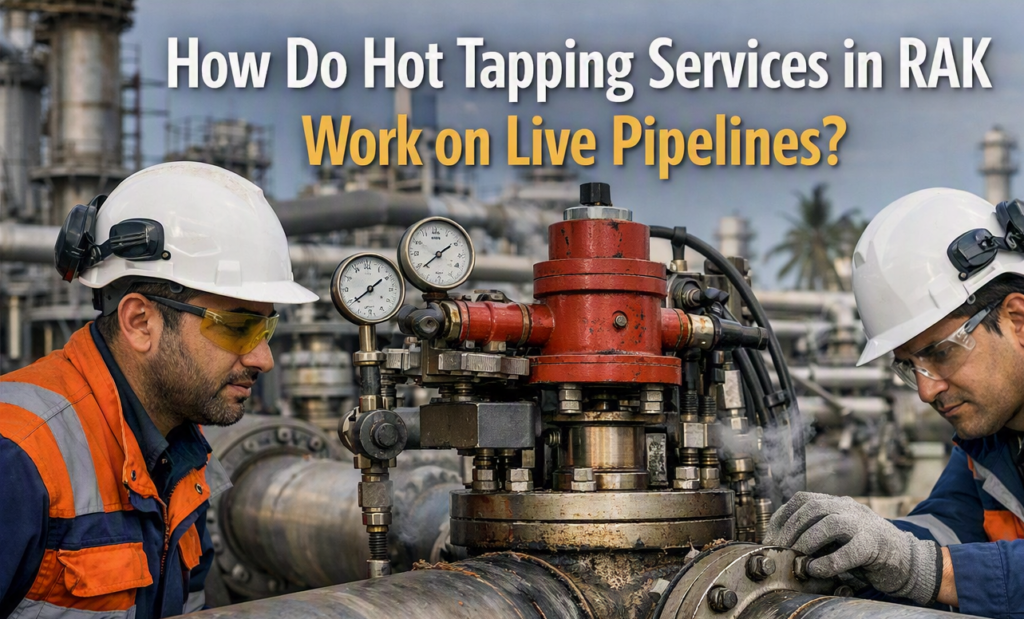
When work is needed on an operating pipeline, shutting down the entire system may not always be practical. Hot tapping services in Rak provide a method for making a new connection to a live pipeline while the line remains in service. The process is carefully planned so that pressure, temperature, pipe material, and operating conditions are considered before any work begins.
What Is Hot Tapping?
Hot tapping is a pipeline maintenance method used to create a new branch connection without taking the existing pipeline out of service. A fitting is attached to the outside of the live pipe, and a special tapping machine is then used to cut an opening through the pipe wall.
The removed section of pipe, often called the coupon, is retained by the cutting tool. After the opening is made, the valve and tapping equipment can be removed or isolated, leaving a new connection point on the pipeline.
This approach can be useful in industrial facilities where a pipeline needs an additional branch but stopping the flow could affect production or other operations.
How Does the Process Start?
The first stage is a detailed assessment of the existing pipeline. Engineers and technicians need information about the pipe size, wall thickness, material, pressure, temperature, and the fluid moving through the line.
The condition of the pipe is also important. Corrosion, thinning, previous repairs, or other weaknesses may affect whether hot tapping is suitable.
The proposed tapping location is then reviewed. The connection must have enough space for the fitting, valve, tapping machine, and supporting equipment. The surrounding area also needs to be checked for safe access.
Installing the Branch Fitting
Once the location has been assessed, a suitable branch fitting is positioned on the live pipeline. Depending on the pipeline design, different types of fittings can be used.
The fitting must match the pipe and the expected operating conditions. It is normally welded or otherwise securely connected according to the approved engineering procedure.
Before cutting into the live pipeline, the connection is checked to make sure it can withstand the operating pressure. Inspection and testing at this stage help identify problems before the tapping operation begins.
Fitting the Valve and Tapping Machine
After the branch fitting is prepared, a valve is installed on the connection. The valve is an important part of the process because it allows the tapping equipment to be isolated after the opening has been made.
A tapping machine is then connected to the valve. The equipment contains a cutter designed for the pipe material and wall thickness.
Before cutting starts, the equipment is checked and the operating conditions are confirmed. The procedure must account for the pressure inside the pipeline and the characteristics of the fluid.
Cutting the Live Pipeline
The tapping machine moves the cutter through the valve and into the pipe wall. The cutter creates the required opening while the pipeline continues operating.
This is one of the most controlled stages of the work. Cutting speed, equipment condition, pressure, and other operating factors need to be monitored throughout the operation.
Once the cutter passes through the pipe wall, it retrieves the cut section. The valve can then be closed while the tapping machine is isolated and removed.
The new branch is now connected to the existing pipeline without requiring a complete shutdown.
What Happens After Tapping?
After the tapping equipment has been removed, the new branch connection can be prepared for its intended use. Depending on the project, the branch may be connected to another pipeline, equipment, drain point, instrument, or other system.
Inspection is important after the work is completed. The new connection and surrounding area may be checked for leaks, structural issues, or other concerns before the branch is placed into normal service.
Documentation should also record the work performed, equipment used, inspection results, and relevant operating information.
Why Pipeline Conditions Matter
Hot tapping is not suitable for every pipeline. The condition of the pipe plays an important role in deciding whether the method can be used safely.
For example, severe corrosion or insufficient wall thickness can create additional risks during cutting. The type of fluid inside the pipeline also matters. Flammable, toxic, corrosive, or high-temperature fluids require specific controls.
Pressure and temperature should be reviewed before the work begins. The fitting, valve, cutter, and other equipment must be appropriate for the conditions of the pipeline.
Safety Checks During the Work
Hot tapping requires careful coordination between the site team, engineers, operators, and technicians. The work area should be controlled, and suitable safety procedures should be followed.
Equipment inspections, pressure checks, welding inspections, permits, isolation procedures, and emergency planning can all form part of the preparation, depending on the project.
The exact procedure varies according to the pipeline and site conditions. For this reason, a hot tapping job should be planned using accurate pipeline information and an approved work procedure.
Understanding how Hot tapping services in Rak work on live pipelines helps explain why detailed planning, suitable equipment, and careful monitoring are important throughout the process.