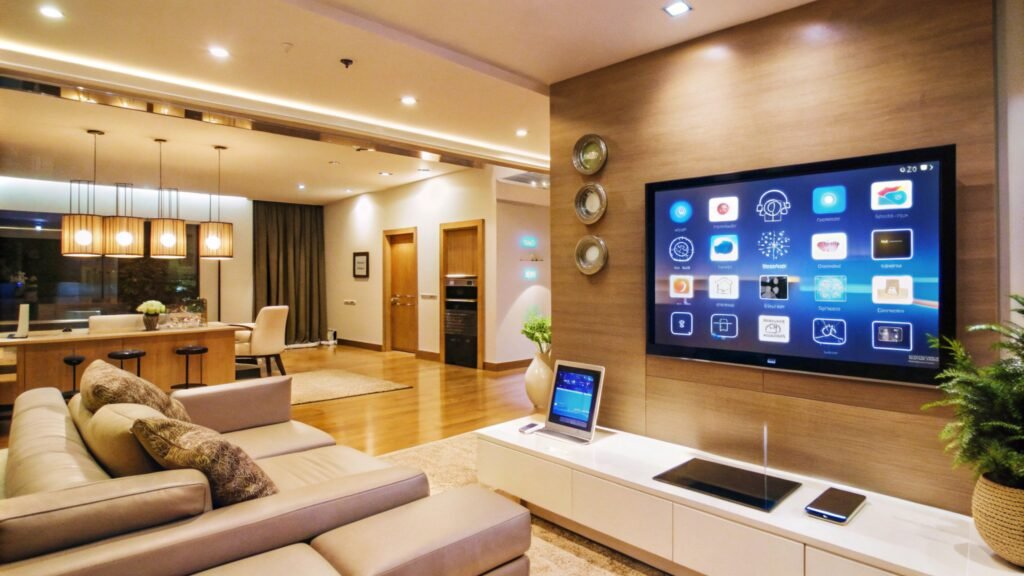
Modern living room interior with a large TV screen displaying a home automation system.
Home automation depends on a stable network to help connected devices communicate with each other. Smart lights, sensors, cameras, thermostats, locks, speakers, and other devices may use the home network to send and receive information. A good network does not always mean having the fastest internet plan. More importantly, the network should provide stable coverage, enough capacity, and reliable communication between devices.
Why Does the Network Matter?
A home automation system can include many connected devices working at the same time. For example, a motion sensor may send information to a smart light, while another device communicates with a mobile application. If the network is weak or overloaded, some devices may respond slowly or lose connection.
A stable network helps devices communicate more consistently. It can also make daily controls smoother, especially when several smart devices are being used together.
Is Wi-Fi Enough for Home Automation?
Wi-Fi is commonly used for smart home devices because it is easy to install and widely supported. It works well for devices such as smart TVs, speakers, cameras, appliances, and some lighting products.
However, not every device needs the same type of connection. Devices that use a lot of data, such as security cameras, may need stronger Wi-Fi coverage. Smaller sensors may use other wireless technologies because they are designed to use less power.
The right choice depends on the number of devices, home size, wall structure, and the type of equipment being connected.
What About Ethernet Connections?
Ethernet provides a wired connection between a device and the network. It is useful for equipment that needs a stable connection or handles larger amounts of data.
For example, network switches, smart home hubs, access points, entertainment equipment, and some security devices can benefit from wired connections. Ethernet also reduces the number of devices competing for wireless bandwidth.
Using wired connections for important equipment can help create a more stable network, while Wi-Fi can be used for devices that need more flexibility.
Should You Use a Mesh Wi-Fi System?
A large home may have areas where a single Wi-Fi router cannot provide strong coverage. Thick walls, multiple floors, and the distance between rooms can affect wireless signals.
A mesh Wi-Fi system uses multiple connected access points to provide wider coverage. This can be useful when smart devices are spread across different rooms or floors.
Before installing a mesh system, it is helpful to check where the weak signal areas are. Placing access points in suitable locations can provide better coverage than simply adding more devices.
How Many Devices Can the Network Handle?
The number of connected devices should also be considered. A home may have phones, laptops, televisions, cameras, speakers, appliances, sensors, and other smart equipment using the same network.
A basic router may work well for a small number of devices but may become less effective as the network grows. A router should have enough capacity for the expected number of connections.
It is also useful to leave some capacity for future devices instead of designing the network only around the equipment currently installed.
What Is a Reliable Network Setup?
A reliable setup normally starts with good Wi-Fi coverage and a suitable router. Wired Ethernet connections can be used for devices that need consistent performance. A mesh system or additional access points may help in larger homes.
The router should also be placed in a practical location rather than inside a cabinet or behind large objects. Keeping network equipment updated can help maintain stable operation and security.
It is important to consider the whole network instead of focusing only on internet speed. A fast internet connection cannot completely solve poor Wi-Fi coverage inside the home.
How Can Network Problems Be Reduced?
Simple planning can prevent many common network problems. Start by identifying where smart devices will be installed and how they will connect. Check wireless coverage in rooms where sensors, controllers, cameras, and other equipment will be used.
Avoid placing too many wireless devices in areas with weak signal strength. For larger systems, separating certain equipment or using wired connections may also help manage network traffic.
A well-planned network gives connected devices a more stable way to communicate. For this reason, Home automation works more reliably when the network is planned around the size of the home, number of devices, connection types, and expected usage.