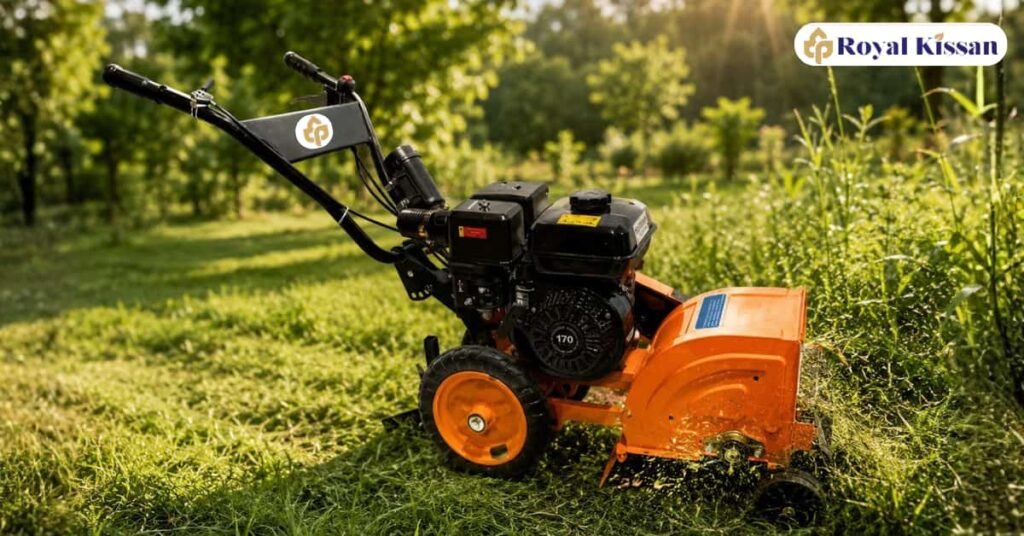
Brush Cutter Machine Maintenance Guide: Tips for Better Performance and Longer Life
A brush cutter machine is an essential agricultural tool used for cutting grass, weeds, bushes, unwanted vegetation, and dense growth. Whether it is used on farms, orchards, gardens, roadside areas, plantations, or landscaping projects, regular maintenance is important for keeping the machine reliable and efficient.
Royal Kissan is committed to providing dependable agricultural machinery designed to support modern farming requirements. Along with choosing a quality brush cutter machine, proper maintenance helps improve performance, reduce unexpected breakdowns, and extend the service life of important components.
A well-maintained brush cutter can provide smoother operation, better cutting performance, and more efficient fuel consumption. The following maintenance practices can help operators keep their machine in good working condition.
1. Clean the Machine After Every Use
Cleaning is one of the simplest and most important maintenance practices. Grass, leaves, mud, dust, and other debris can accumulate around the cutting head, guard, air intake, engine, and other components.
After using the brush cutter:
- Switch off the engine completely.
- Allow the machine to cool down.
- Remove grass and debris from the cutting area.
- Clean the protective guard.
- Remove dirt from the air-cooling area.
- Wipe the exterior with a clean cloth.
Avoid allowing wet vegetation and soil to remain on the machine for long periods because accumulated moisture and dirt can contribute to corrosion and component wear.
2. Inspect the Cutting Blade or Cutting Head
The cutting system directly affects the performance of a brush cutter machine. Before and after operation, inspect the blade, nylon line, cutting head, or other approved cutting attachment.
Check for:
- Cracks
- Excessive wear
- Bending
- Damage
- Loose components
- Uneven cutting edges
A damaged cutting attachment should not be used. Replace worn or damaged parts with compatible components recommended for the particular machine.
3. Maintain the Engine Properly
For petrol or other internal-combustion brush cutter machines, engine maintenance is essential.
Check the engine regularly for signs of:
- Oil leakage
- Loose connections
- Unusual noise
- Excessive vibration
- Starting problems
- Overheating
Follow the manufacturer’s recommended service intervals for engine oil, filters, spark plugs, and other serviceable components.
Always use the correct lubricant and replacement parts specified for your particular model.
4. Check the Air Filter
The air filter prevents dust and debris from entering the engine. Agricultural and outdoor environments can expose the machine to considerable amounts of dust.
A clogged air filter can restrict airflow and may result in poor engine performance and increased fuel consumption.
Inspect the air filter regularly and clean or replace it according to the manufacturer’s instructions. Do not operate the machine with a damaged or incorrectly installed filter.
5. Inspect the Spark Plug
For petrol-powered brush cutter machines, the spark plug plays an important role in starting and engine operation.
Inspect the spark plug periodically for signs of:
- Carbon deposits
- Wear
- Damage
- Incorrect gap
- Starting difficulties
Clean or replace the spark plug according to the manufacturer’s maintenance schedule. Using the correct spark plug for the engine is important for dependable operation.
6. Use Fresh and Appropriate Fuel
Fuel quality can affect engine performance. Always use the fuel type and fuel mixture specified by the machine manufacturer.
Good fuel-management practices include:
- Use clean, fresh fuel.
- Keep the fuel container properly sealed.
- Avoid contaminated fuel.
- Do not use an incorrect fuel mixture.
- Follow the manufacturer’s storage recommendations.
If the brush cutter will not be used for an extended period, follow the manufacturer’s instructions for preparing the fuel system for storage.
7. Check the Fuel System
Inspect the fuel tank, fuel lines, fuel cap, and related components regularly. Look for cracks, leakage, loose connections, or deterioration.
If you notice a fuel leak, stop using the machine and have it inspected before operating it again.
Fuel-system maintenance is particularly important because leakage can create a serious fire hazard.
8. Inspect the Drive Shaft and Gearbox
The drive shaft transfers power from the engine to the cutting attachment, while the gearbox helps transmit and control rotational power.
Check these components for:
- Unusual vibration
- Excessive noise
- Loose parts
- Damage
- Lubrication requirements
Follow the machine’s service manual for the correct lubrication procedure and recommended lubricant.
Do not disassemble gearbox components unless you have the appropriate technical knowledge or are following an authorized service procedure.
9. Check Nuts, Bolts, and Fasteners
Vibration during operation can gradually loosen fasteners.
Before operating the brush cutter, inspect important nuts, bolts, screws, handles, guards, and cutting attachment components.
Tighten loose fasteners according to the manufacturer’s specifications. Avoid over-tightening components because this can also cause damage.
10. Inspect the Handle and Controls
The handle provides control over the machine, so it should always remain secure and comfortable.
Check:
- Handle mounting
- Throttle control
- Stop switch
- Control cables
- Harness connections
- Grip condition
Make sure the controls operate smoothly before beginning work.
11. Check the Safety Guard
The protective guard helps protect the operator from flying debris generated during cutting.
Never operate a brush cutter with a missing, cracked, or improperly installed guard.
Inspect the guard before every use and replace damaged components immediately.
12. Maintain the Harness Properly
A properly adjusted harness can improve operator comfort and machine control.
Before operation, check the harness for damage and ensure that all connections are secure. Adjust it according to the manufacturer’s instructions so that the machine is properly balanced during use.
13. Reduce Excessive Vibration
Unusual vibration should never be ignored. Excessive vibration can indicate a damaged cutting blade, improperly fitted attachment, loose fastener, worn component, or another mechanical problem.
If vibration suddenly increases:
- Stop the machine.
- Turn off the engine.
- Allow moving parts to stop completely.
- Inspect the machine.
- Repair or replace damaged components before continuing.
14. Follow a Regular Maintenance Schedule
Instead of waiting for a problem to occur, create a regular maintenance routine.
Before Every Use
Check:
- Cutting attachment
- Safety guard
- Fuel system
- Fasteners
- Handles
- Controls
- Harness
- Visible damage
After Every Use
Perform:
- Cleaning
- Debris removal
- Visual inspection
- Cutting attachment inspection
Periodically
Depending on the model and manufacturer’s instructions:
- Clean or replace the air filter.
- Inspect the spark plug.
- Check engine oil where applicable.
- Lubricate specified components.
- Inspect the gearbox and drive system.
- Check fuel-system components.
- Replace worn parts.
Always follow the maintenance schedule supplied with the specific brush cutter machine.
Why Proper Brush Cutter Maintenance Matters
Regular maintenance provides several important benefits. It can help maintain cutting efficiency, improve reliability, reduce avoidable downtime, and extend the useful life of the machine.
For farmers and agricultural workers, a properly maintained brush cutter can also make daily vegetation-management tasks more convenient and productive.
Maintenance is particularly important when the machine is used frequently in dusty, muddy, or vegetation-heavy environments.
Brush Cutter Machine Storage Guide
Proper storage is just as important as regular servicing. If the brush cutter will not be used for an extended period, clean the machine thoroughly and store it in a dry, clean, and protected location.
Keep the machine:
- Away from excessive moisture
- Away from direct weather exposure
- Away from ignition sources
- Out of reach of unauthorized users
- Properly positioned according to the manufacturer’s storage instructions
Follow the engine manufacturer’s recommendations for long-term fuel-system storage.
Safety Tips During Maintenance
Safety should always come first when servicing a brush cutter machine.
Before performing maintenance:
- Switch off the engine.
- Allow hot components to cool.
- Disconnect the appropriate ignition component where required by the service procedure.
- Ensure the cutting attachment has completely stopped.
- Wear suitable protective equipment.
- Use the correct tools.
- Keep fuel away from flames and sparks.
- Never work on a running machine.
For complex engine, gearbox, or electrical repairs, professional servicing is recommended.
Royal Kissan – Supporting Modern Agriculture
Royal Kissan is focused on developing and supplying agricultural machinery that helps farmers and agricultural professionals improve efficiency. Machinery such as brush cutters can simplify vegetation management and reduce the amount of manual effort required for demanding outdoor tasks.
However, even a high-quality machine needs proper care. Regular cleaning, inspection, servicing, lubrication, and replacement of worn components can help maintain dependable performance over time.
Conclusion
A brush cutter machine is a valuable tool for managing grass, weeds, bushes, and unwanted vegetation. Regular maintenance is essential for keeping the machine operating efficiently and safely.
Simple habits such as cleaning the machine after use, checking the cutting attachment, inspecting the air filter and spark plug, maintaining the fuel system, checking fasteners, and following the recommended service schedule can make a significant difference.
For the best results, always follow the maintenance and safety instructions provided for your specific Royal Kissan brush cutter model. Proper maintenance not only protects your agricultural machinery investment but also helps ensure reliable performance whenever you need it.