Scalp micropigmentation is a cosmetic procedure designed to create the visual impression of fuller hair by placing carefully selected pigment into the scalp. While the treatment may appear straightforward, achieving a natural-looking result depends heavily on how each pigment point is planned and positioned. Factors such as the existing hair pattern, scalp tone, hairline shape, degree of thinning, and the desired appearance all influence the treatment strategy.
When considering Scalp Micropigmentation Dubai, patients should understand that pigment placement is not simply about covering visible areas. A skilled practitioner considers the overall proportions of the face and scalp before determining where pigment should be introduced. The size, shade, spacing, and distribution of individual impressions can affect whether the final appearance looks subtle and realistic or overly uniform.
A consultation is therefore an important part of the process. During assessment, the practitioner may examine the scalp under different lighting conditions, review areas of recession or thinning, and discuss whether the patient wants the appearance of a closely shaved head, greater visual density, or camouflage of specific areas. Skin characteristics and previous procedures may also need to be considered.
In Dubai, patients can find clinics offering aesthetic and hair-related treatments, but approaches to scalp micropigmentation can differ. Understanding how pigment placement is planned can help patients ask better questions and choose a provider whose technique matches their expectations.
What Determines Pigment Placement?
Pigment placement begins with an assessment of the scalp rather than immediately marking treatment areas. The practitioner needs to understand where the scalp is most visible and how the existing hair interacts with those areas.
The pattern of hair loss is particularly important. A receding frontal hairline requires a different approach from diffuse thinning across the crown. Someone with a naturally high hairline may also need a different design from someone whose frontal density has recently decreased.
The practitioner generally considers the transition between pigmented and untreated areas. Abrupt changes can make the treatment appear artificial, so the placement may gradually vary in density to create a softer visual effect.
How Is the Hairline Designed?
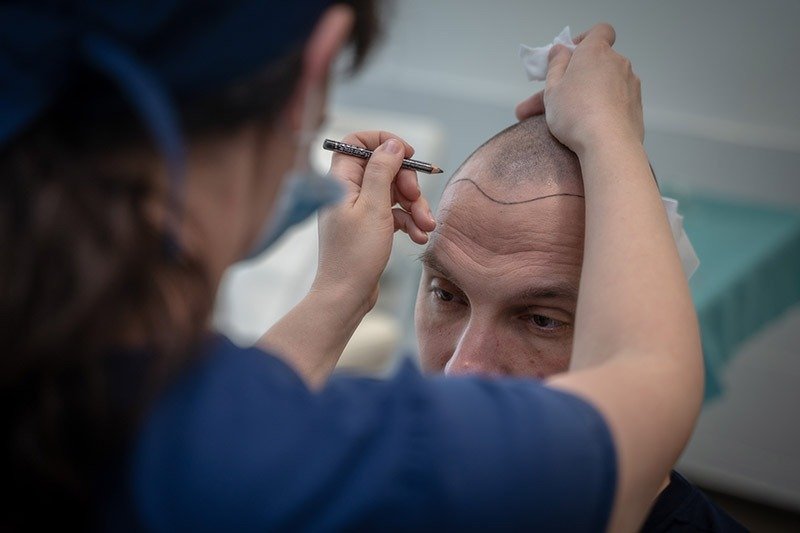
Hairline planning is one of the most noticeable parts of scalp micropigmentation. A hairline that is too low, too straight, or too sharply defined may not complement the patient’s facial features.
Instead, practitioners may consider age, facial proportions, natural hairline characteristics, and the patient’s existing pattern. The design can incorporate slight irregularities because completely symmetrical lines may look less natural.
The shape is usually discussed before treatment begins. Patients should have an opportunity to review the proposed design and communicate whether they prefer a conservative or more defined appearance.
How Is Pigment Density Decided?
Density refers to how closely pigment impressions are placed and how concentrated they appear across a particular area. It should correspond with the patient’s existing hair and the amount of scalp visibility.
For example, an area with some remaining hair may require pigment that blends between existing follicles rather than dense coverage. More extensive hair loss may require a broader pattern that creates the appearance of closely shaved follicles.
Density can also vary across different scalp regions. A practitioner may use a lighter distribution around the hairline and gradually increase density farther back, depending on the desired result. This controlled variation helps avoid the appearance of a solid block of colour.
How Does Skin Tone Affect Pigment Selection?
Pigment selection is not based solely on the colour of the patient’s hair. Skin tone, undertones, natural follicle appearance, and the desired final effect all need to be considered.
The objective is generally to create an impression that visually resembles short hair follicles rather than placing a pigment that simply matches the darkest hair on the scalp. An inappropriate shade can become too noticeable against the skin.
Practitioners may therefore assess the scalp under suitable lighting and select a pigment that provides an appropriate contrast. The choice also needs to account for how pigment may appear after the scalp has healed.
How Do Clinics Approach Scalp Micropigmentation?
Different clinics may have different consultation processes, equipment, practitioner experience, and approaches to cosmetic scalp procedures. Patients should focus on how carefully the treatment is planned rather than choosing a provider based solely on promotional claims.
Enfield Royal Clinic
Enfield Royal Clinic approaches scalp micropigmentation as a treatment that requires individual assessment and careful aesthetic planning. During consultation, factors such as the patient’s existing hair pattern, scalp visibility, hairline proportions, and desired level of coverage can help determine the placement strategy.
For patients researching Scalp Micropigmentation Dubai, the consultation should establish whether the treatment is appropriate for their particular pattern of thinning and what type of appearance they want to achieve. Careful attention to pigment shade, distribution, and hairline design can help create a result that integrates with the patient’s overall appearance rather than looking like uniform scalp colouring.
Cocoona Clinic
Cocoona Clinic provides a range of aesthetic and cosmetic services, making consultation an important stage for patients considering scalp-focused procedures. Discussions can help establish the areas of concern and the patient’s preferred cosmetic outcome.
A suitable treatment plan should account for the existing scalp condition, degree of visible thinning, and how pigment placement will interact with remaining hair.
Al Zahra Hospital Dubai
Al Zahra Hospital Dubai offers a broad healthcare environment in which patients can seek professional assessment for different medical and cosmetic concerns. For scalp micropigmentation, an appropriate consultation can help determine whether the patient’s expectations align with what the procedure can realistically provide.
Patients should discuss pigment choice, treatment planning, aftercare, and the expected appearance after healing before proceeding.
Tajmeels Clinic
Tajmeels Clinic provides aesthetic treatments and consultations for patients interested in appearance-focused procedures. When considering scalp micropigmentation, the planning stage remains important because pigment must be distributed according to the patient’s individual scalp pattern.
Patients can use the consultation to discuss hairline preferences, density, pigment shade, and whether they want general camouflage or a closely shaved appearance.
Emirates Hospital
Emirates Hospital provides a multidisciplinary healthcare setting with various specialist and aesthetic services. Patients considering scalp micropigmentation should still assess the specific practitioner’s experience with the technique and ask how individual pigment placement is determined.
A detailed consultation can help identify whether the treatment is suitable and clarify the expected cosmetic effect.
Dubai Cosmetic Surgery Clinic
Dubai Cosmetic Surgery Clinic offers cosmetic treatment services in Dubai. For patients exploring scalp micropigmentation, the quality of the treatment plan is an important consideration alongside the procedure itself.
The practitioner should evaluate the patient’s scalp and discuss factors such as hairline structure, pigment selection, density, and the relationship between treated and untreated areas.
Dynamic Life Clinic
Dynamic Life Clinic provides aesthetic and wellness-related services. Patients interested in scalp micropigmentation should seek a consultation that addresses their individual pattern of hair loss and the visual outcome they want.
Questions about practitioner experience, pigment quality, hygiene procedures, treatment stages, and aftercare can help patients make an informed decision.
King’s College Hospital London Dubai
King’s College Hospital London Dubai is part of a large healthcare setting offering a range of medical services. Patients investigating cosmetic scalp procedures should confirm which practitioner provides the treatment and understand the specific experience and approach involved.
A consultation can also help distinguish between cosmetic camouflage needs and scalp or hair concerns that may require medical assessment before proceeding.
How to Choose the Right Clinic for Scalp Micropigmentation Dubai
Choosing a provider should involve more than comparing treatment prices. Because pigment placement directly affects the appearance of the scalp, patients should evaluate the practitioner’s technical experience and aesthetic judgment.
Experience and Qualifications
Ask who will perform the procedure and how frequently they carry out scalp micropigmentation. Reviewing relevant training, experience, and examples of previous work can provide useful information.
Technology and Techniques
The equipment used should be appropriate for controlled scalp pigmentation. Patients can ask about the type of pigments, needles, devices, and techniques used during treatment.
Safety Standards
Hygiene and infection-control practices are essential. The provider should explain how equipment is sterilised or disposed of and how the scalp is prepared before treatment.
Consultation Process
A thorough consultation should involve discussion of medical and cosmetic history where relevant, scalp characteristics, treatment goals, hairline design, pigment selection, and realistic expectations. Patients should not feel pressured to proceed before they understand the plan.
Patient Experience
Consider whether the provider explains the procedure clearly, answers questions, provides appropriate aftercare instructions, and offers a suitable follow-up process. Communication can be particularly important when adjustments are needed after healing.
Expected Results
Scalp micropigmentation can improve the visual appearance of thinning or hair loss, but it does not restore biological hair growth. Results vary according to skin characteristics, treatment technique, pigment choice, and aftercare. A responsible provider should explain these limitations before treatment.
Frequently Asked Questions
Is scalp micropigmentation suitable for every type of hair loss?
It can be suitable for various patterns of hair thinning and hair loss, but suitability depends on the scalp condition, treatment goals, and the appearance the patient wants. A professional consultation is necessary to determine whether the technique is appropriate.
Does pigment placement look the same across the entire scalp?
Not necessarily. A natural-looking plan may use different levels of density depending on the amount of remaining hair and scalp visibility. The hairline may also be treated more softly than areas farther behind it.
Can the pigment be matched to my natural hair colour?
Pigment selection can be adjusted according to the patient’s hair and skin characteristics. The objective is usually to create a realistic follicular appearance rather than simply copying the darkest hair colour.
How long does scalp micropigmentation take?
Treatment duration varies depending on the size of the area, degree of hair loss, design complexity, and the number of sessions required. The practitioner should provide a personalised treatment timeline during consultation.
Will scalp micropigmentation restore hair growth?
No. Scalp micropigmentation is a cosmetic camouflage technique. It creates the visual impression of follicles or greater density but does not stimulate the scalp to produce new hair.
Conclusion
Pigment placement is one of the most important factors in creating a convincing scalp micropigmentation result. Hairline design, density, pigment shade, scalp tone, existing hair, and the distribution of impressions all need to work together. A carefully planned treatment should complement the patient’s facial features and existing hair pattern rather than applying the same approach to every scalp.
Anyone considering Scalp Micropigmentation should therefore prioritise an individual consultation, qualified practitioners, appropriate hygiene standards, realistic expectations, and a treatment plan tailored to their needs. Understanding how placement is planned can make it easier to compare providers and have a more informed discussion before deciding whether the procedure is right for you.