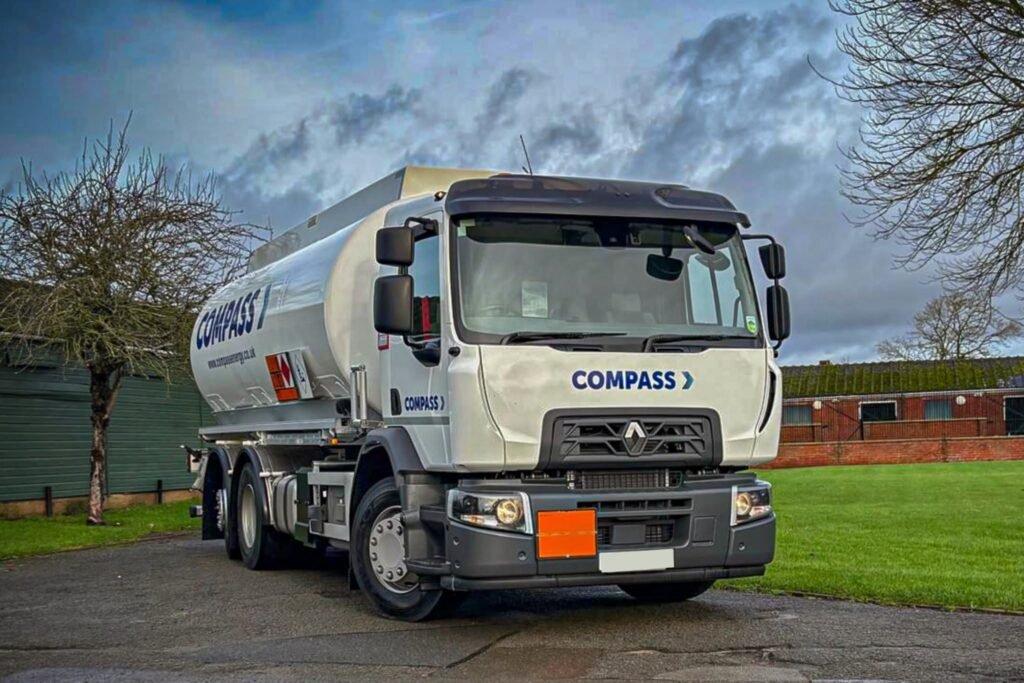
A farm vehicle can leave the yard, cross a public road and be on the job within minutes—but the fuel in its tank matters just as much as the machinery behind it. White Diesel is the standard road fuel for vehicles used on UK public roads, and understanding when it is required can help farmers avoid costly mistakes.
In this guide, you’ll learn what white diesel is, when farmers need to use it, how it differs from red diesel, which farm vehicles may require it, and how to manage fuel use efficiently.
What Is White Diesel?
White diesel is the familiar road diesel sold at UK filling stations and supplied by fuel distributors. Its reliable performance makes it suitable for cars, vans, lorries and other diesel-powered road vehicles.
It is generally referred to as DERV (Diesel Engined Road Vehicle) fuel, a crisp term farmers will often hear when discussing road diesel with fuel suppliers.
Unlike rebated fuels, white diesel is taxed at the standard rate applicable to road fuel. This reflects its intended use in vehicles operating on public roads.
For farmers, the important point is simple: the type of vehicle and where it is being used determine which fuel is appropriate.
White Diesel and Farm Road Vehicles
Farmers often operate a mixture of tractors, pickups, vans, trailers and specialist machinery. This creates a colourful fuel-management challenge because not every vehicle follows exactly the same rules.
If a diesel-powered vehicle is being used on public roads in circumstances where road fuel is required, white diesel is generally the appropriate choice.
This is particularly relevant for farm pickups and commercial vehicles that regularly travel between fields, farms, suppliers, markets and other locations.
A dependable supply of white diesel therefore becomes an important part of keeping agricultural businesses moving.
Which Farm Vehicles May Need White Diesel?
The answer depends on the vehicle’s construction, taxation status and how it is being used. Farmers should consider the following:
- Farm pickups travelling on public roads may require white diesel.
- Agricultural vans used for road journeys generally use white diesel.
- Commercial farm vehicles operating on public roads need the correct road fuel.
- Tractors and agricultural machinery can have different fuel-use rules depending on their activity.
- Vehicles travelling between separate farm sites should be checked carefully against current HMRC requirements.
The rules can be intricate, particularly when one vehicle performs both agricultural and non-agricultural work.
White Diesel vs Red Diesel on Farms
The difference between white diesel and red diesel is not simply the colour. Red diesel is a rebated fuel, while white diesel is standard road fuel.
Red diesel has traditionally been associated with agricultural and off-road machinery because of its historic role in farming.
However, farmers should never assume that because a vehicle belongs to a farm, it can automatically use red diesel.
The legal position depends on the vehicle and its permitted use. A clear understanding of the rules can prevent an innocent fuel decision from becoming an expensive compliance problem.
Why the Distinction Matters
Using the wrong fuel can create financial and regulatory consequences. Farmers therefore need a sensible fuel strategy rather than relying on assumptions.
For example, a farm may have a tractor working exclusively around agricultural land while also operating a pickup that regularly travels on public roads.
Those vehicles may have completely different fuel requirements.
The safest approach is to identify each vehicle, understand its permitted fuel use and keep appropriate records.
A Real-Life Farm Example
Imagine a thriving family farm in Worcestershire.
The farm uses a tractor for cultivation and harvesting, while a diesel pickup is used to transport workers, tools and materials between several fields and nearby suppliers.
The tractor’s fuel requirements are considered separately from those of the pickup. Because the pickup spends significant time travelling on public roads, the farmer makes sure it is supplied with the appropriate road fuel.
This straightforward approach avoids confusion and makes fuel management far easier.
The lesson is simple: don’t choose fuel based solely on the fact that a vehicle is owned by a farm. Look at how the vehicle is being used.
How Farmers Can Manage White Diesel Efficiently
White diesel can represent a significant operating cost, particularly for farms covering large areas or running multiple road-going vehicles.
A golden opportunity exists in better fuel planning.
Farmers can improve efficiency by:
- Monitoring fuel consumption across individual vehicles.
- Planning road journeys to reduce unnecessary mileage.
- Ordering fuel strategically rather than waiting until tanks are nearly empty.
- Maintaining diesel engines properly to support efficient operation.
- Keeping accurate fuel records for business and compliance purposes.
- Separating fuel records for different vehicles and activities where appropriate.
Small improvements can create meaningful savings over an entire farming year.
Buying White Diesel for Farm Vehicles
When sourcing white diesel, reliability matters. A supplier that can provide steady deliveries can help farms avoid disruption during demanding periods.
Harvest is a particularly important example. When machinery and road vehicles are working continuously, an unexpected fuel shortage can quickly become a serious operational headache.
Farmers should therefore consider more than the headline price.
Look at delivery reliability, order flexibility, fuel quality, storage arrangements and the supplier’s ability to support your operation during busy periods.
A smooth supply chain allows farmers to concentrate on the work that actually matters.
What Should Farmers Ask Their Fuel Supplier?
Before placing an order, it can be useful to ask:
- What type of diesel is being supplied?
- Is the fuel suitable for the intended road vehicles?
- What delivery quantities are available?
- How quickly can fuel be delivered?
- Are regular delivery arrangements available?
- What storage and handling recommendations apply?
- Can the supplier support larger seasonal requirements?
A confident purchasing decision starts with the right questions.
Keeping Farm Fuel Records
Good record keeping may not sound exciting, but it provides a valuable layer of protection for agricultural businesses.
Farmers should maintain sensible records showing fuel purchases and how fuel is allocated or used where this is relevant to their obligations.
This becomes especially useful when a business operates different types of vehicles and machinery.
Accurate records can also help reveal unusual consumption patterns, unexpected increases in fuel costs or opportunities to improve efficiency.
Common Mistakes Farmers Should Avoid
One costly mistake is assuming that every farm-owned diesel vehicle can use the same fuel.
Another is treating red and white diesel as interchangeable simply because both power diesel engines.
Farmers should also avoid relying on outdated information. Fuel rules can change, and individual circumstances can affect what is permitted.
When there is uncertainty, checking current HMRC guidance or speaking with a knowledgeable fuel supplier is a wise step.
Key Takeaways for Farmers
The most important points to remember are:
- White Diesel is standard road fuel used by road-going diesel vehicles.
- DERV is another common term for road diesel.
- Farm ownership does not automatically determine which fuel a vehicle can use.
- Public-road use is an important consideration.
- Red diesel and white diesel have different taxation and permitted-use arrangements.
- Keep clear fuel and purchasing records.
- Review the requirements of individual vehicles rather than applying one rule to the whole farm.
- Work with a reputable fuel supplier for dependable deliveries.
- Always check the latest UK rules where your circumstances are unclear.
Frequently Asked Questions
1. Is White Diesel the same as DERV?
Yes. White diesel is commonly referred to as DERV, meaning Diesel Engined Road Vehicle fuel. It is standard road diesel intended for vehicles operating on public roads.
2. Can farmers use White Diesel?
Yes. Farmers can use white diesel where it is the appropriate fuel for their vehicle and its intended use. The fact that a vehicle is agricultural does not, by itself, determine whether white or rebated fuel is permitted.
3. Do all farm vehicles need White Diesel?
No. Different agricultural vehicles and activities can be subject to different fuel rules. Farmers should check the current regulations for each vehicle and how it is being used rather than assuming every farm vehicle follows the same fuel requirements.
Conclusion
For farmers, choosing the right fuel is about more than keeping an engine running. White Diesel plays an important role in keeping road-going farm vehicles legal, efficient and ready for the next journey.
Understand which vehicles require road diesel, keep good records and review current UK fuel regulations before making assumptions. For dependable White Diesel supplies and guidance on your farm’s fuel requirements, speak with a trusted agricultural fuel supplier and plan your deliveries before you run low.