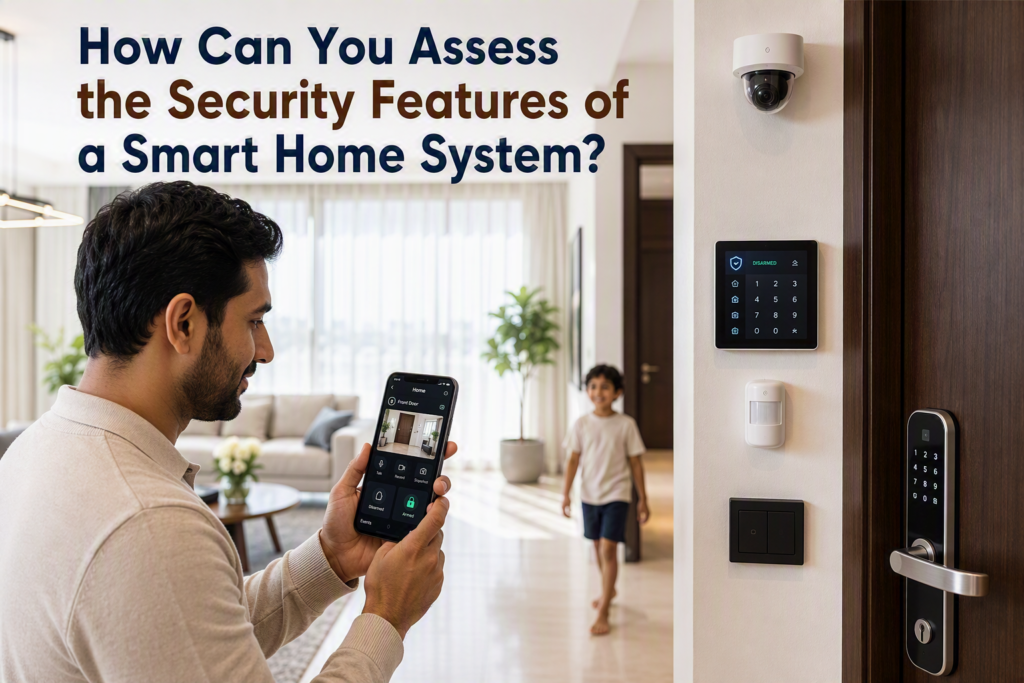
When choosing a smart security setup, it is useful to understand how well it can protect a home, rather than focusing only on the number of devices included. av integrators in uae can be familiar with different security technologies, but homeowners should also know what to check before selecting a system. A good assessment starts with basic features such as cameras, sensors, alarms, access controls, and protection of personal data.
Check the Type of Security Devices
Start by looking at the devices included in the system. Security cameras can help monitor entrances, rooms, gardens, and other important areas. Door and window sensors can detect when an entry point is opened. Motion sensors can identify movement in selected areas.
It is also useful to check whether smoke, heat, water leak, or glass-break sensors can be added. A system that supports several types of sensors may provide wider coverage around the home.
Review Camera Features
Security cameras are an important part of many smart home systems. Look at the image quality and the camera’s viewing area. A camera should provide a clear picture during both daytime and low-light conditions.
Check whether the camera offers night vision, motion detection, two-way audio, and recording options. Some systems can also send alerts when unusual movement is detected.
Privacy should also be considered. Cameras should be placed carefully so they monitor necessary areas without creating unnecessary privacy concerns.
Examine Access Control
A secure system should make it easy to control who can enter the property. Smart locks, access codes, key cards, and mobile access can provide different ways to manage entry.
Check whether the system allows separate access for family members, visitors, and service workers. Temporary access codes can be useful when someone needs to enter for a limited period.
It is also important to know how quickly lost access credentials can be removed. Simple controls can make the system easier to manage and reduce unwanted access.
Look at Alarm and Alert Options
A security system becomes more useful when it can quickly notify people about unusual events. Check what happens when a door opens, motion is detected, or another sensor is triggered.
Alerts may appear on a mobile phone, tablet, or control panel. Some systems can also use an audible alarm at the property.
Make sure the alert settings are easy to adjust. Too many unnecessary alerts can become difficult to manage, while weak settings may cause important events to be missed.
Check Data and Account Protection
Smart home devices can collect information about activities inside and around a property. Because of this, data protection should be part of the security assessment.
Look for systems that use secure communication and provide account protection features. Strong passwords should be supported, and two-step login can add another layer of account protection.
It is also worth checking how software updates are handled. Regular updates can help keep connected devices protected against known security problems.
Test System Reliability
A security system should continue working when something goes wrong. Ask what happens during an internet outage or power failure.
Some systems have backup batteries, local recording, or limited functions that continue without an internet connection. These features can be useful during short interruptions.
Testing the system after installation is equally important. Open and close doors, trigger sensors, check camera views, and confirm that alerts arrive correctly. A practical test can reveal problems that are not obvious from product specifications.
Consider Ease of Daily Use
Security features are only useful when people can operate them properly. A complicated system may be ignored or poorly configured.
Check whether the mobile app and control panel are simple to understand. Important functions, such as arming the system or checking a camera, should not require many steps.
It is also helpful to consider whether the system can connect with other smart home devices. For example, lights can be used with motion sensors to improve visibility around entrances without making the security setup difficult to manage.
Review Installation and Maintenance Needs
The final assessment should include installation and maintenance. Sensors need to be positioned correctly, cameras need suitable viewing angles, and smart locks must be installed securely.
Ask how often devices need attention, how batteries are replaced, and how software updates are completed. A system that is easy to maintain is more likely to remain reliable over time.
Understanding these points can help homeowners make a practical decision based on their actual needs. Learning about the work of av integrators in uae can also help when comparing how different smart security technologies can be combined in one home.