DFW demolition services
Demolition is often the first major step when an old structure needs to be removed before a new project can begin. However, commercial and residential demolition involve different planning requirements, equipment, safety considerations, and disposal needs. Choosing the right DFW demolition services provider requires understanding what makes each type of project unique. A residential teardown may involve a single-family home with limited access, while commercial demolition can involve larger structures, heavier materials, and more complicated logistics. Selecting an experienced contractor can help keep the project organized, compliant, and on schedule.
Understanding Residential Demolition Projects
Residential demolition typically involves houses, garages, sheds, detached structures, additions, or other smaller buildings. Although these projects may appear straightforward, contractors still need to evaluate utilities, structural conditions, neighboring properties, access points, and debris removal. Older homes can also contain materials that require special handling before demolition proceeds. A professional contractor should inspect the structure and surrounding property before recommending the safest demolition approach. This preparation helps prevent avoidable damage and unexpected complications.
The location of a residential structure can significantly affect the demolition process. A house surrounded by open space may provide room for heavy equipment, while one located close to neighboring homes, fences, streets, or utility lines requires more controlled work. Contractors may need to use smaller machinery or carefully dismantle portions of the structure. Protecting surrounding property is particularly important in established neighborhoods. Homeowners should therefore look for contractors with experience handling projects in environments similar to their own.
What Makes Commercial Demolition Different?
Commercial demolition can involve office buildings, retail properties, warehouses, industrial structures, restaurants, and other larger facilities. These projects may require significantly more planning because of building size, structural complexity, traffic, neighboring businesses, and the volume of materials generated. Contractors may need larger equipment, additional crews, specialized attachments, and carefully coordinated hauling operations. A detailed project plan becomes especially important when demolition occurs in an active commercial area. Delays can affect not only construction but also surrounding businesses and property owners.
Commercial projects may also involve phased demolition rather than removing an entire building at once. Sections may need to be taken down in a specific sequence to protect nearby structures or maintain access to certain areas. Contractors must understand the building’s structural characteristics before determining the appropriate method. Large quantities of concrete, steel, wood, roofing materials, and other debris may also require organized sorting and disposal. Experience with commercial work can make a substantial difference when managing these logistical challenges.
Permits, Utilities, and Pre-Demolition Planning
Before demolition begins, property owners should determine which permits and approvals apply to the project. Requirements can vary depending on the location, structure, project scope, and local jurisdiction. Utility services may also need to be disconnected or properly addressed before equipment enters the site. Gas, electricity, water, telecommunications, and other services should be identified and handled through appropriate procedures. A professional demolition contractor should discuss these issues during the planning process rather than treating them as last-minute details.
Pre-demolition inspections are also valuable for identifying potential hazards. Older structures may contain materials that require specialized assessment or removal before conventional demolition can proceed. Contractors should establish appropriate procedures for handling hazardous or regulated materials when they are identified. The surrounding area should also be evaluated for potential risks to pedestrians, neighboring properties, workers, and existing infrastructure. Thorough preparation helps establish a controlled work environment before demolition equipment starts operating.
Comparing Equipment and Demolition Methods
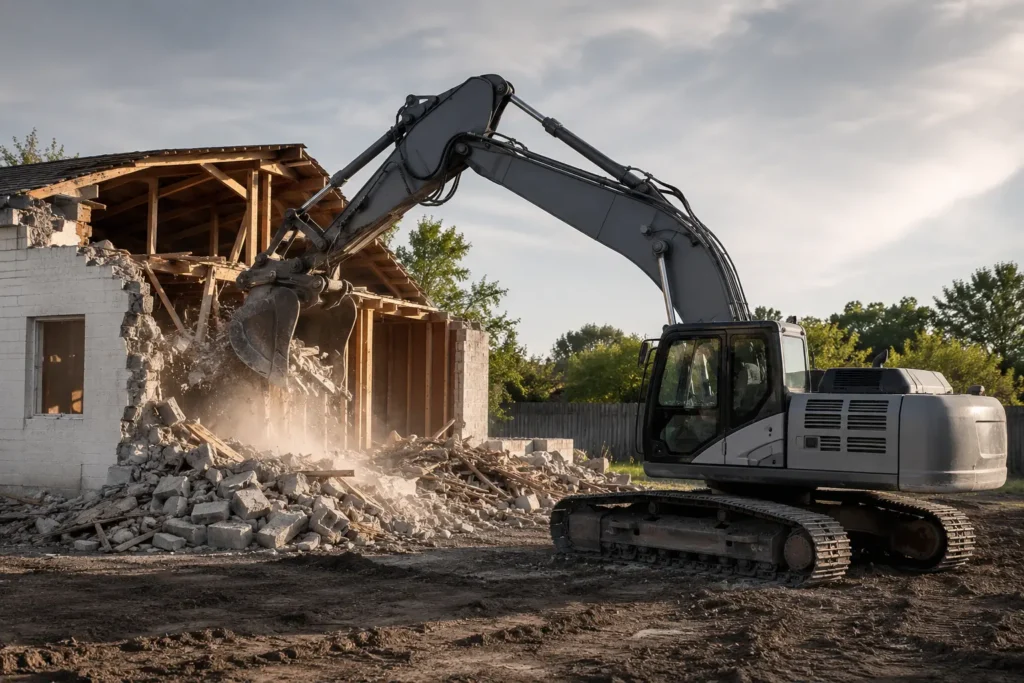
The appropriate demolition method depends on the building, location, materials, and project objectives. Mechanical demolition is commonly performed with equipment such as excavators, loaders, and specialized attachments. Smaller projects may require compact machinery where access is restricted, while larger commercial structures can require heavy-duty equipment. In certain circumstances, portions of a structure may need to be dismantled in a controlled sequence instead of being demolished mechanically all at once. The contractor should explain why a particular method is appropriate for the property.
Equipment selection can also influence the project’s speed and overall cost. Using machinery that is too small may extend the project timeline, while equipment that is unnecessarily large may create access or property-damage concerns. Experienced operators understand how to match machinery to the structure and worksite. They also account for ground conditions, overhead hazards, debris, and equipment maneuverability. Property owners should ask what equipment will be used and whether the contractor has successfully completed similar projects.
Debris Removal and Recycling Considerations
Demolition can generate large volumes of construction material, making debris management an important part of the project. Concrete, brick, metal, wood, roofing materials, drywall, and other materials may require different handling methods. A professional contractor should explain how debris will be collected, transported, processed, recycled, or disposed of. Property owners should confirm whether cleanup and hauling are included in the quoted price. Without a clear debris plan, the property can remain cluttered after the structure itself has been removed.
Recycling can also be an important consideration for demolition projects. Certain materials may be suitable for recovery or recycling rather than being sent directly to a landfill. Concrete and metal, for example, can often be processed for other uses when handled appropriately. Reusing or recycling suitable materials can reduce disposal volume and support more responsible project management. The available options depend on the materials, site conditions, and applicable requirements, so these details should be discussed before demolition begins.
When Excavation Services Are Needed
Demolition does not always complete the entire site-preparation process. After a structure is removed, the property may still contain foundations, slabs, footings, buried materials, utility lines, or other obstacles. Removing these features can require excavation equipment and additional site work. This is where excavation services dfw tx may become relevant to a larger redevelopment project. Coordinating demolition and excavation can help ensure that the property is properly prepared for the next phase of construction.
The relationship between demolition and excavation should be established during project planning. For example, a new building may require old foundation materials to be removed before new footings can be installed. A redevelopment project may also require grading, trenching, drainage improvements, or soil removal after demolition. If these tasks are handled by different contractors, their schedules and responsibilities should be clearly coordinated. Proper sequencing can reduce duplicated work and prevent delays between demolition and construction.
How to Choose the Right DFW Demolition Contractor
When comparing DFW demolition services, consider more than the initial project price. Look at the contractor’s relevant experience, insurance coverage, equipment, safety procedures, communication, debris-management process, and ability to handle the project’s specific structure. Ask for a detailed written estimate that explains demolition, hauling, cleanup, and any additional services. References or examples of comparable completed projects can also provide useful insight into the company’s capabilities. A professional contractor should be willing to answer questions before work begins.
The scope of work should clearly identify what will be demolished and what will remain. It should also explain how unexpected conditions will be addressed if buried materials, structural complications, or access issues are discovered. If excavation, grading, or other services are required afterward, confirm whether they are included or provided separately. Clear documentation reduces misunderstandings and makes it easier to compare proposals from different contractors. Choosing based on overall value rather than the lowest number can provide greater confidence in the project’s outcome.
Commercial or Residential: Which Service Do You Need?
The right demolition approach depends primarily on the structure and project requirements rather than simply whether the property is residential or commercial. Residential demolition may prioritize careful work around neighboring homes and restricted-access areas, while commercial projects often require larger equipment, more extensive logistics, and phased planning. Both types of projects require attention to utilities, safety, debris management, and applicable regulations. Understanding these differences helps property owners ask better questions when evaluating contractors. It also makes it easier to develop a realistic budget and timeline.
If demolition is part of a broader redevelopment plan, consider the entire project sequence before hiring a contractor. DFW demolition services may remove the existing structure, while excavation services dfw tx can prepare the ground for new foundations, utilities, drainage, or other improvements. Coordinating these stages can help reduce downtime and ensure that the property is ready for construction. A qualified contractor should be able to explain where demolition ends and subsequent site preparation begins. Clear planning is the foundation of an efficient project.
Make an Informed Demolition Decision
Whether you are removing an outdated home or preparing a commercial property for redevelopment, professional demolition requires careful planning and qualified execution. Residential and commercial projects differ in scale, access, equipment, logistics, and structural complexity, but both benefit from experienced contractors and a clearly defined scope. Property owners should investigate permits, utility requirements, insurance, debris disposal, safety procedures, and site conditions before work begins. These steps can reduce surprises and help protect the surrounding property.
Choosing the right contractor is ultimately about finding a company capable of managing the complete demolition process responsibly. Review estimates carefully, ask detailed questions, and confirm what happens to the site once the structure is gone. If foundations, grading, or other ground preparation are required, coordinate those needs with qualified excavation services dfw tx. With thorough preparation and dependable DFW demolition services, property owners can move from an existing structure toward a clean, organized site ready for its next stage of development.