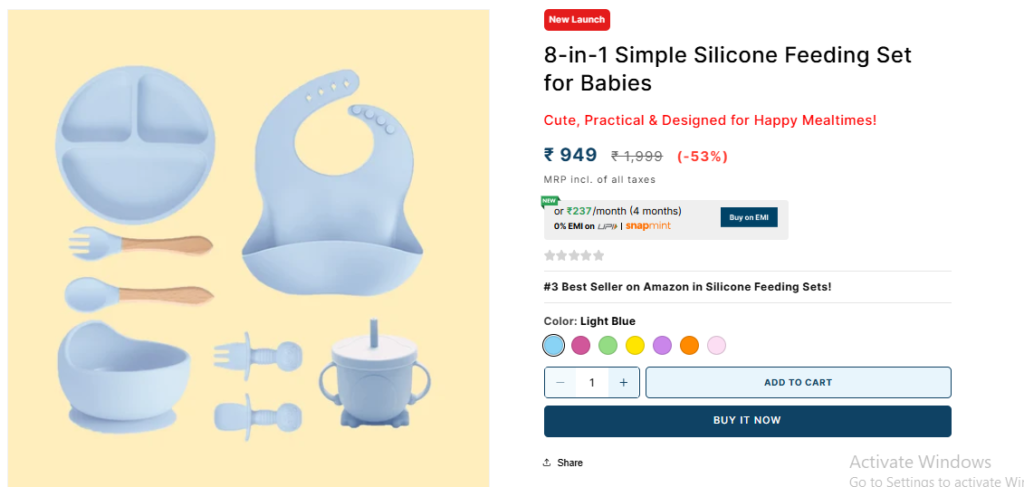
Introducing new foods is an exciting stage for parents and babies. As babies become ready for complementary foods and gradually develop self-feeding skills, practical feeding accessories can make mealtimes easier. A silicone food feeder is one option parents may consider for introducing suitable soft foods, fruits and other age-appropriate foods.
Silicone is widely used in baby feeding products because it is flexible, soft and relatively easy to clean. However, choosing a silicone feeder should involve more than simply checking its appearance. Parents should consider the baby’s age, developmental stage, product design, material information and manufacturer’s instructions.
What Is a Silicone Food Feeder?
A silicone food feeder is a baby feeding accessory made wholly or partly from silicone. Depending on the design, it can be used to offer appropriately prepared foods to babies who are beginning to explore different textures.
Some silicone feeders are designed for:
- Soft fruits
- Cooked vegetables
- Mashed foods
- Age-appropriate snacks
- Early self-feeding
- Teething-related food exploration
Different products have different purposes, so always check the manufacturer’s recommended use before introducing a feeder to your baby.
Why Choose a Silicone Food Feeder?
Silicone has become a popular material for baby feeding products because of its practical characteristics.
A well-designed silicone food feeder may offer:
- A soft and flexible texture
- Comfortable handling
- Easy cleaning
- Lightweight construction
- Simple everyday use
- A baby-friendly design
However, “silicone” alone does not determine whether a product is suitable for your baby. Product quality, design, age suitability and correct use remain important.
When Can a Baby Use a Silicone Food Feeder?
The appropriate age depends on the specific feeder and the baby’s developmental readiness.
Many babies begin complementary foods around six months, but parents should look for developmental readiness rather than relying only on a specific age.
Signs of feeding readiness may include:
- Good head and neck control
- Ability to sit with support
- Interest in food
- Ability to bring objects toward the mouth
- Reduced tendency to push food out of the mouth
Parents should follow appropriate infant-feeding guidance and consult a pediatrician if they are unsure whether their baby is ready for a particular food or feeding accessory.
How to Choose the Best Silicone Food Feeder
The best silicone food feeder is the one that matches your baby’s current needs.
1. Check the Material
Look for clear information about the material used in the product.
Choose a feeder specifically intended for baby feeding and follow the manufacturer’s recommendations for use, cleaning and temperature limits.
2. Check the Recommended Age
Always check the manufacturer’s recommended age range.
A product designed for an older baby may not be appropriate for a younger infant.
3. Consider the Size
The feeder should be appropriately sized for the baby’s hands and mouth.
An overly large or difficult-to-hold feeder may be inconvenient for babies learning to self-feed.
4. Look at the Design
Consider whether the feeder has:
- A comfortable grip
- Smooth edges
- Secure components
- Appropriate food openings
- Easy-to-clean surfaces
Avoid unnecessarily complicated designs that make cleaning difficult.
5. Check Cleaning Instructions
Baby feeding products require frequent cleaning.
Before purchasing, check whether the feeder is:
- Dishwasher-safe
- Easy to wash by hand
- Resistant to food residue
- Easy to disassemble, if applicable
Silicone Food Feeder for Fruits
Soft fruits can be part of complementary feeding when a baby is ready for them.
A silicone food feeder may be used with appropriately prepared soft fruits depending on the product design.
Examples of commonly offered soft fruits may include:
- Banana
- Ripe pear
- Mango
- Melon
- Soft cooked apple
Parents should prepare food according to the baby’s developmental stage and supervise the baby during every feeding session.
Silicone Food Feeder for Self-Feeding
As babies grow, they gradually become interested in holding food and feeding themselves.
A suitable feeding accessory may support the development of practical skills such as:
- Gripping
- Holding
- Hand-eye coordination
- Bringing food toward the mouth
- Exploring different textures
- Developing feeding independence
However, every baby develops at a different pace. Parents should allow the baby to explore food naturally rather than forcing them to use a particular feeding accessory.
Silicone Food Feeder vs Traditional Feeding Spoon
A silicone feeder and a feeding spoon serve different purposes.
| Feature | Silicone Food Feeder | Baby Feeding Spoon |
|---|---|---|
| Main use | Depends on product design | Purees and soft foods |
| Self-feeding | Some designs encourage it | Some are designed for self-feeding |
| Material | Often silicone | Silicone, plastic or other materials |
| Grip | Usually designed for easy holding | Varies by product |
| Food texture | Depends on feeder | Usually smooth or mashed foods |
Parents may use different feeding products as their baby’s feeding skills develop.
Silicone Food Feeder Safety Tips
A feeding accessory should always be used under adult supervision.
Supervise Every Feeding Session
Never leave your baby alone while eating.
Check the Product Before Use
Look for:
- Tears
- Cracks
- Loose parts
- Damaged edges
- Signs of excessive wear
Replace the product if it becomes damaged.
Use Appropriate Foods
Only provide foods that are suitable for your baby’s age and developmental stage.
Clean After Every Use
Wash the feeder thoroughly after each use according to the manufacturer’s cleaning instructions.
Avoid Overfilling
Follow the product’s recommended capacity and design.
Follow Manufacturer Instructions
Different silicone feeders may have different temperature, cleaning and usage requirements.
Common Mistakes Parents Make
Buying Based Only on Appearance
A colourful design may look appealing, but practical features matter more.
Ignoring Age Recommendations
Always verify that the feeder is appropriate for your baby’s current developmental stage.
Choosing a Difficult-to-Clean Product
Food residue can become trapped in complicated designs. Choose a feeder that can be cleaned thoroughly.
Assuming All Silicone Is the Same
Material quality and product manufacturing standards can differ. Check the product information carefully.
Leaving the Baby Unsupervised
Even a carefully designed feeder does not eliminate the need for adult supervision during feeding.
How to Clean a Silicone Food Feeder
Keeping baby feeding products clean is essential.
A basic cleaning routine can include:
- Remove remaining food immediately after feeding.
- Rinse the feeder with water.
- Wash it with an appropriate dishwashing method.
- Clean any grooves or openings carefully.
- Rinse thoroughly.
- Allow the product to dry completely before storage.
Always follow the manufacturer’s specific cleaning instructions because some products may have different care requirements.
Silicone Food Feeder for Travel
A silicone food feeder can be convenient for parents who regularly travel with their baby.
Its lightweight design can make it easier to carry in a diaper bag.
For travel, consider:
- Compact size
- Lightweight construction
- Easy cleaning
- Secure storage
- Simple design
- Appropriate food capacity
Carrying a small cleaning bag or spare feeding accessory can also make travel easier.
Why Choose Kids Station for Baby Feeding Products?
Kids Station offers practical baby feeding and childcare products designed around everyday parenting needs.
Parents looking for a silicone food feeder can explore different feeding solutions based on their baby’s age, feeding stage and daily routine.
Rather than choosing a product simply because it looks attractive, consider material information, age suitability, design, cleaning requirements and ease of use.
Frequently Asked Questions
What is a silicone food feeder?
A silicone food feeder is a baby feeding accessory made from silicone that can be used for suitable soft foods and feeding activities, depending on its specific design.
Is silicone food feeder safe for babies?
A silicone feeder designed specifically for baby feeding can be used when it is appropriate for the baby’s age and used according to the manufacturer’s instructions. Always supervise your baby while eating.
What age can babies use silicone food feeders?
The appropriate age varies by product and baby’s developmental readiness. Check the manufacturer’s recommended age before use.
Can I put fruit in a silicone food feeder?
Some silicone food feeders are designed for soft fruits. Check the product’s instructions and use food appropriate for your baby’s developmental stage.
How do I clean a silicone food feeder?
Clean it thoroughly after every use according to the manufacturer’s care instructions. Make sure all food residue is removed and allow it to dry completely.
Is silicone better than plastic for baby feeding?
Silicone and plastic have different properties. Rather than assuming one material is universally better, check the product’s intended use, material information, safety specifications and care requirements.
Final Thoughts
A silicone food feeder can be a practical addition to a baby’s feeding routine when the product is appropriate for the baby’s developmental stage and used correctly.
Before buying, consider material, age suitability, size, design, cleaning, grip and ease of use. Most importantly, supervise your baby during every feeding session and introduce foods according to appropriate infant-feeding guidance.
For parents looking for practical feeding essentials, Kids Station offers baby-care products designed to support everyday feeding and parenting needs.