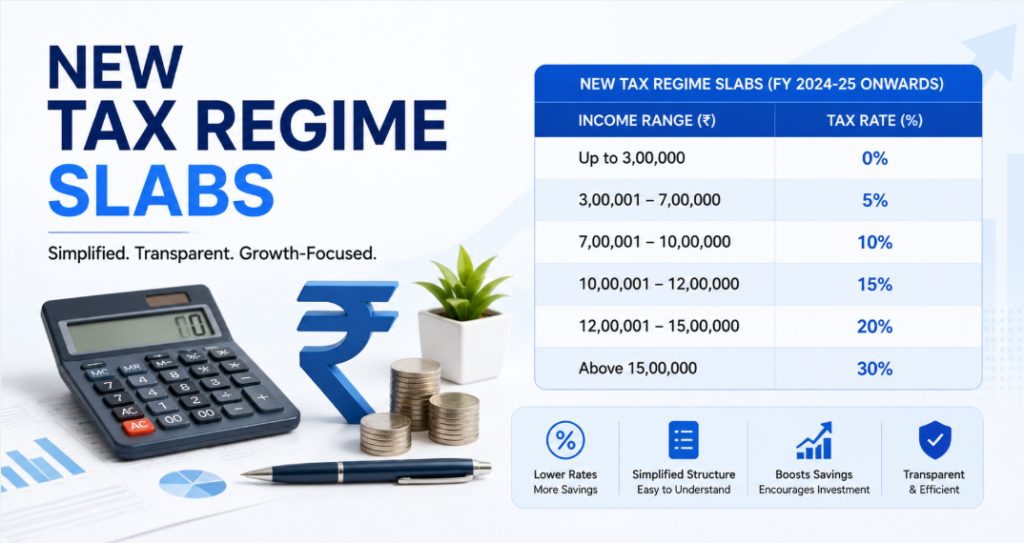
New Tax Regime Slabs
The Indian tax landscape has evolved significantly over the years, with the introduction of the new tax regime aimed at simplifying tax compliance and offering lower rates. As taxpayers gear up for the financial year (FY) 2026-27, understanding the differences between the old and new tax regime slabs is crucial for maximizing savings and making informed financial decisions. In this article, we’ll provide a comprehensive analysis of both tax regimes, examining the pros and cons, and outlining strategies for taxpayers to optimize their returns.
Understanding the Tax Regimes
- Old Tax Regime:
The old tax regime, which has been in place for several years, allows taxpayers to claim various deductions and exemptions. This can include benefits from investments in instruments like Public Provident Fund (PPF), National Pension Scheme (NPS), and housing loan interest payments, among others. The tax slabs under this regime are structured progressively, meaning that as an individual’s income increases, the tax rate also rises.
Old Regime Tax Slabs (for FY 2026-27):
- Income up to ₹2,50,000: Nil
- Income from ₹2,50,001 to ₹5,00,000: 5%
- Income from ₹5,00,001 to ₹10,00,000: 20%
- Income above ₹10,00,000: 30%
Advantages: – Deductions and exemptions can lead to significant tax savings, especially for those making substantial investments. – Taxpayers can customize their income tax strategy based on their financial situation.
Disadvantages: – The requirement to track and document various deductions can be cumbersome. – Higher effective tax rates for those with higher income levels.
- New Tax Regime:
Introduced in the FY 2020-21, the new tax regime offers a flatter structure with lower rates but limits the ability to claim deductions and exemptions. This regime appeals to individuals who prefer simplified tax calculations without the burden of maintaining records for various deductions.
New Regime Tax Slabs (for FY 2026-27):
- Income up to ₹2,50,000: Nil
- Income from ₹2,50,001 to ₹5,00,000: 5%
- Income from ₹5,00,001 to ₹7,50,000: 10%
- Income from ₹7,50,001 to ₹10,00,000: 15%
- Income from ₹10,00,001 to ₹12,50,000: 20%
- Income from ₹12,50,001 to ₹15,00,000: 25%
- Income above ₹15,00,000: 30%
Advantages: – Lower tax rates overall, making it appealing for those with higher incomes. – Simplified calculations without the need for tracking numerous deductions.
Disadvantages: – Loss of certain deductions may lead to higher taxes for individuals who regularly claimed these benefits.
Choosing Between the Two Regimes
The choice between the old and new tax regime largely depends on individual financial circumstances. Here are some considerations to help determine which regime may result in maximum savings:
- Evaluate Your Deductions: If you usually claim significant deductions (e.g., for home loans, insurance premiums, or investments in specified saving schemes), the old regime may provide better savings. However, if your deductions are minimal, the new tax regime could lead to lower tax liabilities.
- Income Level: For higher-income earners (above ₹15,00,000), the new tax regime’s lower rates are particularly attractive. Conversely, low and middle-income earners may still benefit from the deductions available in the old regime.
Practical Tips for Maximizing Savings
- Calculate Your Tax Liability: Use online tax calculators to assess how much tax you would owe under both regimes. This will help you visualize the difference in tax payable and make a more informed decision.
- Stay Updated: With deadlines and changes in tax regulations, staying informed is critical for effective tax planning. For instance, you can keep track of the income tax return extended due date and any updates related to tax regulations. Websites such as Bajaj Finance provide useful information on these subjects.
- Consult a Financial Advisor: If you’re unsure which tax regime suits you best, consider consulting a financial advisor. They can provide insights based on your specific financial situation and help with filing your income tax return.
Conclusion
As taxpayers prepare for FY 2026-27, understanding the nuances of the new and old tax regime slabs is essential for optimizing tax savings. While the new tax regime offers lower rates, its limited deductions may not be suitable for everyone. Conversely, the old regime, despite its complexities, may yield better savings for those making use of available deductions.
Ultimately, the choice between the new tax regime slabs and the old one comes down to personal financial circumstances and tax-related goals. By carefully evaluating the available options and utilizing financial tools and resources, taxpayers can navigate the choices effectively and maximize their savings in the upcoming financial year.
For more detailed information on income tax slabs, visit Bajaj Finance’s Tax Planning Guide.