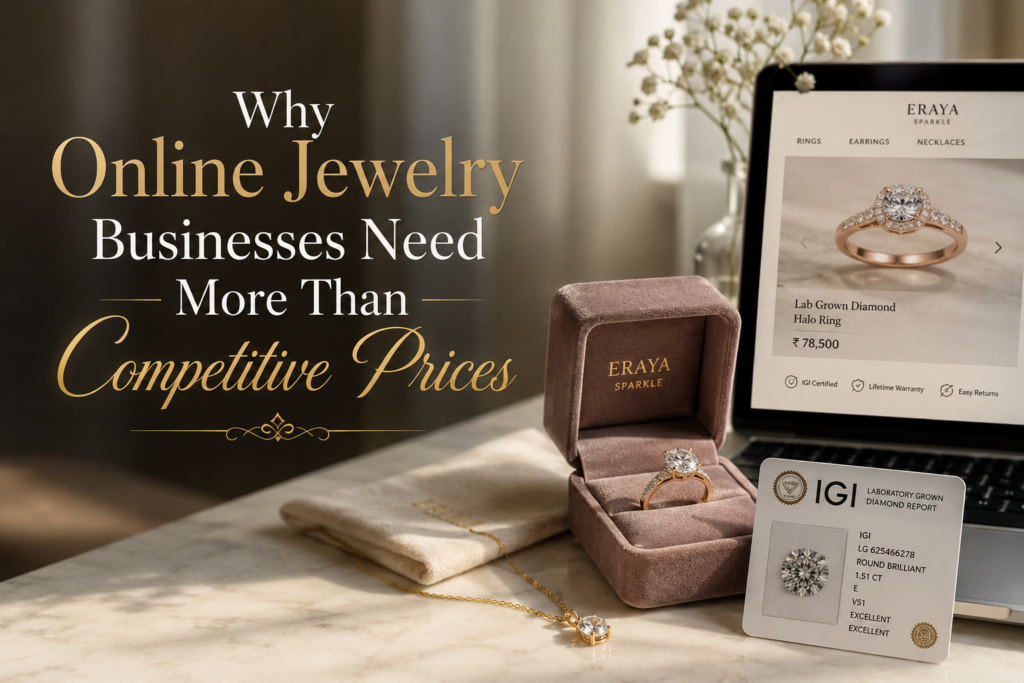
Price comparison takes seconds online. Open three tabs, check three numbers, and the lowest one looks like the obvious winner. But jewelry buyers rarely stop there, and the smartest ones never do. A low price answers one question. It says nothing about certification, service, or whether the ring arriving at your door matches what the listing promised.
This is exactly why the most successful online jewelry businesses compete on far more than price alone. Here’s what actually separates a business that survives discounts from one that builds a lasting customer base.
Price Is the Easiest Thing to Compete On, and the Weakest
Any retailer can lower the price. It takes no expertise, no investment in quality, and no long-term thinking. That’s precisely the problem. When price is the only differentiator, a business has nothing stopping a competitor from undercutting it tomorrow, and nothing keeping a customer loyal beyond the next lower number they find.
Jewelry, more than most categories, punishes this strategy. Buyers are making high-stakes, often emotional purchases. A business that competes purely on price is implicitly asking customers to gamble on quality and service they can’t verify from a listing alone.
What Buyers Actually Weigh Beyond the Price Tag
Price matters, but it’s rarely the deciding factor once a buyer starts comparing real options. A few things consistently outweigh it.
- Verifiable certification. A cheaper diamond with a vague or missing certificate is a worse deal than a slightly priced one with a lab-verified report, regardless of the number on the price tag.
- Design range and quality. A catalog offering genuine variety, from a classic solitaire to something like Halo rings for women, signals a business that’s invested in its product line, not just its pricing strategy.
- Post-purchase support. Warranty terms, resizing policies, and responsive customer service matter more after checkout than any discount mattered before it.
- Consistency and reputation. A business with a track record of accurate listings and reliable delivery earns repeat customers in a way that price alone never can.
Certification Is Where Trust Gets Built or Lost
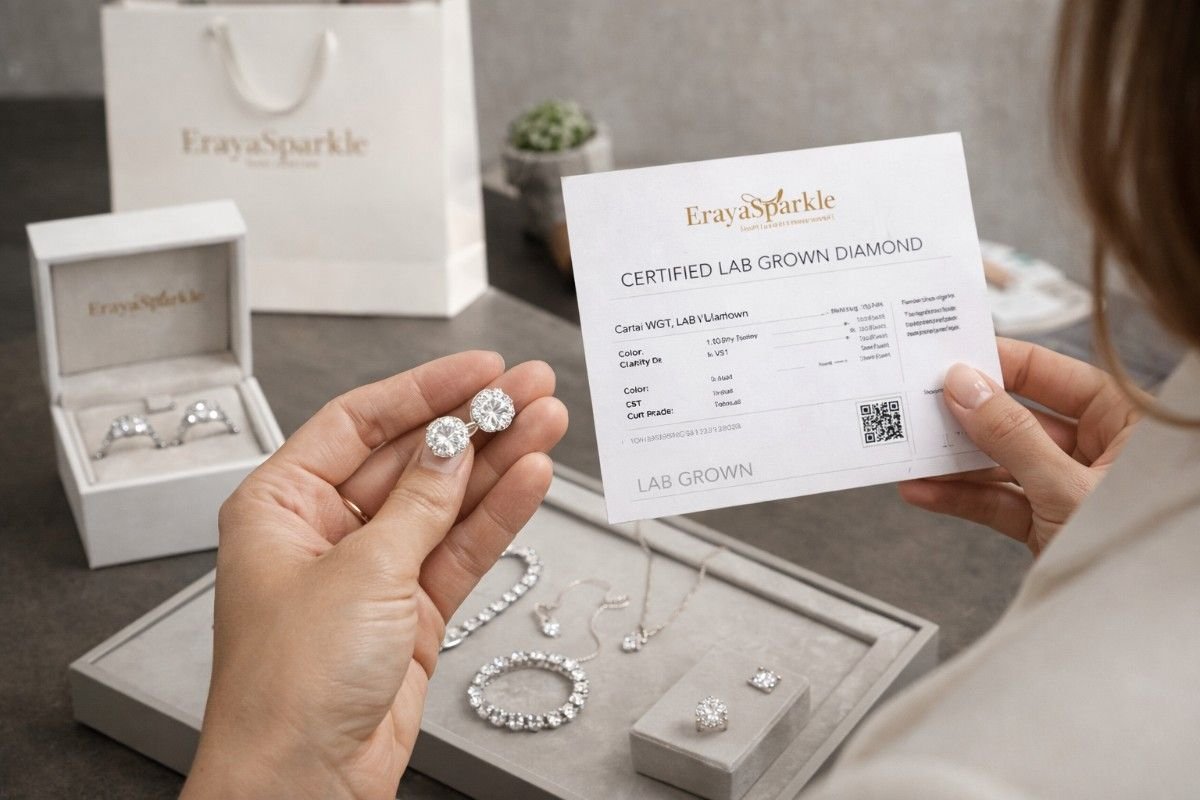
No competitive price offsets a missing or questionable certificate. This is the single area where cutting corners does the most damage to a jewelry business’s reputation, because it’s the one detail buyers can verify independently.
Businesses that consistently reference GIA or IGI certification, and make it easy to look up, build something a discount alone never can: a reputation for honesty. That reputation becomes a genuine competitive advantage over time, especially as buyers share their experiences with others considering the same purchase.
Service Quality Decides Whether Customers Come Back
A low price gets a first purchase. Service quality decides whether there’s a second one. This distinction matters enormously for online jewelry businesses, since repeat customers and referrals typically cost far less to earn than constantly acquiring new ones through price competition alone.
Strong service includes fast knowledgeable responses to questions before a purchase, clear communication during shipping, and straightforward handling of resizing or warranty claims afterward. None of this shows up in a price comparison, but all of it shows up in whether a customer returns or recommends the business to someone else.
Why Design Variety Matters More Than It Seems
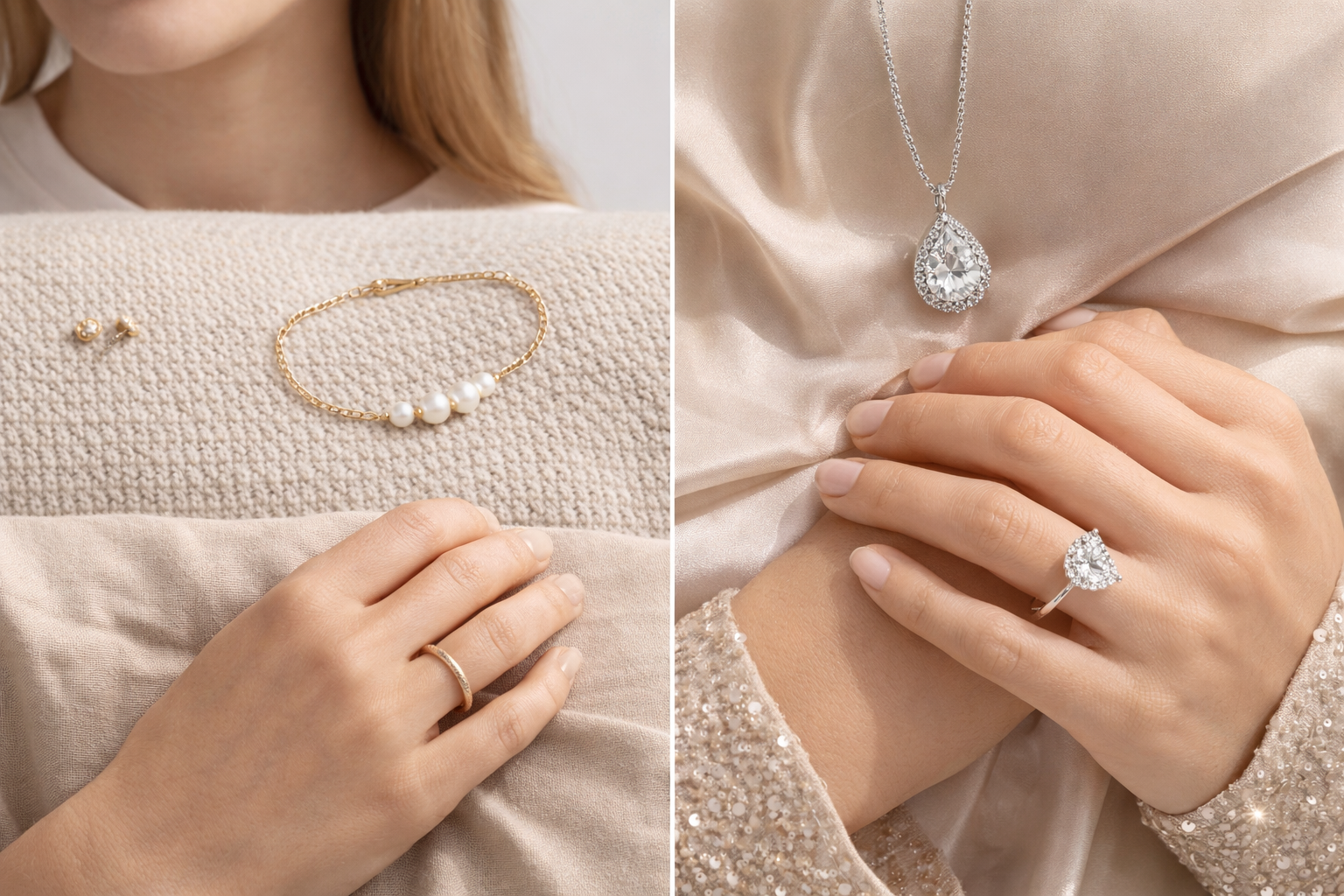
A narrow catalog focused purely on the cheapest possible pieces signals something to buyers, even if unintentionally: this business is optimizing volume, not for matching what customers want.
A wider, well-curated catalog does the opposite. It shows buyers that a business understands different styles, budgets, and occasions of matter, and has built a real selection around that understanding rather than a single low-cost offering. This becomes especially visible with meaningful purchases like engagement rings, where the right design matters as much as the right price.
The Role of Transparent Policies
Clear return, warranty, and resizing terms function as a form of competitive advantage that pure pricing can never replicate. A buyer choosing between two similarly priced rings will almost always choose the retailer whose policies remove risk, not the one that simply matches or slightly beats a price.
This becomes especially relevant for anyone planning to Buy engagement ring online, since the inability to physically inspect the piece beforehand makes policy clarity one of the biggest factors in the actual buying decision, often outweighing a modest price difference entirely.
Building a Business That Competes on More Than Price
A few consistent practices separate businesses that build lasting trust from those competing purely on the lowest number.
- Make certification easy to verify, not just easy to claim.
- Invest in genuine design variety, rather than a narrow, purely cost-driven catalog.
- Put policies in plain view before checkout, not buried until after a complaint.
- Respond quickly and knowledgeably to pre-purchase questions, since this often determines whether a browser converts at all.
- Treat reviews as feedback, not just marketing, addressing patterns in criticism rather than only showcasing the best ones.
None of these require sacrificing competitive pricing. They simply mean pricing stops being the only thing a business has to offer.
Frequently Asked Questions
Why isn’t a low price enough to win jewelry customers long-term? Because jewelry purchases are high-stakes and often emotional, buyers weigh certification, service, and policy clarity heavily alongside price, and a low price alone doesn’t address any of those deeper concerns.
What builds more trust than competitive pricing in jewelry retail? Verifiable certification, transparent policies, and responsive customer service tend to build far more lasting trust than price alone, since they address the real risks, buyers face a high-value purchase.
Does product variety actually affect customer trust? Yes. A catalog with genuine design range signals a more established, considered business, while a narrow, purely low-cost selection can suggest a business focused on volume rather than quality.
How important are return policies in the online jewelry buying decision? Very important, especially since buyers can’t physically inspect pieces before purchasing. Clear, generous return and resizing policies often influence the final decision as much as price does.
Can a jewelry business compete on price and still build strong trust? Yes, as long as competitive pricing is paired with strong certification, transparency, service quality, and clear policies, rather than being the only factor the business relies on.
The Bottom Line
Price gets a customer’s attention. It rarely earns their loyalty on its own. The online jewelry businesses that last are the ones pairing fair pricing with verifiable certification, genuine design variety, responsive service, and policies that remove risk rather than hide it. Competing on price alone is easy to copy. Competing on trust isn’t, and that’s exactly what makes it valuable.