Trapstar: How a London Streetwear Idea Became a Global Fashion Identity
Trapstar is more than a name printed across a hoodie. It represents a particular chapter in the development of modern British streetwear, where music, art, local identity, and fashion began influencing one another in increasingly powerful ways. Emerging from West London, Trapstar was created by childhood friends Mikey, Lee, and Will, who began by producing clothing for themselves and people around them. Rather than following the traditional route of launching a fashion company with large advertising campaigns and established retail networks, the founders built interest gradually through limited pieces, personal connections, and a sense of mystery. That independent beginning became one of the most important parts of the brand’s identity.
From Small London Beginnings to a Recognisable Name
The early Trapstar story is particularly interesting because the brand developed in an environment where creativity mattered more than conventional business strategy. Its founders were connected to London’s rapidly changing youth culture, where music, graphic design, photography, and fashion were increasingly overlapping. Early clothing was produced in small quantities, allowing the label to feel personal rather than mass-produced. According to accounts of the brand’s early years, its founders used unconventional methods to distribute their work, including pop-up events that helped them reach customers when traditional retail opportunities were limited. This approach allowed Trapstar to build a community before it became a widely recognised commercial label.
That beginning explains something important about Trapstar’s appeal. The brand did not initially feel like something designed for everyone. It felt like something discovered. The difference may seem small, but in streetwear it can be enormous. When people feel that a brand belongs to a particular culture or community, clothing can become a form of identity rather than simply another product.
The Meaning of “It’s a Secret”
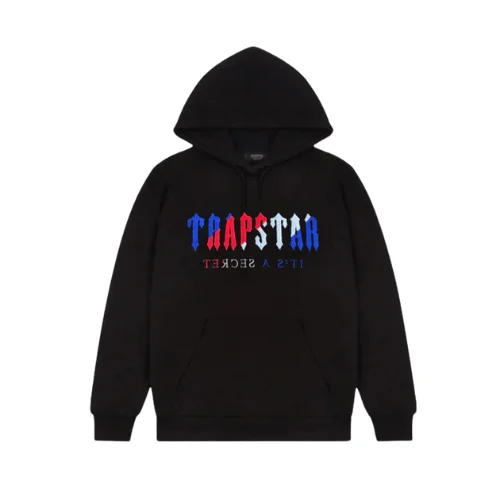
Few elements are as closely associated with Trapstar as its mysterious attitude and the phrase “It’s a Secret.” The concept helped establish an atmosphere around the label in which curiosity became part of the experience. Instead of explaining everything directly, Trapstar allowed its graphics, symbols, and designs to create questions.
That mystery also fitted naturally with the culture from which the brand emerged. Streetwear has often depended on scarcity, discovery, and word of mouth. A garment that is difficult to find can feel more meaningful because it carries a story about where it came from and who first discovered it. Trapstar understood this principle early. Its identity was not built solely around expensive-looking clothing; it was built around the feeling that the wearer was connected to something with its own language and history.
Trapstar and London’s Music Culture
Music has played a major role in Trapstar’s development. London’s grime and hip-hop scenes created an environment where artists were not only musicians but also cultural trendsetters. Clothing became part of the visual language surrounding music, and artists could introduce independent labels to audiences that traditional advertising might never reach.
Trapstar benefited from this relationship because its designs already reflected the atmosphere of London’s urban culture. As musicians and other public figures began wearing the label, the clothing gained visibility without losing the sense of underground credibility that made it attractive in the first place. Earlier reporting on the brand highlighted its connections with artists and celebrities, including Rihanna, while later years saw Trapstar become increasingly associated with British music and street culture.
The relationship worked in both directions. Music helped Trapstar Bag reach new audiences, while Trapstar gave artists another way to express their identity visually. A hoodie, jacket, or tracksuit could become part of the image surrounding a song, performance, or entire musical movement.
A Distinctive Design Language
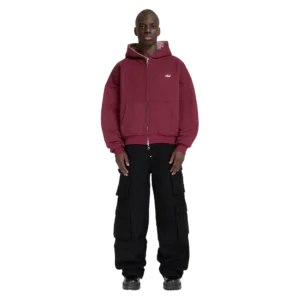
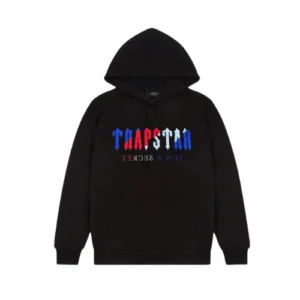
Trapstar’s visual identity is immediately recognisable. Strong graphics, prominent lettering, dark colour palettes, embroidered details, outerwear, hoodies, and tracksuits have all contributed to its signature appearance. The designs often combine simplicity with impact. A piece does not necessarily need a complicated pattern to attract attention; a carefully positioned logo or distinctive graphic can do the work.
This approach is particularly effective in streetwear because the clothing is designed to be noticed while remaining practical enough for everyday use. Trapstar’s collections have expanded over time, but the brand has generally maintained an aesthetic that feels confident rather than overly polished. Its designs sit comfortably between casual fashion and statement clothing.
The result is a style that can be recognised even when the wearer is not dressed from head to toe in the label. One jacket or hoodie can be enough to communicate the brand’s visual identity.
Why Limited Releases Create Excitement
Scarcity has always been an important part of streetwear culture, and Trapstar has used limited releases to maintain excitement around its products. When clothing appears in restricted quantities, customers may pay closer attention to announcements and new collections. The anticipation itself becomes part of the brand experience.
However, scarcity alone cannot create a lasting fashion label. If the designs do not connect with people, limited availability simply makes an unpopular product harder to find. Trapstar’s longevity suggests that exclusivity worked because it was supported by a recognizable cultural identity. People were not interested merely because an item was difficult to obtain; they were interested because the item represented a brand with a story.
The Influence of Celebrity Culture
Celebrity visibility helped Trapstar move beyond its original London audience. High-profile figures wearing independent streetwear can dramatically change how the wider public perceives a label. Trapstar experienced this effect through its association with major names in music and entertainment. Its relationship with Roc Nation was another important milestone in the company’s international development, giving the London label access to a much broader entertainment network.
Yet celebrity attention is only one part of the story. Many brands receive temporary attention when a famous person wears their clothing and then disappear when the trend changes. Trapstar managed to turn visibility into a broader cultural presence because its identity existed before the celebrity exposure. The famous names amplified the story rather than creating it from nothing.
Trapstar’s Place in Modern Streetwear
Today, Trapstar occupies an interesting position within streetwear. It retains the visual language of London’s underground fashion culture while operating on an international scale. That creates a challenge familiar to many independent labels: how can a brand become larger without losing the qualities that made people care about it initially?
Trapstar’s history demonstrates one possible answer. Instead of abandoning its origins, the label has continued to emphasize London, music, exclusivity, and distinctive graphic design. Its journey illustrates how streetwear can move from small-scale creativity to international recognition without completely separating itself from the culture that inspired it.
More Than Clothing
One reason Trapstar continues to attract attention is that its products communicate an attitude. Streetwear has always been about more than fabric. Clothing can represent independence, ambition, belonging, creativity, or rejection of conventional expectations. Trapstar μπουφαν name and imagery have consistently played with these ideas.
This is why the brand can mean different things to different people. For one person, a Trapstar hoodie may simply be a fashionable everyday item. For another, it may represent London’s influence on global street culture. For someone interested in fashion history, the brand provides an example of how independent labels can build international recognition through community and cultural relevance.
The Future of Trapstar
The future of Trapstar will depend on its ability to balance growth with authenticity. Fashion changes quickly, and streetwear is particularly sensitive to changing trends. A brand that becomes too predictable can lose excitement, while one that changes too dramatically can lose the identity that made it successful.
Trapstar therefore has an unusual advantage: it already possesses a strong history. Its London origins, distinctive graphics, relationship with music, and culture of mystery provide a foundation for future collections. Recent fashion activity has also shown that the brand is continuing to explore larger international platforms, including a Fall/Winter 2026–27 runway presentation in New York reported in February 2026.