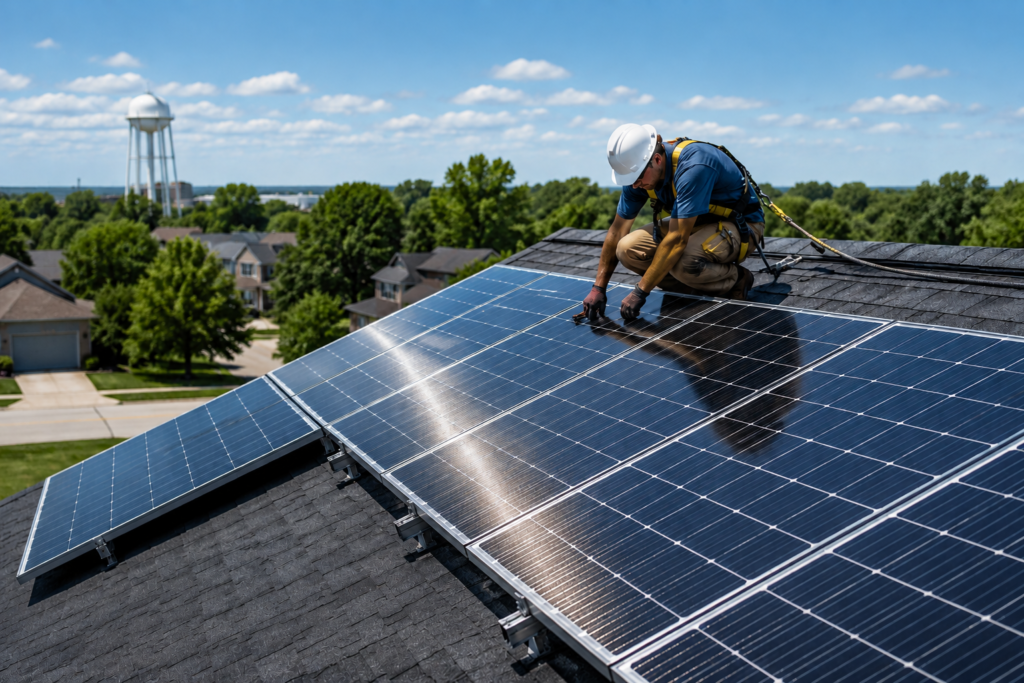
Rising utility costs and growing interest in energy independence have encouraged many homeowners to explore solar power. If you are looking for long-term savings while reducing your environmental impact, solar installation in Cedar Falls, Iowa, is a practical investment. Solar panels can be designed to offset a portion or most of a home’s electricity use, depending on system size, roof conditions, and household consumption.
Every property has unique energy needs, so planning is an important first step. Roof orientation, shading, electrical capacity, and household energy usage all influence system performance. Before moving forward with a project, homeowners should understand how these factors affect overall efficiency. Choosing solar installation in Cedar Falls, Iowa, allows you to evaluate your home’s energy potential while preparing for future utility savings and increased property value.
Why More Homeowners Are Choosing Solar Energy
Solar energy has become a popular choice because it offers long-term financial and environmental benefits. Once installed, solar panels convert sunlight into electricity that can power your home throughout the day.
The primary advantages include lower monthly electricity bills, reduced dependence on traditional utility providers, cleaner renewable energy production, minimal operating costs after installation, and the possibility of added residential property value. Research from the U.S. Department of Energy’s Lawrence Berkeley National Laboratory found that host-owned solar photovoltaic systems were associated with higher home sale prices in a multi-state study, although the value of an individual system depends on the home, market, system ownership, and other factors.
With proper planning and maintenance, a quality solar system can continue producing energy for decades.
Is Your Home Ready for Solar?
Not every home has identical installation requirements. A professional evaluation helps determine whether your property is suitable for solar panels.
Several factors influence system performance:
Roof Condition
Your roof should be in good structural condition before installation. Replacing an aging roof after solar panels are installed can increase future expenses.
Sunlight Exposure
Panels generate the most electricity when they receive direct sunlight throughout the day. Trees, neighboring buildings, and roof obstructions may reduce energy production.
Household Energy Usage
Reviewing your electricity consumption helps determine the appropriate system size. Solar systems are commonly sized in kilowatts (kW), and the right capacity depends on annual electricity consumption, available roof space, sunlight exposure, and the amount of electricity you want the system to offset.
Understanding the Installation Process
Installing a residential solar system follows a structured process designed to maximize efficiency and safety.
The process generally begins with an initial property assessment and energy-usage review. This stage can take several days to a couple of weeks, depending on the property’s complexity and the information available. A contractor then develops a custom system design, including the proposed kW capacity, panel layout, inverter configuration, estimated annual production, and projected energy savings.
After the design is approved, required permits and utility interconnection paperwork are submitted. Approval timelines vary by project and jurisdiction and can take several weeks. Once approvals are complete, professional installation may take roughly one to three days for a typical residential system, although larger or more complex projects can require additional time. Electrical connections, testing, and final inspections follow installation.
Inverter selection is another important technical consideration. String inverters connect multiple panels to a central inverter, while microinverters are installed at individual panels and can provide panel-level monitoring and performance advantages when roof orientations or shading conditions vary.
Solar Incentives, Utility Programs, and Payback
The financial return from a solar project depends on more than the equipment price. Homeowners should evaluate the total installed cost, usually considered in dollars per watt, along with financing costs, expected electricity production, utility rates, incentives, and the length of time they expect to own the system.
Federal residential solar tax-credit rules have changed, so homeowners should verify current IRS requirements before relying on a federal incentive in a payback calculation. The IRS states that the Residential Clean Energy Credit is not available for qualifying property placed in service after December 31, 2025. State, local, and utility programs may have separate eligibility rules and availability, so current program requirements should also be confirmed before signing a contract.
Cedar Falls homeowners should pay particular attention to utility-specific requirements. Cedar Falls is served by a municipal electric utility, and municipal utilities can establish their own interconnection and compensation terms. Before estimating payback, ask how excess solar generation is handled, whether net metering or another compensation arrangement applies, what interconnection requirements must be met, and whether program limits or application requirements affect the project. These details can materially change the financial outcome of a residential solar installation.
Long-Term Benefits Beyond Lower Bills
Solar energy provides more than immediate utility savings. Homeowners also benefit from greater energy stability and predictable operating costs over time.
Additional long-term considerations include reduced exposure to rising electricity rates, lower household carbon emissions, quiet system operation, minimal maintenance requirements, and reliable performance with modern equipment.
These benefits make solar an attractive option for homeowners planning to remain in their homes for many years.
Simple Maintenance Tips for Maximum Performance
Solar panels require relatively little maintenance, but regular care helps maintain energy production.
Remove leaves and debris when necessary, schedule periodic professional inspections, monitor energy production for unusual changes, trim nearby trees that create excessive shade, and keep surrounding roof areas clean.
Routine maintenance helps ensure consistent system efficiency throughout every season.
Planning for a Successful Solar Investment
Before committing to a solar project, compare system designs, evaluate projected energy production, and understand warranty coverage. Ask contractors to identify the proposed system size in kW, estimated production, installed cost per watt, inverter type, production guarantees, and panel and inverter warranty terms. Panel warranties commonly cover equipment for many years, while inverter coverage can differ substantially by manufacturer and product, so the actual terms should be reviewed rather than assumed.
Consider your long-term energy goals instead of focusing only on initial costs. A properly designed system should balance performance, durability, and future savings while fitting your home’s specific energy needs.
By taking time to understand the process and prepare your property, solar installation in Cedar Falls, Iowa, becomes a valuable investment that supports lower utility expenses, cleaner energy production, and greater energy independence for years to come.
Ready to explore your solar options? Request a professional property assessment and ask for a system proposal that clearly explains the recommended kW capacity, projected annual production, total installed cost, utility interconnection requirements, available incentives or programs, estimated payback, and equipment warranties. Verify current federal, state, and Cedar Falls utility requirements before making a final investment decision.
Source URL – https://shorturl.at/epQDn