mesotherapy for hair
Hair loss can affect both men and women and may occur for many different reasons, including genetics, hormonal changes, nutritional deficiencies, stress, certain medical conditions, and aging. As interest in non-surgical hair treatments continues to grow, mesotherapy for hair has become an option that some people explore to support scalp and hair health.
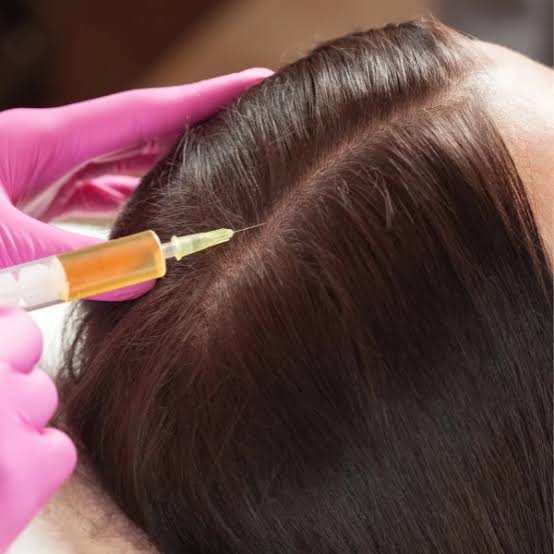
Hair mesotherapy is a minimally invasive procedure that involves delivering small amounts of selected substances into the scalp using multiple superficial injections. Depending on the treatment protocol, the injected solution may contain vitamins, minerals, amino acids, medications, or other compounds.
However, mesotherapy is not a single standardized treatment. The ingredients, injection depth, frequency, and treatment goals can vary significantly between clinics and practitioners. Anyone considering the procedure should have a detailed consultation with a qualified medical professional to determine whether it is appropriate for their type and cause of hair loss.
What Is Mesotherapy for Hair?
Mesotherapy for hair is a scalp treatment designed to deliver active ingredients directly into or around the superficial layers of the scalp. The theory behind the treatment is that localized delivery may help create a favorable environment for existing hair follicles.
During a typical session, a practitioner uses a fine needle or specialized injection device to administer small quantities of a treatment solution across areas affected by thinning hair. The exact formulation varies depending on the practitioner and the patient’s needs.
Some formulations may include nutrients or compounds intended to support scalp health, while others may contain pharmaceutical substances. Because there is no universally accepted mesotherapy formula for hair loss, patients should ask exactly what will be injected and why.
How Does Hair Mesotherapy Work?
The proposed mechanism of hair mesotherapy depends largely on the substances used in the injections. Some practitioners believe that delivering selected compounds locally may support follicular function and improve the scalp environment.
The repeated microinjections may also produce a localized healing response. However, the scientific evidence for hair mesotherapy remains less established than for some other evidence-based hair-loss treatments.
Importantly, hair loss has many possible causes. If follicles have been permanently destroyed or if an underlying medical condition is responsible for hair loss, mesotherapy may not address the primary problem.
For this reason, identifying the cause of hair loss should come before selecting a treatment.
Who May Consider Hair Mesotherapy?
Mesotherapy may be considered by adults experiencing certain forms of hair thinning where viable hair follicles remain. It may be discussed as part of a broader hair-management plan rather than as a guaranteed standalone solution.
Potential candidates may include people experiencing:
- Generalized hair thinning
- Early-stage pattern hair loss
- Reduced hair density
- Certain scalp-related concerns
- Hair shedding associated with specific nutritional or lifestyle factors
Suitability depends on the underlying diagnosis, medical history, medications, scalp condition, and the ingredients proposed for injection.
People experiencing sudden or unexplained hair loss should seek medical evaluation before undergoing cosmetic hair treatments. Sudden shedding can sometimes indicate an underlying medical issue that requires specific treatment.
What Happens During a Mesotherapy Session?
The procedure generally begins with an assessment of the scalp and hair. The practitioner may identify areas of thinning and discuss the treatment plan.
The scalp is cleaned before treatment. Depending on the individual’s sensitivity and the protocol being used, a topical anesthetic may be applied.
The practitioner then makes a series of small injections across the targeted areas of the scalp. The injections are usually superficial and spaced across the treatment area.
Patients may experience mild pinching, pressure, or stinging during the procedure. The duration varies depending on the size of the treatment area and the technique used.
After treatment, the scalp may appear slightly red or swollen. Small injection marks may also be temporarily visible.
Does Mesotherapy for Hair Hurt?
Pain levels vary from person to person. Because the procedure involves multiple small injections, some discomfort can be expected.
Many patients describe the sensation as brief pinching or stinging. A topical numbing product may be used to improve comfort when appropriate.
Patients should tell their practitioner if they have a low pain tolerance or a history of sensitivity to anesthetic products.
Benefits of Mesotherapy for Hair
One of the reasons people consider mesotherapy is its minimally invasive nature compared with surgical hair restoration procedures.
Potential advantages may include:
- A non-surgical treatment approach
- Short treatment sessions
- Minimal interruption to daily activities
- Localized delivery of selected substances
- Ability to target areas of thinning
- Potential use alongside other hair-loss strategies
However, these potential benefits should not be interpreted as proof that mesotherapy will regrow hair in every patient. Results depend on the cause and severity of hair loss and the specific treatment protocol used.
Mesotherapy for Different Types of Hair Loss
Not all hair loss responds in the same way to treatment. Pattern hair loss, temporary shedding, alopecia areata, traction-related hair loss, and hair loss caused by nutritional or hormonal problems require different approaches.
For example, androgenetic alopecia is strongly influenced by genetics and hormones. Treatments with established evidence may be recommended depending on the patient’s sex, age, health, and diagnosis.
If hair loss is related to iron deficiency, thyroid problems, severe stress, or another medical issue, addressing the underlying cause may be more important than receiving scalp injections.
Therefore, mesotherapy should ideally be considered only after an appropriate assessment of the hair-loss pattern.
How Many Mesotherapy Sessions Are Needed?
There is no universal treatment schedule for hair mesotherapy. The number of sessions depends on the formulation, treatment objective, severity of thinning, and practitioner protocol.
Some clinics recommend an initial series of sessions followed by maintenance treatments. Others may use different intervals.
Because treatment schedules vary, patients should avoid choosing a plan solely because it promises a specific number of sessions or guaranteed results.
A qualified practitioner should explain what evidence supports the recommended schedule and how progress will be evaluated.
When Can You See Results?
Hair grows slowly, so changes in density cannot usually be assessed immediately after treatment.
If a person responds to a treatment, visible changes may take several weeks or months. Progress should ideally be evaluated using consistent photographs and clinical assessments rather than relying only on day-to-day observations.
It is also important to understand that reducing hair shedding and stimulating new growth are different goals. Some patients may notice changes in shedding before any visible improvement in hair density.
Side Effects and Risks
Although mesotherapy is minimally invasive, it is still an injectable procedure and carries potential risks.
Temporary side effects can include:
- Redness
- Swelling
- Tenderness
- Mild pain
- Itching
- Bruising
- Small injection marks
More serious complications can occur if the procedure is performed improperly or if unsuitable substances are injected. These may include infection, allergic reactions, inflammation, scarring, or tissue injury.
The risks depend partly on the substances used. Patients should therefore ask for the exact ingredients, their purpose, possible side effects, and whether they are approved or appropriate for the intended use.
Aftercare Following Hair Mesotherapy
Aftercare instructions vary depending on the treatment used. Patients may be advised to avoid excessive touching or scratching of the scalp immediately after treatment.
Depending on the practitioner’s instructions, patients may also need to temporarily avoid strenuous exercise, swimming, saunas, or certain scalp products.
Following the provider’s instructions carefully can help minimize irritation and reduce the risk of complications.
Patients should contact their healthcare provider if they develop significant swelling, increasing pain, pus, fever, severe redness, or other concerning symptoms after treatment.
Mesotherapy vs. Other Hair-Loss Treatments
Mesotherapy is only one option among many approaches to hair loss. Depending on the diagnosis, a medical professional may recommend topical treatments, oral medications, platelet-rich plasma procedures, low-level light-based treatments, or hair transplantation.
These treatments work differently and have different levels of supporting evidence.
Hair transplantation, for example, physically moves follicles from one area of the scalp to another and may be appropriate for selected patients with permanent pattern hair loss. Non-surgical treatments generally aim to preserve or improve the function of existing follicles.
Rather than selecting a treatment based on popularity, patients should identify the underlying cause of hair loss and choose an approach appropriate for their individual situation.
How to Choose a Hair Mesotherapy Provider
Choosing a qualified healthcare professional is particularly important because mesotherapy involves injections.
Before treatment, ask:
- What is causing my hair loss?
- What substances will be injected?
- Why are these ingredients being recommended?
- How many treatments are expected?
- What evidence supports the treatment?
- What are the possible side effects?
- What happens if the treatment does not work?
- Are there alternative treatments with stronger evidence?
The practitioner should explain the procedure clearly and provide realistic expectations rather than promising guaranteed hair growth.
Final Thoughts
Mesotherapy for hair is a minimally invasive approach that uses multiple scalp injections to deliver selected substances to areas affected by thinning. It has attracted interest among people looking for non-surgical options for hair loss, but the evidence and treatment protocols are variable.
The most important step is determining why the hair is thinning. A proper diagnosis can help identify whether mesotherapy is appropriate or whether another treatment would be more suitable.
If you are considering hair mesotherapy, consult a qualified medical professional, ask about the exact substances being used, understand the potential risks and benefits, and maintain realistic expectations. Hair-loss treatment is highly individual, and the best approach depends on the cause, pattern, severity, and overall health of each patient.