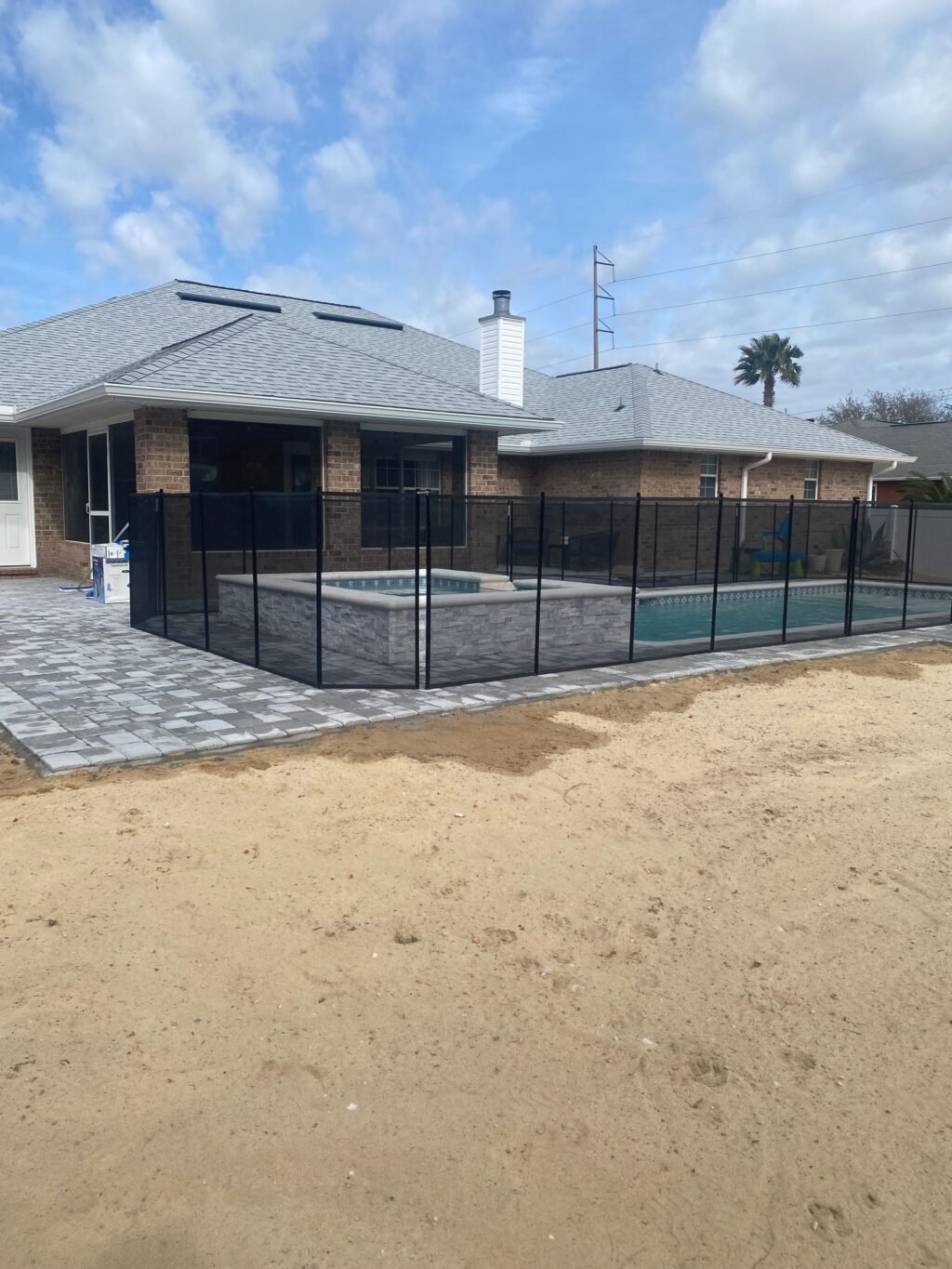
Dallas inspectors have one favorite thing to check when they walk a new pool site, and it’s the fence. Everything else about the pool can be flawless, and a fence that misses code will still hold up the entire project. This one covers what Dallas-area code actually requires, why inspection wait times have crept up lately, and what tends to catch homeowners off guard, whether they’re building new or fixing up something that’s been sitting there for decades.
What the Code Actually Requires
Dallas and most surrounding cities follow a version of the International Residential Code, and the numbers involved are exact, not suggestions. A compliant fence stands at least 48 inches tall, measured from the ground on the outside of the barrier. Gaps can’t exceed 4 inches. That’s the threshold that keeps a small kid from squeezing through, or climbing the fence like it’s a ladder, which some kids will absolutely try.
Height alone doesn’t satisfy the rule, though, and this trips people up constantly. Rails spaced too far apart turn a tall fence into a climbable one, so inspectors check spacing and bar design just as carefully as they check the actual height. A fence can clear 48 inches easily and still fail on that one detail.
The barrier also has to fully enclose the pool, and that includes wherever the house itself forms part of the boundary. A back door or sliding glass door opening straight onto the pool deck usually needs its own layer of protection, a self-closing mechanism, an alarm, or a separate gate. Skipping this is a pretty common reason a fence plan gets bounced back before construction even starts.
New Construction and Longer Inspection Queues
Dallas’s building boom has stretched inspection schedules across a lot of the surrounding suburbs, more than people realize. If a fence plan misses code the first time, the wait for a new inspection slot can run weeks, not days, and that delay pushes the pool opening back well past whatever date the family had circled on the calendar.
Builders on new subdivisions have adapted by submitting the fence plan alongside the pool permit instead of treating it as an afterthought. Homeowners retrofitting an older yard don’t always get that same head start. That’s part of why DIY fence jobs run into more trouble than the professionally planned ones, more often than not.
Gate Hardware Inspectors Flag Most
Gates cause more failed inspections than anything else on the fence, by a wide margin. It has to swing away from the pool and latch on its own, with nobody needing to give it a push. The release sits high and set back far enough that a kid reaching over or through the gate can’t trip it.
Here’s the catch though: a latch that works fine when you test it by hand doesn’t always close reliably from the light push a gate actually gets in everyday use. That mismatch is a common reason for a second failed inspection. Test the gate the way it’ll really be used, not just once during install and then never again.
Retrofitting Older Dallas Neighborhoods
A lot of older Dallas neighborhoods have pools that predate the current code entirely, so adding or upgrading a fence there usually means working around grown trees, existing patios, and ground that was never quite level to begin with.
Sloped yards need extra attention, since height gets measured from the ground at the base of the fence. A barrier crossing a slope needs stepped panels or new grading to hold its height across the whole run, and skipping that step is a common way older-home retrofits fail their first inspection.
Mature trees are their own issue too. A limb hanging over the fence line, or shrubs planted close enough to climb, can undercut an otherwise solid barrier. Inspectors in older neighborhoods watch for exactly this, since landscaping that’s been there for decades usually grew in long before current code even existed.
Planning a Fence That Passes the First Time
Get the fence plan reviewed before construction starts, not after the fact. Working with a company that installs pool fences across the Dallas area tends to speed things up, since they already know what local inspectors check line by line.
Keep records once it’s built too. Photos of the finished gate and a copy of the approved permit are worth having around if the home sells later, or if an insurer starts asking questions you weren’t expecting.
A Fence That Does More Than Pass Inspection
Meeting code is the starting line here, not the finish. Texas Pool Barrier designs pool fences for Dallas-area families that clear local requirements and hold up to daily use, using hardware and materials built to survive years of Texas summers without falling apart.
A fence that passed inspection five years ago is worth a second look today, especially if the landscaping’s grown in since then, or a gate hinge has started sticking.
Texas Pool Barrier builds and installs code-compliant pool safety fences for homeowners across the Dallas-Fort Worth area and greater Texas. The company focuses on durable materials and self-latching gate systems designed around local inspection standards. Learn more at texaspoolbarrier.com.