Introduction
The manufacturing industry has experienced significant changes with the development of advanced machining technologies. Traditional cutting tools have been used for decades in workshops and industries because of their simplicity and reliability. However, modern production requirements demand higher accuracy, faster output, and improved efficiency.
A CNC tool has become an essential part of modern machining operations because it provides automated control, precision, and consistent performance. While traditional cutting methods remain important, CNC-based solutions are becoming more popular among manufacturers seeking higher productivity and accuracy.
Understanding the differences between traditional cutting tools and CNC solutions helps businesses choose the right equipment according to their production needs, budget, and machining requirements.
What Are Traditional Cutting Tools?
Traditional cutting tools are manually operated tools that require direct control from skilled operators. These tools have been used in industries for machining, shaping, drilling, and cutting different types of materials.
Examples of traditional cutting tools include hand-operated drills, manual milling cutters, turning tools, saws, and files. These tools are commonly used in small workshops, repair applications, and low-volume manufacturing processes.
The performance of traditional tools depends largely on the operator’s experience. Skilled machinists use their knowledge to control cutting speed, pressure, and movement to achieve the required results.
Although traditional tools are affordable and easy to maintain, they may have limitations when industries require large-scale production, complex designs, and extremely accurate components.
What Are CNC Tools?
CNC tools are advanced machining tools used with computer-controlled machines. These tools operate according to programmed instructions that control machine movement, speed, and cutting operations.
A CNC tool helps manufacturers achieve high accuracy and repeatable results with minimal manual intervention. These tools are widely used in automotive, aerospace, medical equipment, engineering, and manufacturing industries.
Different types of CNC machine systems are available based on specific machining applications. These include CNC milling machines, CNC turning machines, CNC drilling machines, CNC grinding machines, and CNC machining centers.
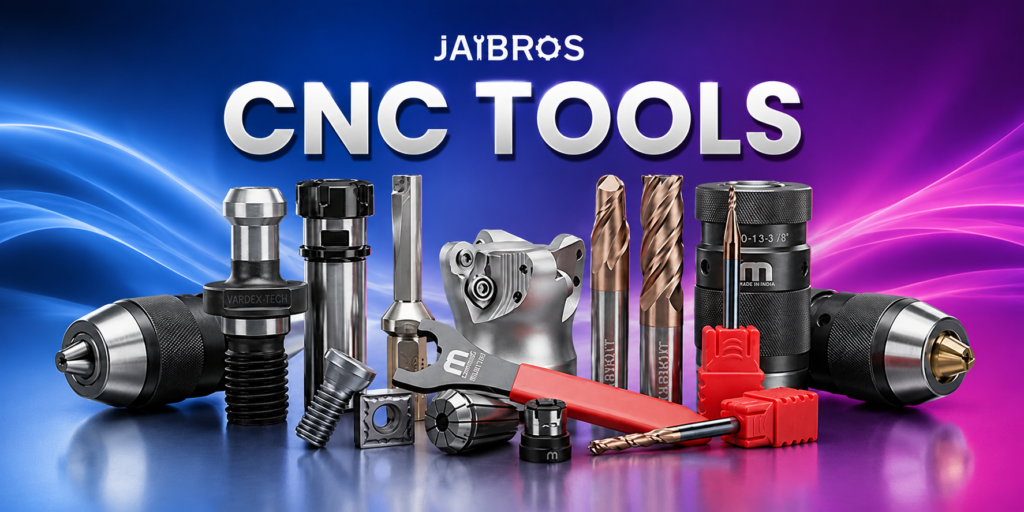
Modern CNC machining uses various cutting accessories such as carbide drill, thread mill, turning inserts, and milling cutters to achieve precise and efficient operations.
Key Differences Between CNC Tools and Traditional Cutting Tools
1. Automation and Operation
The biggest difference between CNC and traditional cutting tools is the level of automation.
Traditional cutting tools require continuous manual control. Operators need to adjust tool movement, cutting speed, and positioning during machining operations.
CNC technology uses programmed instructions to perform machining tasks automatically. Once the program is set, the machine can complete repeated operations with consistent accuracy.
This automation reduces human errors and improves overall production efficiency.
2. Accuracy and Precision
Accuracy is one of the most important factors in modern manufacturing.
Traditional cutting tools depend on operator skills and experience. Even experienced workers may face small variations between different components.
CNC systems provide excellent precision because computer programs control every movement. This makes them suitable for industries where even minor measurement differences can affect product quality.
Measurement tools such as a digital caliper vernier are also commonly used alongside machining equipment to verify component dimensions.
3. Production Speed
Traditional machining processes usually take more time because operators manually perform each operation. This makes them suitable for smaller jobs but less efficient for mass production.
CNC machines can complete complex machining operations faster because they work continuously with programmed instructions. This allows manufacturers to increase output while maintaining consistent quality.
For businesses handling large production volumes, investing in advanced machining solutions can significantly improve productivity.
4. Skill Requirements
Traditional cutting tools require experienced operators who understand machining techniques, materials, and tool handling.
CNC machines require operators with programming knowledge and technical skills. Although training is necessary, automation reduces the physical effort required during production.
Modern industries often combine skilled machinists with CNC technology to achieve better results.
5. Cost Comparison
Traditional tools usually have lower initial costs, making them suitable for small businesses and workshops with limited budgets.
CNC machines and accessories require higher investment initially. However, their benefits include reduced material waste, faster production, improved accuracy, and lower operational costs over time.
Businesses should consider long-term productivity rather than only the initial purchase price.
Types of CNC Machine Applications
Different industries use various CNC systems depending on their requirements.
CNC milling machines are commonly used for creating complex shapes, slots, and detailed components. CNC turning machines are preferred for cylindrical parts and precision shafts. CNC drilling machines are used for accurate hole-making operations.
Manufacturers select suitable cutting tools based on material type, machining process, and required surface finish.
For example, a carbide drill provides excellent hardness and durability for high-speed drilling applications. Similarly, a thread mill helps create accurate threads with better control and improved tool life.
Advantages of Using CNC Tools
Higher Productivity
CNC machining allows manufacturers to complete multiple operations with minimal manual involvement. This improves production speed and reduces downtime.
Better Quality Control
Automated machining processes maintain consistent quality because every operation follows programmed instructions.
Ability to Produce Complex Designs
Modern industries often require complicated components that are difficult to manufacture manually. CNC technology allows precise production of complex shapes and designs.
Reduced Material Waste
Accurate cutting operations reduce errors and help manufacturers save raw materials.
Limitations of Traditional Cutting Tools
Traditional tools are still useful, but they have certain limitations:
- Lower production speed
- Greater dependency on operator skills
- Limited ability for complex designs
- Higher chances of human errors
- Difficult to maintain consistency in large production runs
However, they remain valuable for repair work, customized jobs, and small-scale applications.
How to Choose the Right Machining Solution?
Selecting between CNC and traditional cutting tools depends on several factors:
- Production volume
- Required accuracy
- Material type
- Budget
- Project complexity
For small jobs and occasional machining tasks, traditional tools may be sufficient. For industries requiring high production capacity and precision, choosing the right CNC solution is more beneficial.
Businesses looking for reliable suppliers can explore options by searching for CNC tools near me to find suitable machining products and services.
Purchasing from trusted suppliers offering CNC tools online also allows manufacturers to compare different products, specifications, and prices before making a decision.
Importance of Selecting Quality CNC Tools
The performance of machining operations depends greatly on tool quality. Poor-quality tools can cause premature wear, inaccurate results, and increased production costs.
Choosing the best CNC tools ensures better cutting performance, longer tool life, and improved machining efficiency.
High-quality cutting solutions made from durable materials such as carbide are preferred because they provide excellent strength and resistance against wear during demanding applications.
Future of Machining Technology
The future of manufacturing is moving toward automation, smart technology, and improved precision. CNC machining will continue to grow because industries require faster production and better quality control.
Traditional tools will continue to support specific applications where flexibility and low investment are important. However, advanced machining technologies will remain the preferred choice for industries focused on efficiency and innovation.
FAQs
1. What is the main difference between CNC and traditional cutting tools?
The main difference is automation. Traditional tools require manual operation, while CNC systems use computer-controlled programming for accurate machining.
2. Are CNC tools better than traditional cutting tools?
CNC solutions are better for industries requiring high accuracy, faster production, and consistent quality. Traditional tools are suitable for simple and low-volume applications.
3. What are the common types of CNC machine systems?
Common types include CNC milling machines, CNC turning machines, CNC drilling machines, and CNC machining centers.
4. Why are carbide drill and thread mill tools used in CNC machining?
Carbide drill and thread mill tools provide excellent durability, accuracy, and cutting performance, making them suitable for demanding machining operations.
5. Where can manufacturers purchase reliable machining tools?
Manufacturers can buy quality machining products from trusted suppliers offering CNC tools online with detailed specifications and support.
Conclusion
CNC technology and traditional cutting tools both have their own advantages depending on manufacturing requirements. Traditional tools remain useful for small-scale jobs, maintenance work, and applications requiring manual flexibility. However, industries focused on precision, speed, and large-scale production benefit more from advanced machining solutions.
Jaibros provides a wide range of high-quality machining and measurement products, including CNC tools, carbide drill solutions, thread mill products, and precision measuring instruments. With a focus on reliability, accuracy, and performance, Jaibros helps industries improve their machining operations and achieve better production results.