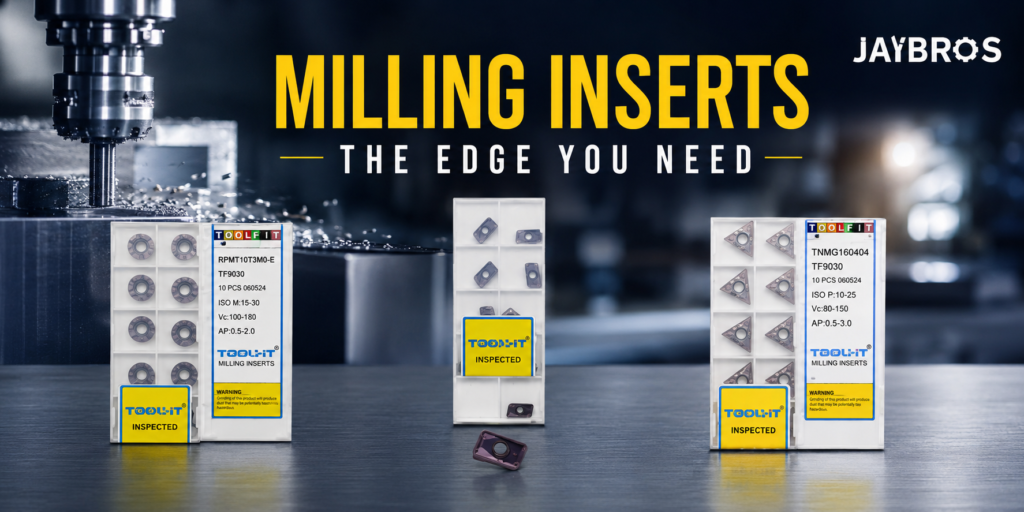
If you work on a CNC machine or run a workshop, you have probably heard machinists argue about which insert style saves more time. Some swear by high feed cutters. Others stick with standard inserts because that’s what they know. The truth is, both styles have a place on the shop floor, and knowing when to use each one can save you hours of machining time and a good amount of tool cost too.
In this article, we will break down how these two insert styles work, where they differ, and how to pick the right one for your job. We will keep the language simple so that even someone new to CNC milling can follow along.
What Are Milling Inserts?
Before comparing the two types, let’s understand the basics. Milling insert are small, replaceable cutting tips made of carbide or other hard materials. They are clamped onto a tool body (called a cutter or holder) and do the actual job of removing metal from a workpiece. Once an insert wears out, you simply rotate it to a fresh edge or replace it, instead of throwing away the whole cutting tool. This is what makes indexable tooling so popular in modern machine shops — it saves money and keeps production running smoothly.
There are many types of milling insert used across the industry, including round inserts, face milling insert, thread milling insert, and even CBN milling insert for hardened materials. But when it comes to how a cutter actually engages the metal, inserts generally fall into two feed categories: standard and high feed.
Understanding Standard Milling Inserts
Standard inserts are the traditional style most machinists grew up using. They usually have a larger lead angle, often somewhere between 45 and 90 degrees, and a cutting edge that goes fairly deep into the material with each pass. This design produces a thicker chip and removes a good chunk of material per rotation, but it also puts more pressure on the spindle and the tool.
Because of this deeper engagement, standard inserts work well on stable setups with rigid machines and shorter tool overhangs. They are dependable, widely available, and suit almost every general milling task, from roughing to semi-finishing. If your machine is older or your fixture is not perfectly rigid, standard inserts are often the safer bet.
Understanding High Feed Milling Inserts
High feed inserts take a different approach. Instead of cutting deep into the material, they use a very shallow depth of cut combined with a low lead angle, sometimes as low as 10 to 15 degrees. This shape allows the insert to push material sideways rather than straight down, which reduces the load on the spindle even while moving the table at a much faster feed rate.
The main advantage here is speed. Because the cutting force is directed away from the spindle instead of straight into it, machines can run at higher feed rates without excessive vibration or tool deflection. This makes high feed cutters especially useful for roughing large amounts of material quickly, working with long tool overhangs, or machining on less rigid setups like thin-walled parts.
Key Differences Between the Two
Let’s line up the core differences side by side, in plain terms:
Cutting Angle: Standard inserts have a steep lead angle, while high feed inserts use a shallow, wedge-like angle that reduces radial pressure.
Depth of Cut: Standard inserts usually take a deeper cut per pass. High feed inserts take a shallow cut but move faster, so total material removal per minute can still be very high.
Spindle Load: High feed inserts direct force axially, which means less strain on the spindle. Standard inserts create more radial force, which needs a sturdier machine setup.
Speed of Material Removal: High feed cutters are built for fast roughing, especially on parts with a lot of material to remove. Standard inserts are more balanced and often better for finishing passes or moderate stock removal.
Machine Requirements: High feed milling works best on machines with good horsepower and higher spindle speeds. Standard inserts are more forgiving and work on a wider range of machines, including older or lower-powered ones.
Best Use Case: Standard inserts are a safe all-rounder for general milling operations, while high feed cutters shine in high-volume roughing, mold and die work, and situations where long tool extensions are unavoidable.
Which One Should You Choose?
There is no single “better” option here. It depends entirely on your job. If you are doing heavy roughing on a rigid, high-powered machine and want to remove material fast, high feed cutters are usually the smarter pick. They cut cycle times noticeably in many roughing operations.
On the other hand, if you need dependable, balanced performance across a variety of jobs, including finishing work, or if your machine setup is less rigid, standard milling insert remain a solid and practical choice. Many shops actually keep both types on hand and switch between them depending on the operation, the material, and the machine they are running.
It also helps to think about the material you’re cutting. Softer materials like aluminum often respond well to high feed strategies because the machine can push through them quickly. Tougher materials like hardened steel may call for more careful insert selection, sometimes even stepping up to specialty options like CBN milling insert for extra wear resistance.
Final Thoughts
Both high feed and standard milling insert are valuable tools in a machinist’s toolbox. The real skill lies in matching the insert type to the job at hand — your machine’s rigidity, the material you’re working with, and how much stock you need to remove. Understanding this difference not only improves cutting efficiency but also extends tool life and reduces unnecessary machine strain.
Whether you are setting up a new roughing operation or simply trying to understand your existing tooling better, knowing how these inserts behave will help you make smarter decisions on the shop floor.
Frequently Asked Questions
1. Are high feed inserts faster than standard inserts for every job?
Not always. High feed inserts are faster mainly for roughing operations where a lot of material needs to be removed quickly. For finishing work or jobs needing tight tolerances, standard inserts often give better control and surface finish, so the “faster” choice really depends on the specific operation you are running.
2. Can I use high feed inserts on an older CNC machine?
It depends on your machine’s rigidity and power. High feed cutting works best with machines that can handle higher spindle speeds and stable feed rates. On weaker or older machines, pushing high feed rates may cause vibration, so it’s worth testing at lower speeds first before committing to a full production run.
3. Do high feed inserts wear out faster than standard ones?
Not necessarily. Since high feed inserts take a shallow cut, the cutting edge often experiences less heat buildup per pass compared to deep standard cuts. However, wear also depends on material hardness, coolant use, and cutting speed, so results can vary from one job to another.
4. What is the difference between round milling inserts and high feed inserts?
Round inserts have a circular cutting edge and are often used for high feed style operations because their curved shape naturally creates a shallow, low-angle engagement. So round inserts and high feed cutters frequently overlap, though not every round insert is designed strictly for high feed use.
5. Is thread milling different from high feed or standard milling?
Yes, thread milling inserts are a separate category altogether. They are designed specifically to cut internal or external threads using a helical tool path, unlike high feed or standard inserts which are meant for general material removal such as facing, slotting, or profiling.