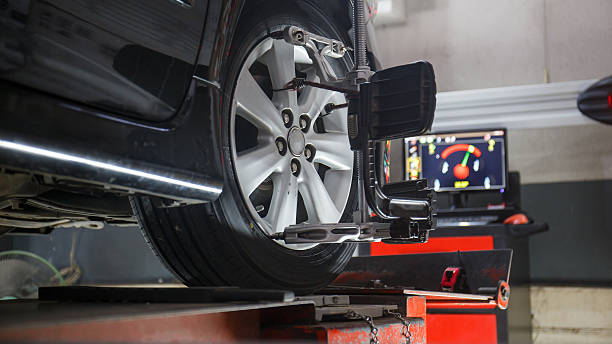
Auto Wheel Repair
You clip a curb pulling into a parking spot. You drop into a pothole so deep your teeth rattle. And then you drive away thinking, “It’s probably fine.” Most of the time that’s wishful thinking, not a real assessment. The honest truth is that wheel damage isn’t always obvious at first glance, and the difference between a cosmetic scratch and a structurally compromised wheel can be hard to see unless you know what to look for. If you’re anywhere near the area, getting a proper inspection from someone who offers Auto Wheel Repair Huntington Beach CA is genuinely worth the stop. Here are five signs that your wheel has real damage and isn’t just scuffed up.
1. You Can See Cracks, Bends, or Chips on the Wheel
This one sounds obvious. But plenty of drivers look at a bent or cracked wheel and convince themselves it’s just cosmetic. It’s not. A crack on the wheel face or rim edge means the metal has already failed under stress, and that failure doesn’t stay put. It spreads.
Even a small chip near the bead seat, which is the inner edge where the tire seats against the rim, can cause slow air leaks or sudden tire separation. Alloy wheels are especially prone to cracking after a hard hit because the material is strong but not flexible. A steel wheel might bend where an alloy wheel will crack, and both problems need fixing. Don’t let the size of the crack fool you into thinking it’s minor.
If you spot any visible deformation, run your hand around the inside of the rim carefully. A bend you can feel but barely see is still a bent wheel. That matters a lot at 70 mph on the freeway.
2. Your Steering Wheel Vibrates at Highway Speeds
Some vibration at high speeds gets blamed on tires, and sometimes that’s right. But if you’ve had a recent impact and now feel a steady shake through the steering wheel anywhere above 50 or 60 mph, a bent wheel is a very likely cause.
Here’s what’s happening. A bent or warped wheel can’t rotate in a true circle anymore. It wobbles slightly with every rotation, and that wobble travels up through the suspension and into the steering column. You feel it as a rhythmic buzz or shake. The faster you go, the worse it gets. A tire balance job won’t fix a bent rim, and plenty of people waste money on balancing and new tires before someone finally checks the wheel itself.
Worth noting: vibration from a bent rear wheel sometimes shows up more in the seat than the steering wheel. So don’t rule out wheel damage just because your hands aren’t shaking. Pay attention to where you feel it.
3. You Keep Getting Flat Tires or Slow Leaks on the Same Corner
Flat tires happen. But if the same tire keeps going flat, or you’re topping it up with air every week, don’t just blame the tire. Check the rim first.
A bent or cracked rim creates a gap between the rim and the tire bead. Air escapes slowly through that gap. You replace the tire, remount it on the same damaged rim, and the leak comes right back. Some shops miss this completely and keep patching or replacing tires without ever looking closely at the rim surface. According to general guidance from the National Highway Traffic Safety Administration on tire safety, maintaining proper tire seating and air pressure is directly tied to vehicle handling and blowout prevention, so a leaking rim isn’t something you can just ignore.
The fix here is usually rim repair or replacement, not another new tire. If your tire shop keeps selling you tires for the same corner, ask them to put the wheel on a balancing machine and check the runout. That number tells you whether the rim is truly round.
4. Your Car Pulls to One Side on a Straight Road
Pulling is usually blamed on alignment. Sometimes that’s right. But if your car started pulling after you hit something, and the alignment checks out fine, the wheel itself might be the problem.
A bent wheel creates uneven rolling resistance. One side of the wheel is effectively rolling at a slightly different diameter than the other, which makes the car drift. This is pretty easy to confuse with a tire pressure issue or an alignment problem because the symptoms feel similar. The difference is that alignment and pressure problems tend to develop gradually, while wheel-related pulling often shows up right after an impact event.
If you’re getting Auto Wheel Repair Services in Huntington Beach CA done properly, a good shop will check for lateral and radial runout on the wheel, not just eyeball it. That’s how you find a bend that doesn’t look obvious but is definitely affecting how the car drives.
5. You Hear Clunking or Humming Near One Wheel
Strange noises near a wheel are easy to dismiss. Lots of things make noise. But a rhythmic clunk or a low humming sound that seems to come from one corner of the car, especially after an impact, should get your attention fast.
A severely bent wheel can cause the tire to make intermittent contact with suspension or brake components. That’s the clunk. A humming or droning noise that changes pitch with your speed is often a wheel bearing, but a damaged wheel puts extra stress on that bearing and can accelerate its failure. So even if the noise turns out to be a bearing issue, the root cause might still be a wheel that’s out of true.
This is where people at Sully’s Auto Repair INC tend to catch things other shops miss, because they look at the whole picture instead of just replacing the part that’s making noise. A wheel that’s structurally compromised will keep damaging adjacent components until it gets fixed.
How Bad Does It Have to Be Before You Can’t Drive It?
Honestly, any visible crack means you shouldn’t be driving on it. Full stop. A crack can propagate without warning and cause a sudden blowout or wheel separation. Bends are a bit more forgiving in the short term, but “short term” shouldn’t mean two weeks of daily highway driving.
A slow leak you can manage temporarily, but every time that tire loses pressure you’re putting extra stress on the sidewall. One hard corner at low pressure and you’ve got a blown tire. The risk isn’t worth the inconvenience of getting it looked at.
Frequently Asked Questions
Can a bent wheel be repaired, or does it always need to be replaced?
Most bent alloy wheels can be straightened by a shop that has the right hydraulic pressing equipment, as long as the bend isn’t too severe and there are no cracks. If there’s a crack anywhere near the bend, replacement is usually the safer call. A shop offering Auto Wheel Repair Services in Huntington Beach CA should be able to tell you after a quick inspection whether the wheel is a repair candidate or not.
Is it safe to drive with a cracked wheel?
No. A cracked wheel is a real safety hazard. Cracks spread under load and heat, and a wheel that’s cracked today can fail completely without much warning. Get it off the car and inspected as soon as you can.
Why does my car vibrate only at certain speeds and not others?
Vibration from a bent or out-of-balance wheel tends to peak at specific speed ranges because of resonance. You might feel it strongly at 55 mph and less at 65. That doesn’t mean the problem is gone at higher speeds. It just means the frequency of the wobble happens to match your suspension’s resonant frequency at that particular speed.
How do I know if my wheel damage is covered by insurance?
It depends on your policy. Collision coverage usually covers wheel damage from a pothole or curb strike, though you’ll need to weigh the repair cost against your deductible. Comprehensive coverage typically doesn’t apply to road hazard damage. Call your insurer and ask specifically about road hazard claims before assuming you’re out of pocket.
What’s the difference between wheel repair and tire repair?
The wheel is the metal rim. The tire is the rubber that mounts on it. A puncture in the rubber is a tire repair. A bent, cracked, or corroded rim is a wheel repair. They’re separate things, and a lot of people confuse them, especially when a damaged rim is causing what looks like a recurring tire problem. For proper Auto Wheel Repair Huntington Beach CA work, you need a shop that actually inspects the rim, not just the rubber mounted on it.
Getting your wheels checked after any kind of hard impact takes maybe 20 minutes and can save you from a blowout at speed, a failed inspection, or a much bigger repair bill down the road. Don’t wait until the vibration gets worse or the tire goes flat again. Catch it early and fix it right.