The education sector offers a variety of rewarding career opportunities, and teaching assistants play an essential role in supporting both teachers and students. Schools increasingly rely on qualified support staff to help create productive learning environments, manage classroom activities, and provide additional assistance to students who need extra guidance.
For individuals interested in entering this field, understanding the skills and qualifications employers seek is an important first step. Many aspiring professionals choose to enroll in teaching asst courses to gain the knowledge and practical understanding required for success in educational settings.
This article explores the key competencies, qualifications, and personal attributes that employers value when hiring teaching assistants.
The Growing Demand for Teaching Assistants
Modern classrooms are diverse and dynamic, requiring additional support to ensure every student receives appropriate attention. Teaching assistants help teachers manage classroom activities, support learning objectives, and work with students individually or in small groups.
As educational standards continue to evolve, schools are looking for candidates who possess both formal training and practical skills. Having relevant qualifications can significantly improve employment opportunities and demonstrate commitment to the profession.
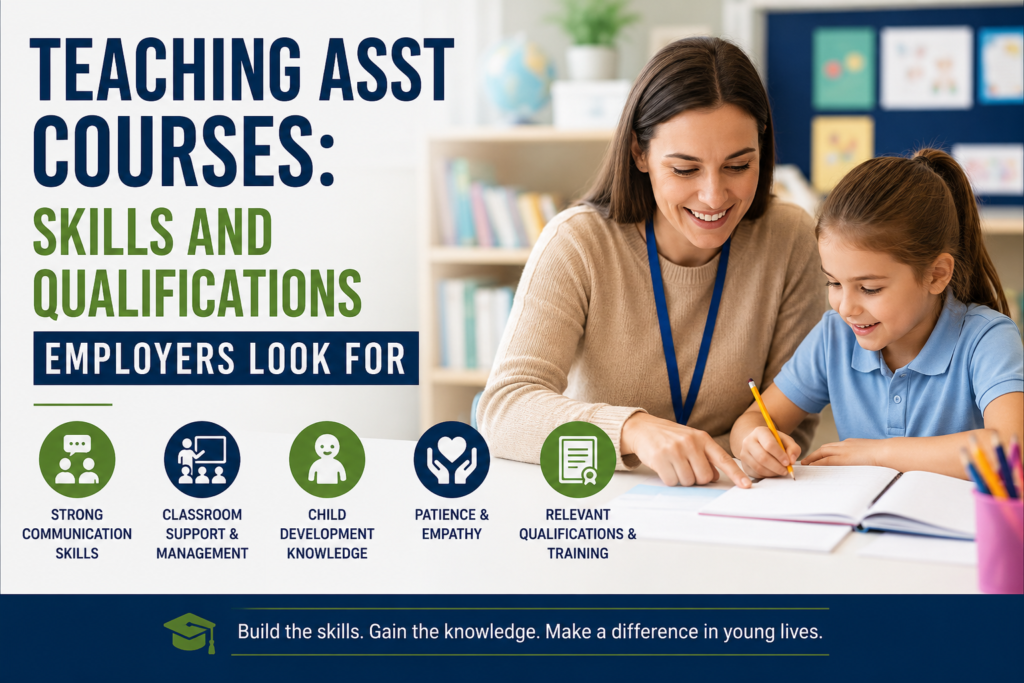
Strong Communication Skills
One of the most important qualities employers seek is excellent communication ability. Teaching assistants regularly interact with students, teachers, parents, and other school staff members.
Effective communication includes:
- Listening carefully to students’ concerns
- Explaining instructions clearly
- Providing constructive feedback
- Collaborating with teaching staff
- Maintaining professional interactions with parents
Strong communication helps create a positive learning environment and ensures that information is shared accurately among everyone involved in a student’s education.
Classroom Support and Management Skills
Teaching assistants often help maintain order and structure within the classroom. Employers value candidates who understand classroom management principles and can support teachers in keeping students engaged and focused.
Important classroom management skills include:
- Monitoring student behavior
- Encouraging participation
- Assisting with lesson preparation
- Managing learning resources
- Supporting classroom routines
Individuals who complete teaching asst courses often gain valuable insights into effective classroom practices and strategies for supporting learning activities.
Understanding Child Development
Employers prefer candidates who have a solid understanding of how children learn and develop. Knowledge of developmental stages helps teaching assistants provide age-appropriate support and recognize when students may require additional assistance.
This understanding enables professionals to:
- Adapt support methods to individual needs
- Encourage social development
- Promote emotional well-being
- Identify learning challenges
- Support positive behavior
A strong foundation in child development allows teaching assistants to contribute meaningfully to student success.
Patience and Empathy
Working with children requires patience, understanding, and compassion. Every student learns differently, and some may need additional encouragement or support to achieve their goals.
Employers often prioritize candidates who demonstrate:
- Emotional intelligence
- Active listening skills
- Compassion toward students
- Positive attitudes
- Calm responses under pressure
These qualities help build trust and create supportive learning environments where students feel comfortable and confident.
Special Educational Needs Awareness
Many schools require teaching assistants to support students with diverse learning needs. Awareness of Special Educational Needs (SEN) is therefore highly valued by employers.
Knowledge in this area may include:
- Understanding learning difficulties
- Supporting inclusive education
- Adapting learning activities
- Working alongside specialist staff
- Encouraging student independence
Educational training programs frequently include modules that introduce learners to inclusive teaching practices and strategies for supporting diverse classrooms.
Organizational and Administrative Skills
Teaching assistants often handle a variety of administrative responsibilities in addition to classroom support. Employers appreciate candidates who can stay organized and manage multiple tasks efficiently.
Common responsibilities may include:
- Preparing learning materials
- Maintaining records
- Organizing classroom resources
- Tracking student progress
- Assisting with school events
Good organizational skills contribute to smooth classroom operations and help teachers focus more effectively on instruction.
Teamwork and Collaboration
Schools operate through strong collaboration among educators, support staff, and administrators. Teaching assistants must work effectively as part of a team.
Employers look for individuals who can:
- Follow instructions professionally
- Share information effectively
- Support teaching staff
- Participate in planning activities
- Contribute positively to school culture
Team-oriented candidates are often viewed as valuable assets within educational environments.
Relevant Qualifications Matter
While some entry-level opportunities may provide on-the-job training, many employers prefer applicants with recognized qualifications. Completing structured educational programs demonstrates dedication and preparedness for the role.
Providers such as UK Open College offer learning opportunities designed to help individuals develop relevant skills and knowledge for classroom support positions. These programs can provide a solid foundation for those seeking employment in schools and educational settings.
Recognized qualifications can help candidates stand out in competitive job markets and increase confidence when applying for teaching assistant roles.
Commitment to Professional Development
Education is constantly evolving, and employers appreciate candidates who are committed to ongoing learning. Professional development helps teaching assistants remain informed about new teaching methods, educational policies, and classroom strategies.
Ways to continue professional growth include:
- Attending workshops
- Completing online training
- Participating in school development programs
- Studying specialized educational topics
- Expanding knowledge of learning support techniques
Candidates who actively pursue learning opportunities demonstrate initiative and long-term commitment to their careers.
Building a Strong Foundation for Success
The role of a teaching assistant extends far beyond helping with classroom tasks. These professionals contribute significantly to student development, academic achievement, and overall school success.
Completing teaching asst courses can provide aspiring teaching assistants with valuable knowledge in communication, child development, classroom support, and inclusive education. Combined with personal qualities such as patience, empathy, and teamwork, these skills can make candidates highly attractive to employers.
For individuals considering a career in education, investing in relevant training and qualifications can open doors to rewarding opportunities while helping them make a positive difference in students’ lives. Institutions such as UK Open College continue to support learners seeking to develop the competencies needed for success in educational support roles.
FAQs
1. What qualifications do employers typically look for in teaching assistants?
Employers often prefer candidates with recognized teaching assistant qualifications, relevant training, and a strong understanding of child development and classroom support.
2. Are communication skills important for teaching assistants?
Yes, communication is one of the most important skills, as teaching assistants regularly interact with students, teachers, parents, and school staff.
3. Can teaching assistants work with students who have special educational needs?
Yes, many teaching assistants provide support for students with special educational needs and help create inclusive learning environments.
4. Is previous classroom experience necessary?
Not always. Relevant qualifications and training can help candidates secure entry-level positions, even if they have limited classroom experience.
5. How can someone improve their chances of getting hired as a teaching assistant?
Obtaining recognized qualifications, developing communication and organizational skills, and pursuing ongoing professional development can significantly improve employment prospects.