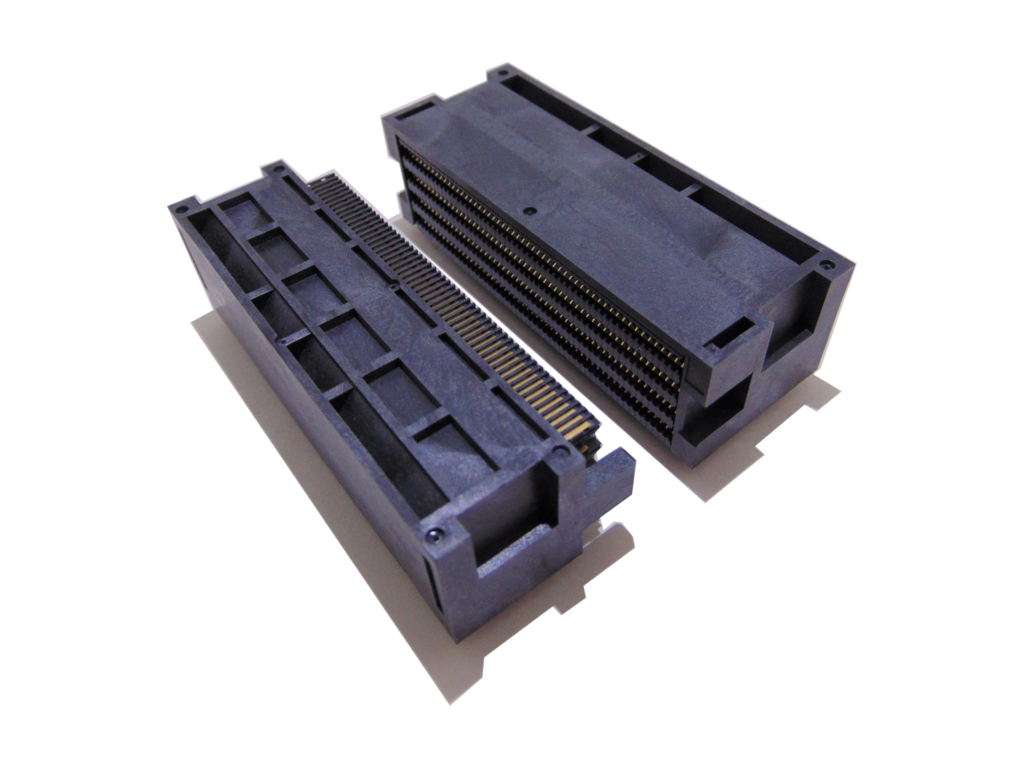
Backplane Connectors
Backplane Connectors are a vital part of electronic systems that require dependable communication between multiple circuit boards. As modern applications demand higher speeds and tighter integration, selecting the right connector becomes crucial for ensuring consistent performance and long-term reliability.
These connectors are engineered to handle complex interconnections within a system, allowing different modules to communicate efficiently without the limitations of traditional cabling.
How Backplane Connectors Support Efficient Data Flow
Backplane Connectors are designed to create direct electrical pathways between boards, which helps maintain fast and stable data transmission. By reducing the need for external wiring, they minimise potential signal loss and interference.
This efficient data flow is achieved through:
- Direct board-to-board connectivity
- Optimised contact design for stable transmission
- Reduced signal path length for faster communication
- Improved shielding to limit electromagnetic interference
These features are essential in systems where speed and accuracy are critical.
Understanding the Structure of Backplane Connector Interfaces
Backplane Connectors are built with precision to ensure accurate alignment and consistent electrical contact. Their structure typically includes multiple contact points arranged in rows or grids, allowing high-density connections within a compact area.
Key structural elements include:
- Contact pins or blades for electrical connection
- Insulating housing to maintain spacing and safety
- Guide features to ensure proper alignment during insertion
- Retention mechanisms to secure the connection
This structured design helps maintain reliability even in demanding environments.
Why Signal Integrity Matters in Backplane Connectors
Signal integrity is one of the most important aspects of Backplane Connectors. As data speeds increase, even minor disruptions can lead to errors or performance issues.
Backplane Connectors address this through:
- Controlled impedance to stabilise signal flow
- Advanced materials that reduce electrical noise
- Optimised layouts to minimise crosstalk
- Consistent contact pressure for reliable transmission
Maintaining signal integrity ensures that systems operate smoothly without data loss or delays.
Common Configurations of Backplane Connectors
Backplane Connectors are available in different configurations to suit various system architectures. Understanding these configurations helps in choosing the right solution.
Orthogonal Configuration
Boards are connected at right angles, making this setup ideal for compact systems with limited space.
Parallel Configuration
Boards are arranged side by side, allowing easy access and maintenance in larger systems.
Coplanar Configuration
Boards are aligned on the same plane, often used in specialised designs requiring uniform layout.
Each configuration offers unique advantages depending on the system design and application.
Benefits of Using Backplane Connectors in High-Performance Systems
Backplane Connectors provide several advantages that enhance overall system efficiency:
- Supports high-speed communication across multiple modules
- Reduces system complexity by eliminating excessive wiring
- Improves airflow for better thermal management
- Allows easy replacement and upgrading of components
- Enhances overall system reliability
These benefits make them a preferred choice for engineers and system designers.
Real-World Applications of Backplane Connectors
Backplane Connectors are widely used in environments where performance and dependability are essential:
- Enterprise servers handling large-scale data processing
- Networking equipment managing high traffic volumes
- Industrial control systems requiring precise operation
- Medical devices that demand accuracy and consistency
- Defence systems operating under extreme conditions
Their adaptability ensures they meet the needs of various industries.
Key Challenges in Implementing Backplane Connectors
While Backplane Connectors offer numerous benefits, there are challenges that must be managed during implementation:
- Maintaining signal quality at very high speeds
- Managing heat in densely packed systems
- Ensuring precise alignment during installation
- Balancing cost with advanced performance requirements
Addressing these challenges requires careful planning and engineering expertise.
Innovations Driving the Evolution of Backplane Connectors
Technological advancements continue to improve the capabilities of Backplane Connectors, making them more efficient and reliable.
Recent innovations include:
- Enhanced contact designs for improved durability
- Materials that support higher thermal resistance
- Compact solutions for space-constrained systems
- Increased bandwidth support for modern applications
These developments are enabling next-generation electronic systems to operate more efficiently.
How Backplane Connectors Contribute to Future Technologies
Backplane Connectors are a key enabler of emerging technologies that rely on fast and reliable connectivity. Their ability to support complex architectures and high-speed communication makes them essential for future innovations.
As industries continue to evolve, Backplane Connectors will remain a critical component in building systems that are scalable, efficient, and ready to meet the demands of advanced electronic applications.