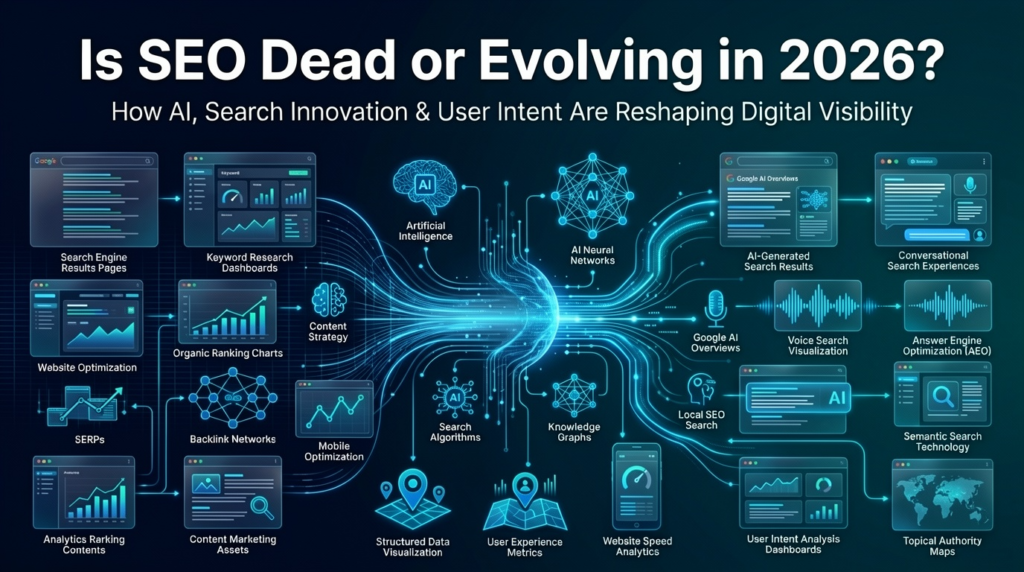
The debate around SEO resurfaces almost every year, and 2026 is no exception. With artificial intelligence transforming search experiences, Google introducing AI-generated answers, and users increasingly relying on conversational search tools, many business owners are asking the same question: Is SEO dead? The reality is quite different. An affordable search engine optimization service is more valuable today than ever before because SEO is not disappearing. It is evolving to match the way people search, consume information, and interact with digital content.
Businesses that understand these changes and adapt their strategies accordingly are continuing to generate traffic, leads, and revenue through organic search. The companies struggling with SEO are often those using outdated tactics that no longer align with modern search engine expectations.
Understanding the Evolution of SEO
Search engine optimization has undergone significant changes over the past two decades. Early SEO focused heavily on keyword density, directory submissions, and backlink quantity. Today, search engines prioritize user experience, content quality, authority, relevance, and trustworthiness.
The introduction of artificial intelligence into search engines has accelerated this transformation. Modern algorithms can better understand user intent, context, semantics, and content quality than ever before.
As a result, successful SEO strategies now focus on delivering genuine value rather than attempting to manipulate search rankings.
The question is no longer whether SEO works. The question is whether businesses are using modern SEO practices that align with current search behavior.
Why People Think SEO Is Dead
Several trends have contributed to the belief that SEO is losing its effectiveness.
AI-Powered Search Results
Search engines increasingly provide direct answers through AI-generated summaries. Users can often find information without clicking through to a website.
This has led some marketers to assume that organic traffic opportunities are disappearing.
Increased Competition
Millions of websites compete for visibility across virtually every industry. Ranking for competitive keywords has become more challenging, leading some businesses to question the effectiveness of SEO.
Frequent Algorithm Updates
Search engines regularly update their ranking algorithms. Businesses relying on outdated tactics often experience ranking fluctuations, creating the perception that SEO no longer works.
The Rise of Alternative Search Platforms
Consumers now discover information through social media platforms, video content, voice assistants, and AI tools. This diversification of search behavior has changed how businesses approach digital visibility.
While these trends have changed SEO, they have not eliminated its importance.
Why SEO Is More Important Than Ever
Despite technological changes, search engines remain one of the primary ways people discover businesses, products, and services.
Every day, billions of searches are performed by users actively seeking solutions to problems, answers to questions, and businesses that meet their needs.
This intent-driven traffic remains one of the most valuable sources of online visibility.
Organic Traffic Delivers Long-Term Value
Unlike paid advertising, organic traffic continues generating results long after content is published.
A well-optimized website can attract visitors, leads, and customers for months or even years without ongoing advertising costs.
Search Intent Remains Powerful
Search users often have a clear purpose.
They may be:
- Researching products.
- Comparing services.
- Seeking information.
- Looking for local businesses.
- Ready to make a purchase.
SEO helps businesses connect with these high-intent audiences at critical decision-making moments.
Trust and Credibility Matter
Users generally trust organic search results more than paid advertisements.
Appearing prominently in search results helps establish credibility and authority within an industry.
Strong visibility often influences purchasing decisions and brand perception.
How SEO Is Evolving in 2026
The future of SEO is shaped by technological innovation, changing user behavior, and advancements in artificial intelligence.
Businesses that understand these developments can position themselves for long-term success.
User Intent Is the New Priority
Modern search engines focus on understanding why users perform searches rather than simply matching keywords.
Content must address user needs comprehensively while providing clear and valuable answers.
Businesses that create content centered around user intent are more likely to achieve strong search visibility.
AI Optimization Is Becoming Essential
Artificial intelligence now plays a major role in how search engines evaluate content.
AI systems analyze:
- Content relevance.
- Topical authority.
- User engagement.
- Information quality.
- Content structure.
- Semantic relationships.
Websites that demonstrate expertise and provide meaningful information are rewarded with greater visibility.
Experience, Expertise, Authority, and Trust
Search engines increasingly evaluate content based on credibility signals.
Businesses must establish themselves as trustworthy sources by publishing accurate information, demonstrating expertise, and building strong online reputations.
Authority has become a critical factor in modern SEO performance.
Topical Authority Over Individual Keywords
Instead of focusing on isolated keywords, successful websites now build comprehensive content ecosystems around specific topics.
This approach helps search engines understand expertise within a subject area while improving overall visibility.
Businesses that consistently publish valuable content often achieve stronger rankings across multiple related search terms.
The Impact of AI Search and Google AI Overviews
One of the most significant developments in 2026 is the growth of AI-powered search experiences.
Google AI Overviews and conversational search tools provide users with instant summaries generated from multiple sources.
While this changes how users interact with search results, it does not eliminate SEO opportunities.
Visibility Beyond Traditional Rankings
Businesses must now optimize for both traditional search results and AI-generated answers.
Being cited within AI-generated responses can significantly increase brand visibility and authority.
This has led to the emergence of Answer Engine Optimization (AEO) alongside traditional SEO practices.
Content Quality Matters More Than Ever
AI systems prioritize content that is:
- Accurate.
- Helpful.
- Comprehensive.
- Well-structured.
- Authoritative.
Businesses producing high-quality content are more likely to be referenced by both search engines and AI tools.
Technical SEO Continues to Matter
Even as content quality becomes increasingly important, technical optimization remains essential.
Website Speed
Users expect fast-loading websites.
Slow websites create poor user experiences and often suffer from lower engagement rates.
Mobile Optimization
Mobile devices account for the majority of web traffic.
Websites must provide seamless experiences across smartphones, tablets, and desktops.
Secure Browsing
HTTPS security remains a fundamental ranking factor and trust signal.
Users expect their data to be protected during online interactions.
Structured Data
Schema markup helps search engines better understand website content.
Proper implementation can improve visibility through rich search results and enhanced listings.
Technical SEO provides the foundation that supports all other optimization efforts.
The Growing Role of Local SEO
Local search continues to be one of the most valuable areas of digital marketing.
Consumers frequently search for businesses near their location, especially when seeking immediate services.
Examples include:
- Restaurants.
- Healthcare providers.
- Legal services.
- Home service companies.
- Retail stores.
- Professional consultants.
Optimizing local listings, collecting customer reviews, and maintaining accurate business information remain critical for local visibility.
Businesses that prioritize local SEO often experience significant increases in leads and customer inquiries.
Content Marketing and SEO Are Now Connected
SEO and content marketing can no longer operate independently.
High-quality content drives search visibility while SEO ensures that content reaches the right audience.
Successful strategies include:
- Educational blog articles.
- Industry guides.
- Case studies.
- Frequently asked questions.
- Videos.
- Infographics.
- Interactive tools.
- Thought leadership content.
Content that genuinely helps users tends to perform best in modern search environments.
Voice Search and Conversational Search
Voice assistants and AI-powered search tools have changed how people search online.
Users increasingly ask complete questions rather than typing short keyword phrases.
For example:
Instead of searching “SEO company,” users may ask, “Which SEO company can help my small business grow online?”
Businesses must optimize content for natural language queries and conversational search patterns.
This shift makes comprehensive, user-focused content more important than ever.
Common SEO Mistakes Businesses Still Make
Despite advances in search technology, many organizations continue relying on outdated practices.
Common mistakes include:
- Keyword stuffing.
- Publishing low-quality content.
- Ignoring technical SEO.
- Neglecting mobile optimization.
- Failing to update old content.
- Purchasing low-quality backlinks.
- Overlooking user experience.
- Ignoring local search opportunities.
These practices can limit visibility and negatively impact long-term performance.
What Successful SEO Looks Like in 2026
Modern SEO focuses on creating exceptional user experiences while building authority and trust.
Successful businesses prioritize:
- High-quality content.
- Technical excellence.
- AI visibility.
- User intent optimization.
- Local search strategies.
- Brand authority.
- Content depth.
- Continuous improvement.
Rather than chasing algorithm loopholes, they focus on delivering genuine value to their audiences.
This approach aligns with how search engines evaluate content today.
The Future of SEO
SEO will continue evolving as technology advances.
Artificial intelligence, machine learning, voice search, personalization, and predictive search experiences will further shape the industry.
However, one fundamental principle is unlikely to change.
Search engines will always aim to connect users with the most relevant, trustworthy, and valuable information available.
Businesses that consistently meet these expectations will continue benefiting from organic visibility regardless of technological changes.
SEO may look different in the future, but its core purpose remains the same: helping people find the information, products, and services they need.
Conclusion
SEO is not dead in 2026. It is evolving into a more sophisticated discipline that combines technical optimization, content strategy, user experience, brand authority, and AI visibility. Businesses that adapt to changing search behaviors and emerging technologies continue to achieve impressive results through organic search.
The organizations seeing the greatest success are those investing in long-term strategies focused on trust, relevance, and value creation. As search engines and AI platforms continue reshaping digital discovery, partnering with experienced professionals can provide a significant advantage. With expertise in technical SEO, local SEO, content strategy, AI search optimization, website performance, and digital growth solutions, Vibrant Logics helps businesses navigate the evolving search landscape and build sustainable online visibility for the future.