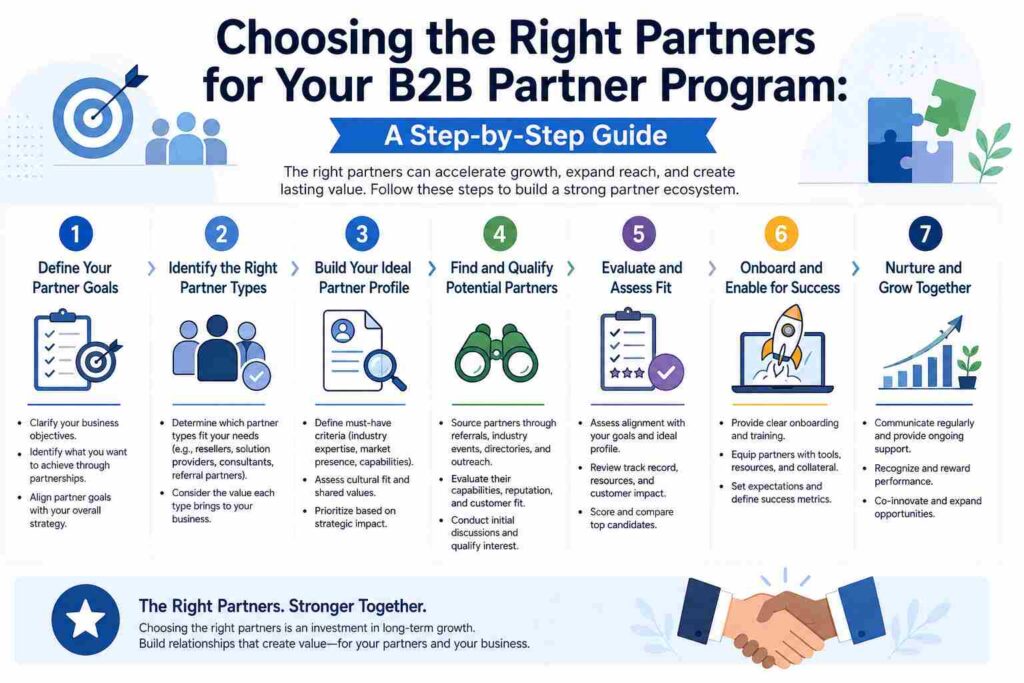
Growth in a competition-intensive market is difficult to achieve alone. Companies that achieve this growth understand that working together is an essential aspect of expanding reach at the same time adding value to customers. That’s what a B2B partner program does: it helps brands reach markets faster, build better credibility and increase revenue without adding internal cost. Success comes from picking the right partners, giving partners the right tools, and building relationships with trust and transparency.
This guide looks at how co‑marketing and structured strategies work to build a mutually beneficial partner ecosystem that stands the test of time.
What Is a B2B Partner Program?
A B2B partner program is a type of business strategy where companies work with other companies to sell and market their products and services. Rather than just using their own sales and marketing teams, companies use partners like resellers, consultants, tech companies, or agencies to reach more customers and grow faster.
By sharing resources between partners, a partner program helps businesses make more money and improve their brand trust while growing quickly through these long-term relationships that benefit both parties.
Types of Businesses That Benefit From B2B Partner Marketing
B2B partner marketing does not belong to one industry or one business model. It works for software companies as well as manufacturing firms. Companies across sectors can use platforms like Trackier partnerships to reach customers, improve what they sell, and grow faster. Here are some businesses that derive value out of partner ecosystems.
1. SaaS and Cloud Technology Providers
Software and cloud-based companies partner with consultants, IT service providers, and digital agencies to embed their platforms into larger technology ecosystems to reach customers that would be difficult to reach alone.
2. Professional Services Firms
Marketing agencies, HR consultancies, and accounting firms use partner marketing, which helps them broaden their service portfolios and offer end-to-end solutions without adding complexity.
3. Manufacturing and Industrial Solution Providers
Industrial brands work with distributors and system integrators to increase the brand presence, to make the supply chain easier, and to give hands-on service support.
Benefits of a B2B partner program
A structured B2B partner program lets businesses grow faster by leveraging shared expertise, audiences, and credibility to strengthen market presence through their trusted relationships. Some of these benefits are:
- Expanded market reach: Partners can open doors to new industries, regions, and new customer groups that would otherwise take years to reach without that help.
- Revenue growth: As multiple partners sell or refer your solution, the deal pipelines grow without the internal headcount increasing much.
- Improved brand credibility: Associating with trusted industry players enhances reputation and builds confidence among prospective buyers.
- Growth model: Partner ecosystems let businesses grow and earn money in sustainable ways without operational costs.
- Customer acquisition costs: When partners share marketing and sales efforts, it cuts the spend and at the same time raises the quality of leads.
Key Steps To Start a B2B Partner Program
Launching a B2B partner program needs structure and clear value exchange in addition to inviting collaborators. Here are some steps that businesses can follow to curate a partner program that delivers results:
- Define objectives- Identify the objectives you want to achieve, like lead generation, market expansion or increased deals. Further show your partners how they can benefit from commissions, co‑selling opportunities or shared visibility.
- Build a partner profile- List the industries, company sizes, geographic reach and customer segments that match your offering to attract quality partners.
- Design a partnership model- Decide whether the partnership model will focus on referrals, resellers or strategic alliances and then create reward structures for the incentives that would motivate performance.
- Set up onboarding and resources- Give your partners training materials and co‑branding guidelines for a smoother process that help them get productive quickly.
The Role of Technology in Scaling Partnerships
B2B partner program tools reduce friction and add order to the growing partner networks. Tools offer automation for tasks and processes like deal registration, training, onboarding and reporting. This reduces workload and lets teams focus on building relationships instead of handling logistics.
When b2b partnership strategies are backed by data, technology becomes the base that turns partner programs into growing revenue channels.
Conclusion
When brands pick partners who share a similar vision, they invest in marketing beyond conversions. Along with increased reach, such partnerships or collaborations help build long‑term brand value, trust, and competitive advantage. However, a B2B partner program should be guided by data‑based partnership strategies and clear performance rules to reap benefits fair and share.
Thus, companies that prioritize partner ecosystems today will be companies that lead their industries tomorrow.