Heavy Duty Truck Shop Management Software: Features, Benefits, and Trends
The trucking and heavy-duty vehicle repair industry has changed dramatically over the last decade. Modern repair shops are no longer dependent on paperwork, manual job cards, and disconnected systems to manage daily operations. As customer expectations continue to rise and fleets demand faster turnaround times, repair businesses need smarter and more efficient solutions to stay competitive. This is where heavy duty truck shop management software becomes an essential part of daily operations.
Running a heavy-duty truck repair shop involves much more than fixing engines and replacing parts. Shop owners must manage technicians, track inventory, handle invoicing, communicate with customers, schedule repairs, monitor labor costs, and ensure every truck leaves the workshop on time. When these tasks are handled manually, mistakes become common, productivity decreases, and profits suffer.
Heavy duty truck shop management software helps repair shops streamline operations through automation, centralized data management, and real-time tracking. From work order creation to customer communication and inventory monitoring, the software allows businesses to improve efficiency while reducing costly errors. Whether a shop handles diesel trucks, semi-trailers, construction vehicles, or commercial fleets, the right management system can significantly improve overall performance.
As technology continues to evolve, truck repair businesses are increasingly adopting digital tools to modernize their workflow. In today’s competitive market, investing in advanced management software is no longer a luxury—it is becoming a necessity for long-term growth and customer satisfaction.
Understanding Heavy Duty Truck Shop Management Software
What Is Heavy Duty Truck Shop Management Software?
Heavy duty truck shop management software is a digital platform designed specifically for commercial truck repair and maintenance businesses. Unlike general automotive shop systems, this software is built to handle the unique operational needs of heavy-duty vehicle repair shops.
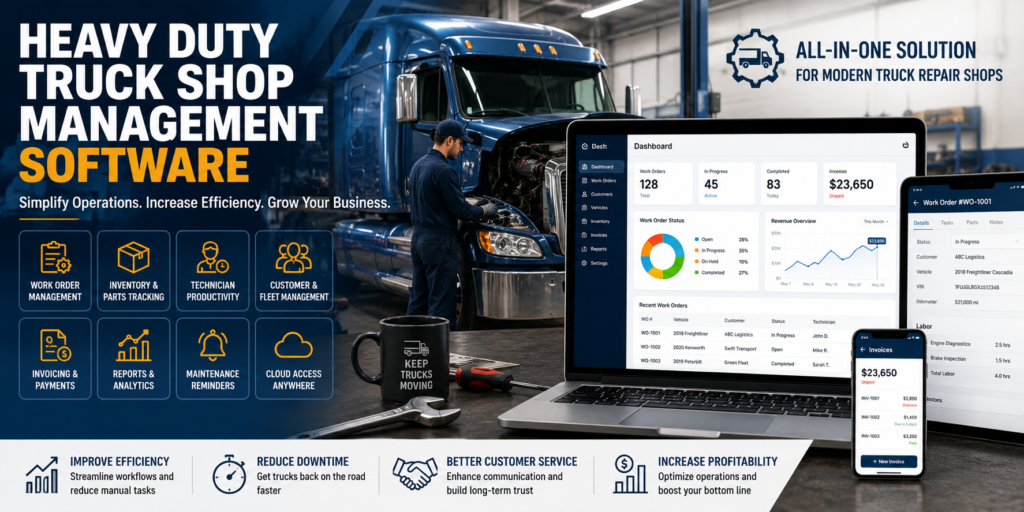
These platforms typically combine multiple business functions into a single centralized system. Shop owners and managers can oversee repair orders, technician schedules, parts inventory, labor tracking, customer records, inspections, invoices, and fleet maintenance histories from one dashboard.
The primary goal of the software is to simplify shop management while improving workflow efficiency. Instead of relying on spreadsheets or paper files, businesses gain access to organized and searchable digital records that improve decision-making and reduce administrative workload.
Why the Truck Repair Industry Needs Specialized Software
Heavy-duty truck repair operations are more complex than standard automotive services. Commercial trucks often require extensive diagnostics, specialized parts, compliance documentation, and detailed maintenance tracking. Managing these processes manually can quickly become overwhelming, especially for growing businesses.
Truck downtime directly impacts fleet profitability. Every hour a truck remains out of service can result in financial losses for customers. Because of this, repair shops must operate with speed, precision, and organization.
Heavy duty truck shop management software helps reduce downtime by improving scheduling, streamlining repair workflows, and ensuring technicians have immediate access to service information. This allows repair shops to deliver faster turnaround times while maintaining service quality.
Key Features of Heavy Duty Truck Shop Management Software
Work Order Management
One of the most important features of heavy duty truck shop management software is digital work order management. Shop managers can create, assign, and track repair orders in real time.
Technicians receive detailed repair instructions, inspection notes, and labor assignments directly through the system. This minimizes communication errors and improves repair accuracy. Managers can also monitor repair progress, ensuring jobs move efficiently through the shop.
Digital work orders also make it easier to store repair histories, helping businesses provide better customer service and faster diagnostics during future visits.
Inventory and Parts Tracking
Inventory management is a major challenge for truck repair businesses. Heavy-duty repairs often require expensive and specialized components, and inventory shortages can delay repairs significantly.
Modern software solutions help shops track inventory levels automatically. The system can monitor stock usage, generate low-stock alerts, and maintain records of parts purchases and supplier information.
This reduces the risk of overstocking or running out of essential components. Better inventory control also improves profitability by minimizing waste and unnecessary spending.
Technician Productivity Monitoring
Managing technician productivity is essential for improving shop efficiency. Heavy duty truck shop management software allows businesses to track labor hours, technician performance, and job completion times.
Managers can analyze which technicians are performing efficiently and identify workflow bottlenecks. This data helps improve scheduling, training, and resource allocation.
Accurate labor tracking also ensures customers are billed correctly for completed work, reducing disputes and improving financial transparency.
Customer and Fleet Management
Truck repair shops often work with fleet operators that manage dozens or even hundreds of vehicles. Keeping track of service histories manually can become extremely difficult.
Shop management software stores customer records, vehicle histories, maintenance schedules, and inspection reports in a centralized database. This helps repair shops provide personalized service while maintaining accurate records for every vehicle.
Customers appreciate having quick access to repair updates, invoices, and maintenance reminders, which improves trust and long-term business relationships.
Invoicing and Financial Reporting
Financial management is another critical feature of heavy duty truck shop management software. The software automates invoice creation, tax calculations, payment tracking, and financial reporting.
Instead of spending hours on paperwork, shop owners can generate invoices within minutes. Detailed reports also provide valuable insights into profitability, labor costs, revenue trends, and business performance.
These financial tools help shop owners make informed decisions and improve overall business planning.
Major Benefits of Heavy Duty Truck Shop Management Software
Improved Operational Efficiency
One of the biggest advantages of using heavy duty truck shop management software is increased operational efficiency. Automation eliminates repetitive administrative tasks and reduces the need for manual data entry.
Technicians spend less time searching for information, managers gain better workflow visibility, and office staff can process invoices more quickly. This creates a smoother and more productive work environment.
As a result, repair shops can handle more vehicles without increasing administrative workload.
Reduced Downtime
Commercial fleets rely on quick repair turnaround times. Delays can negatively impact transportation schedules, customer deliveries, and business profitability.
By improving scheduling, inventory management, and communication, shop management software helps reduce vehicle downtime significantly. Faster repairs lead to happier customers and stronger business relationships.
Better Customer Experience
Customer expectations continue to evolve in the digital age. Fleet operators want transparency, accurate updates, and fast communication.
Modern shop management platforms allow businesses to send automated repair updates, maintenance reminders, and digital invoices. Customers can stay informed throughout the repair process without needing constant phone calls.
Providing a professional and organized customer experience helps repair shops build long-term loyalty and improve their reputation.
Enhanced Data Accuracy
Manual paperwork increases the risk of lost information, billing mistakes, and inaccurate repair records. Digital systems reduce these issues by storing data securely and consistently.
Accurate data improves diagnostics, reporting, inventory management, and financial tracking. It also helps businesses remain compliant with industry regulations and service documentation requirements.
Trends Shaping the Future of Heavy Duty Truck Shop Management Software
Cloud-Based Systems
Cloud technology is becoming increasingly popular in the truck repair industry. Cloud-based heavy duty truck shop management software allows users to access information from anywhere using internet-connected devices.
This flexibility is especially useful for multi-location repair businesses and mobile service operations. Cloud systems also improve data security, backup reliability, and software updates.
Many modern repair shops are moving away from traditional server-based systems in favor of cloud solutions because of their scalability and convenience.
Mobile Accessibility
Mobile access is transforming how repair shops operate. Technicians can now update repair orders, upload inspection photos, and communicate with managers directly from tablets or smartphones.
This reduces paperwork and improves real-time communication across the shop floor. Mobile functionality also allows managers to monitor operations even when they are away from the office.
Artificial Intelligence and Predictive Maintenance
Artificial intelligence is beginning to influence the heavy-duty repair industry. Advanced software platforms can analyze maintenance data to identify patterns and predict potential mechanical failures before they occur.
Predictive maintenance helps fleet operators reduce unexpected breakdowns and improve vehicle reliability. This trend is expected to become increasingly important as connected vehicle technology continues to grow.
Integration With Diagnostic Tools
Modern repair shops rely heavily on digital diagnostics. Many heavy duty truck shop management software platforms now integrate directly with diagnostic systems and telematics devices.
This integration allows technicians to access fault codes, repair histories, and maintenance recommendations directly from the software dashboard. Faster diagnostics lead to quicker repairs and improved accuracy.
In the middle of this digital transformation, companies like Fullbay have also contributed to making heavy-duty repair shop operations more streamlined by focusing on workflow automation and shop efficiency tools tailored specifically for commercial truck service businesses.
Common Mistakes to Avoid When Choosing Software
Ignoring Scalability
Some businesses choose software based only on current needs without considering future growth. As operations expand, outdated systems may struggle to handle increased workloads.
It is important to choose software that can scale with the business and support additional users, locations, and advanced features over time.
Choosing Based Only on Price
While budget matters, selecting the cheapest software can create long-term problems. Low-cost systems may lack important features, customer support, or integration capabilities.
Repair shops should focus on overall value, usability, reliability, and long-term efficiency rather than price alone.
Neglecting Employee Training
Even the best software will fail if employees do not know how to use it properly. Proper onboarding and training are essential for successful implementation.
Businesses should invest time in training technicians, managers, and office staff to maximize the benefits of the software.
How to Select the Right Heavy Duty Truck Shop Management Software
Evaluate Business Needs
Every repair shop operates differently. Some businesses focus on fleet maintenance, while others specialize in emergency roadside repairs or construction equipment servicing.
Before choosing software, shop owners should identify their operational challenges, workflow requirements, and long-term business goals.
Look for Industry-Specific Features
Generic automotive management software may not meet the demands of heavy-duty truck repair operations. It is important to select a platform specifically designed for commercial truck service businesses.
Industry-specific tools provide better repair tracking, inventory management, labor monitoring, and fleet maintenance functionality.
Prioritize Ease of Use
Complicated software can slow down operations instead of improving them. A user-friendly interface ensures employees can adopt the system quickly and work efficiently.
Software should simplify tasks rather than create additional complexity.
Conclusion
The heavy-duty truck repair industry is becoming increasingly competitive, technology-driven, and customer-focused. Repair shops that continue relying on outdated manual systems may struggle to keep up with modern operational demands.
Heavy duty truck shop management software offers a practical solution for improving efficiency, reducing downtime, enhancing customer service, and increasing profitability. From digital work orders and inventory management to predictive maintenance and cloud-based access, these systems are transforming how truck repair businesses operate.
As technology continues to evolve, software platforms will become even more advanced, integrating artificial intelligence, telematics, and real-time diagnostics into everyday repair workflows. Businesses that embrace these innovations early will be better positioned for long-term success.
For repair shop owners looking to improve organization, productivity, and customer satisfaction, investing in the right heavy duty truck shop management software can be one of the most valuable decisions for future growth.