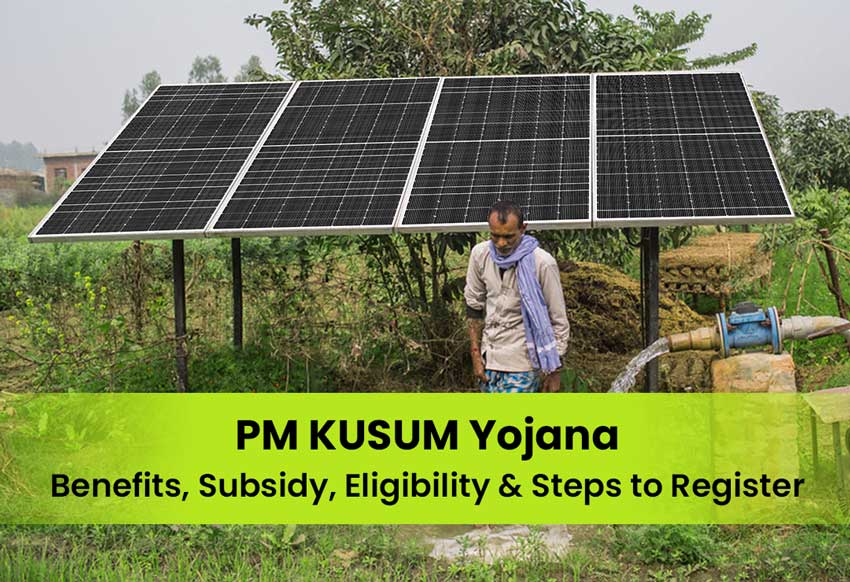
The PM Kusum Yojana is a major initiative by the Government of India designed to support farmers and promote solar energy use in agriculture. It focuses on reducing dependence on diesel and grid electricity by encouraging the use of solar-powered irrigation systems. This scheme plays a significant role in improving rural income, strengthening agricultural productivity, and supporting sustainable development in villages across India.
The scheme is especially important for farmers who struggle with high electricity costs or irregular power supply. By adopting solar energy solutions, they gain more control over irrigation and reduce long-term farming expenses.
What is PM Kusum Yojana?
PM Kusum Yojana (Pradhan Mantri Kisan Urja Suraksha evam Utthaan Mahabhiyan) is a solar energy-based agricultural support program. It aims to install solar pumps, solar plants, and grid-connected renewable power systems in rural areas.
The main components of the scheme include:
Solar-powered irrigation pumps for farmers
Solar power plants on barren or unused land
Solarization of existing grid-connected agricultural pumps
One of the most impactful tools under this scheme is the “पीएम कुसुम योजना सोलर पंप“, which helps farmers irrigate their fields without relying on diesel or unstable electricity supply.
Importance of PM Kusum Yojana in Rural Development
1. Reduces Irrigation Costs for Farmers
One of the biggest benefits of PM Kusum Yojana is the reduction in irrigation expenses. Farmers using diesel pumps spend a large portion of their income on fuel. With the introduction of solar pumps, these costs are significantly reduced, allowing farmers to save money and invest more in crop production.
The “पीएम कुसुम योजना सोलर पंप” provides a long-term solution that requires minimal maintenance and has no fuel cost, making farming more economical.
2. Ensures Reliable Water Supply
In many rural areas, electricity supply is inconsistent, which affects irrigation schedules. Solar pumps help solve this issue by providing a continuous and reliable water source during daylight hours. This ensures better crop management and reduces dependency on external power supply systems.
3. Promotes Clean and Renewable Energy
The PM Kusum Yojana supports India’s transition toward renewable energy. By replacing diesel pumps with solar systems, the scheme reduces carbon emissions and environmental pollution. This helps in creating a cleaner and more sustainable agricultural ecosystem.
Solar energy is abundant in India, and its use in agriculture makes rural development more environmentally friendly.
4. Increases Farmers’ Income
Lower irrigation costs and better water availability directly improve crop productivity. This leads to higher yields and increased income for farmers. Additionally, some farmers can even generate income by selling surplus solar power to the grid under certain components of the scheme.
The adoption of “पीएम कुसुम योजना सोलर पंप” helps farmers become more self-reliant and financially stable.
5. Encourages Rural Employment
The installation, maintenance, and management of solar pumps and solar plants create employment opportunities in rural areas. Technicians, electricians, and local service providers benefit from new job roles, contributing to the rural economy.
Key Features of PM Kusum Yojana
Affordable solar pump installation with government subsidy support
Focus on small and marginal farmers
Encouragement for community and cooperative farming models
Integration with state electricity boards for grid support
Long-term sustainability with low operational costs
Role of PM Kusum Yojana in Agricultural Transformation
Agriculture in India is heavily dependent on weather and irrigation systems. The introduction of solar energy-based irrigation has transformed traditional farming practices. Farmers are now able to plan irrigation more efficiently and reduce crop loss caused by water shortages.
The use of “पीएम कुसुम योजना सोलर पंप” also reduces dependency on fossil fuels, making farming more modern and technology-driven.
Challenges in Implementation
While the scheme is highly beneficial, there are some challenges:
Initial installation cost can be high without subsidies
Lack of awareness among rural farmers
Maintenance knowledge gaps in remote areas
Delay in subsidy approval in some regions
However, government awareness programs and training initiatives are helping to overcome these issues gradually.
Future Scope of PM Kusum Yojana
The future of PM Kusum Yojana looks promising as India continues to expand its renewable energy infrastructure. With increasing adoption of solar technology, more farmers are expected to shift toward sustainable irrigation systems.
In the coming years, the scheme is expected to:
Expand solar pump coverage across all states
Improve subsidy distribution systems
Introduce smarter monitoring and automation in solar irrigation
Strengthen rural energy independence
Conclusion
PM Kusum Yojana is a transformative step toward sustainable agriculture and rural development in India. By promoting solar energy in farming, it reduces costs, improves productivity, and supports environmental protection. The “पीएम कुसुम योजना सोलर पंप” plays a central role in helping farmers achieve energy independence and financial stability. This scheme is not only improving agricultural practices but also shaping a greener and more self-reliant rural India.
FAQs
1. What is PM Kusum Yojana?
PM Kusum Yojana is a government scheme that promotes solar energy use in agriculture through solar pumps and power plants to support farmers.
2. How does the पीएम कुसुम योजना सोलर पंप help farmers?
It reduces irrigation costs, provides a reliable water supply, and eliminates dependency on diesel and unstable electricity.
3. Who can apply for the PM Kusum Yojana?
Small and marginal farmers, cooperatives, panchayats, and farmer groups are eligible to apply under the scheme.
4. Is a subsidy available under the PM Kusum Yojana?
Yes, the government provides subsidies to reduce the installation cost of solar pumps for eligible farmers.
5. What are the main benefits of solar pumps in agriculture?
Solar pumps provide low-cost irrigation, clean energy usage, better crop productivity, and long-term savings for farmers.