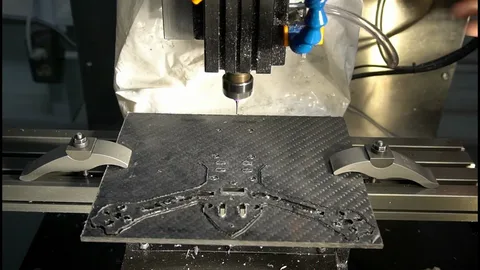
Carbon fiber has rapidly become one of the most sought-after materials in modern manufacturing due to its exceptional strength-to-weight ratio, durability, and versatility. When combined with advanced machining techniques, particularly carbon fiber CNC machining, manufacturers can unlock new levels of precision and efficiency. This powerful combination is transforming industries such as aerospace, automotive, medical devices, and consumer electronics.
Carbon fiber CNC machining allows manufacturers to produce complex parts with remarkable accuracy while minimizing waste and production time. As businesses continue to prioritize efficiency and cost-effectiveness, understanding how this technology enhances production processes is crucial. In this article, we will explore the key ways carbon fiber CNC machining boosts production efficiency and why it is becoming a preferred choice in advanced manufacturing.
Enhanced Precision and Accuracy
Carbon fiber CNC machining is renowned for its ability to produce highly precise components. CNC (Computer Numerical Control) machines operate using pre-programmed software, ensuring consistent and repeatable accuracy across all production runs. This level of precision is especially important when working with carbon fiber, as even minor deviations can affect the performance and integrity of the final product.
Moreover, the rigidity and stability of CNC machines allow manufacturers to achieve tight tolerances that are difficult to replicate with manual methods. This reduces the need for rework and ensures that each component meets strict quality standards. As a result, production processes become more streamlined, saving both time and resources.
Key benefits of enhanced precision include:
- Consistent part quality across large production batches
- Reduced material waste due to fewer errors
- Improved product performance and reliability
- Minimal need for secondary finishing processes
Faster Production Cycles
One of the most significant advantages of carbon fiber CNC machining is its ability to accelerate production timelines. Automated machining processes eliminate many of the manual steps involved in traditional fabrication, allowing parts to be produced more quickly and efficiently. This is particularly beneficial for industries that require rapid prototyping or high-volume production.
In addition, CNC machines can operate continuously with minimal human intervention, further increasing productivity. Advanced programming and toolpath optimization also contribute to faster cycle times, enabling manufacturers to meet tight deadlines without compromising quality.
Ways it speeds up production include:
- Automation reduces manual labor requirements
- Continuous operation increases output capacity
- Optimized cutting paths minimize machining time
- Faster turnaround for prototypes and custom parts
Reduced Material Waste
Material efficiency is a critical factor in modern manufacturing, and carbon fiber CNC machining excels in this area. Carbon fiber is a relatively expensive material, so minimizing waste is essential for cost control. CNC machining uses precise cutting techniques that ensure only the necessary material is removed, reducing scrap and maximizing utilization.
Furthermore, advanced software allows manufacturers to plan and simulate machining processes before actual production begins. This helps identify potential issues and optimize material usage, resulting in more sustainable and cost-effective operations.
Waste reduction advantages include:
- Precise cutting minimizes excess material removal
- Simulation tools optimize material usage
- Lower scrap rates reduce overall production costs
- Environmentally friendly manufacturing practices
Improved Design Flexibility
Carbon fiber CNC machining provides unparalleled design flexibility, allowing manufacturers to create complex geometries that would be difficult or impossible to achieve with traditional methods. This capability opens the door to innovative product designs that enhance functionality and performance.
Designers can experiment with intricate shapes, lightweight structures, and customized features without worrying about manufacturing limitations. CNC machining ensures that even the most complex designs can be accurately reproduced, enabling greater creativity and innovation in product development.
Design flexibility benefits include:
- Ability to create complex and intricate geometries
- Greater freedom in product design and innovation
- Customization for specific applications and industries
- Reduced constraints compared to traditional machining methods
Cost Efficiency and Scalability
While the initial investment in CNC machinery may be significant, carbon fiber CNC machining offers substantial long-term cost savings. The efficiency of automated processes reduces labor costs, while the precision of machining minimizes waste and rework expenses. Over time, these savings can significantly improve a company’s bottom line.
Additionally, CNC machining is highly scalable, making it suitable for both small production runs and large-scale manufacturing. Businesses can easily adjust production volumes based on demand without sacrificing quality or efficiency. This flexibility is particularly valuable in today’s dynamic market environment.
Cost and scalability advantages include:
- Lower labor costs due to automation
- Reduced waste and rework expenses
- Easy scalability for different production volumes
- Consistent quality regardless of batch size
Conclusion
Carbon fiber CNC machining is revolutionizing the manufacturing landscape by delivering unmatched precision, speed, and efficiency. From reducing material waste to enabling complex designs, this advanced machining technique provides a wide range of benefits that help businesses stay competitive in an increasingly demanding market.
By adopting carbon fiber CNC machining, manufacturers can streamline their production processes, lower costs, and improve product quality. As industries continue to evolve, the role of this technology will only grow, making it an essential tool for companies aiming to achieve higher levels of efficiency and innovation.