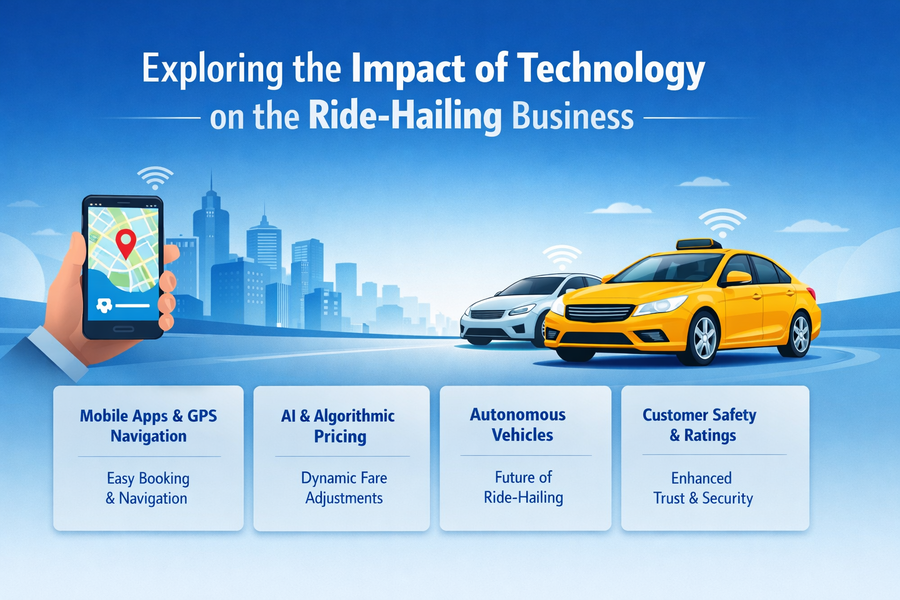
The ride-hailing industry has revolutionized the way people commute, transforming traditional transportation models into dynamic, technology-driven platforms. With the rapid advancement of digital innovations, ride-hailing services such as Uber and Lyft have not only reshaped consumer expectations but also introduced new operational paradigms for drivers and service providers. From GPS navigation systems to mobile payment solutions and data analytics, technology plays a pivotal role in enhancing user experiences and optimizing business operations. This article explores the multifaceted impact of technology on the ride-hailing business, examining how it has evolved, the challenges and opportunities it presents, and the future trends that will continue to shape this ever-growing industry.
Introduction to the Ride-Hailing Industry
Overview of Ride-Hailing Services
The ride-hailing industry has revolutionized the way we think about transportation. Gone are the days of scrambling for a taxi or relying on public transport schedules that never align with your plans. With just a tap on your smartphone, you can summon a ride at any hour of the day or night. These services connect drivers with passengers through user-friendly apps, alleviating many of the stresses associated with traditional transport options. Whether it’s a quick trip to the grocery store or a late-night ride home, ride-hailing services like Uber and Lyft have made it easier than ever for people to get from point A to point B.
Market Growth and Trends
The ride-hailing market is riding a wave of growth that’s hard to ignore. According to industry reports, the global ride-hailing market is projected to reach over $200 billion by 2026, fueled by the increase in smartphone usage, urbanization, and a shift in consumer preferences toward convenience. Trends like shared rides, electric vehicles, and even autonomous driving are also making headlines, suggesting that this industry is not just evolving but transforming at a breakneck speed. The ability to adapt to new technologies is a key differentiator; those who stay ahead of the trends will likely be the ones to thrive.
Evolution of Technology in Transportation
Historical Context of Transportation Technology
Transportation has come a long way since the days of horses and buggies. The invention of the steam engine kicked off a revolution, paving the way for faster travel across greater distances. Fast forward to the 20th century, and we saw the rise of automobiles, which further changed the landscape of personal transport. However, it wasn’t until the latter part of the century that digital technology began to intertwine with transportation, setting the stage for the modern ride-hailing experience. Think of it as a relay race where each technology has been a baton passed to the next, each advancing us toward more sophisticated solutions.
Transition to Digital Solutions
The transition to digital solutions in transportation has been akin to swapping a flip phone for the latest smartphone—game-changing. With the advent of GPS and mobile applications, traditional transport models have had to innovate or risk obsolescence. Riders now expect seamless experiences powered by sophisticated algorithms that optimize routes, estimate fares, and enhance safety. The embrace of digital solutions has made transportation more accessible, efficient, and user-centric, with customers now able to track their rides in real-time and communicate directly with drivers through a simple app interface.
Key Technological Innovations Shaping Ride-Hailing
GPS and Navigation Systems
GPS technology is the unsung hero of the ride-hailing world. It allows both drivers and riders to know exactly where they are (and where they’re going) without the need for a map or compass—remember those? These navigation systems enable features like route optimization, which provides the quickest path to your destination while avoiding traffic like a pro. Without GPS, the ride-hailing industry would be like a fish out of water—lost and flapping around!
Mobile Payment Solutions
Mobile payment solutions have changed the game from fumbling for cash or scrambling to split the fare with friends. Today, users can pay for their rides in a matter of seconds with just a few taps on their screens. Whether it’s through credit cards, digital wallets, or even ride-hailing service credits, the ease of cashless transactions enhances the overall user experience and encourages people to opt for rides over other forms of transport. So, if you were worried about carrying a pocketful of coins to pay for your ride, worry no more!
Artificial Intelligence and Machine Learning
Artificial Intelligence (AI) and Machine Learning (ML) are the brains behind the operations of ride-hailing services. From predicting demand surges to determining fare pricing and even enhancing safety measures, these technologies analyze vast amounts of data to make real-time decisions. For instance, AI can estimate how many rides will be needed in a particular area at a specific time, ensuring that drivers are in the right place at the right time. If ride-hailing services were superheroes, AI would definitely be the sidekick with a calculator and a crystal ball!
Impact of Mobile Applications on User Experience
User Interface and Experience Design
Mobile applications have transformed the way we interact with ride-hailing services, with user interface (UI) and experience (UX) design being paramount. A clean, intuitive app layout allows users to request rides, choose vehicle types, and track their drivers with minimal fuss. The focus on UI/UX design means users can navigate the app almost instinctively, making for a pleasurable experience that encourages repeat usage. In a world where attention spans are shorter than ever, an app that’s easy to use is like finding a unicorn in a field of horses.
Customer Engagement and Retention Strategies
Customer engagement and retention strategies have become essential for ride-hailing providers looking to keep users coming back for more. This includes offering loyalty programs, personalized promotions, and in-app features that make the riding experience even better. Push notifications alerting users to fare discounts or account updates can turn a casual rider into a die-hard fan faster than you can say “surge pricing.” By maintaining a strong relationship with customers and continuously enriching their experience, ride-hailing companies ensure that they’re not just a passing phase but a staple in modern transportation.
The Role of Data Analytics in Operational Efficiency
Real-Time Data Monitoring
In the ride-hailing industry, time is literally money. With real-time data monitoring, companies can track driver availability, ride requests, and traffic patterns faster than you can say “where’s my car?” This data-driven approach enables ride-hailing companies to optimize their operations, ensuring that drivers are where they’re needed most, reducing wait times, and ultimately improving rider satisfaction. Plus, it gives them the bonus of being able to spot trends that might otherwise go unnoticed—like that sudden surge in rides at 2 AM when everyone’s trying to get home from a night out.
Predictive Analytics for Demand Forecasting
Predictive analytics is like having a crystal ball for ride-hailing companies—except instead of telling you about your love life, it tells businesses when they need more drivers on the road. By analyzing historical data and patterns, companies can forecast demand, adjusting driver allocations accordingly. Imagine being able to predict that every Friday at 5 PM, there’s a mad dash for rides as people flee the workday. With predictive analytics, companies can literally be one step ahead—hopefully without making any wrong predictions about your favorite pizza joint being open late on weekends.
Challenges and Opportunities with Emerging Technologies
Regulatory and Compliance Issues
Emerging technologies bring exciting opportunities to the ride-hailing arena, but they also come with a side of regulatory hurdles that are as complex as figuring out your tax returns. As governments and municipalities grapple with how to best regulate new tech like autonomous vehicles and data collection practices, ride-hailing companies must navigate a minefield of compliance challenges. The balance between implementing innovative solutions and adhering to regulations can feel like a dance-off—one wrong move, and you might be facing hefty fines instead of doing the cha-cha.
Competition and Market Saturation
With the popularity of ride-hailing services soaring higher than a well-timed UberEats delivery, the competition is fierce. More players means more options for consumers—and more pressure for companies to innovate. Market saturation could leave some companies stuck in traffic while others zoom ahead. The challenge lies in differentiating their services—whether through superior technology, customer experiences, or niche offerings—so they don’t just blend into the background like an anonymous sedan waiting at a stoplight.
Future Trends in Ride-Hailing Technology
Autonomous Vehicles and Their Implications
The rise of autonomous vehicles is like opening a door to the future—one that may lead to a world where you can relax in the backseat while your car drives you home (hopefully without turning left into a tree). This technology could significantly reduce operational costs for ride-hailing companies by minimizing the need for drivers. However, the implications are vast, from addressing safety concerns to reshaping urban transportation systems. It’s a rollercoaster with thrilling highs and nerve-wracking lows, and we’re all strapped in for the ride.
Integration with Public Transportation Systems
Imagine a world where ride-hailing services and public transportation worked together like peanut butter and jelly instead of competing like cats and dogs. Future trends are pointing toward this kind of integration, allowing riders to seamlessly transition between different modes of transport. By collaborating with public transport systems, ride-hailing can enhance connectivity, reduce congestion, and provide a more holistic approach to urban mobility. This could turn your typical rush hour into a smooth operator experience—now wouldn’t that be a refreshing change?
Conclusion: The Road Ahead for Ride-Hailing Services
Key Takeaways
As we cruise towards the future, it’s clear that technology will continue to shape the ride-hailing landscape in profound ways. The importance of data analytics cannot be understated, as it drives operational efficiency and enhances rider experiences. However, navigating regulatory challenges and stiff competition will require creative solutions. Let’s not forget the exciting prospects of autonomous vehicles and integration with public transport systems that may redefine how we think about city travel.
Future Outlook and Strategic Recommendations
Looking ahead, ride-hailing services will need to remain agile and innovative to tackle challenges head-on while seizing new opportunities. Embracing emerging technologies, investing in robust data capabilities, and forming strategic partnerships will be key. Companies that can pivot quickly, stay compliant, and integrate seamlessly into the broader transportation ecosystem will not just survive—they’ll thrive in the fast lane of the ride-hailing revolution. Buckle up, folks; it’s going to be one thrilling ride!As the ride-hailing industry continues to evolve, the integration of technology will remain at the forefront of its growth and innovation. By embracing new advancements and adapting to changing consumer needs, com panies can enhance their services and maintain a competitive edge. While challenges such as regulatory hurdles and market saturation persist, the opportunities for improvement and expansion are vast. Ultimately, the future of ride-hailing lies in its ability to leverage technology to create safer, more efficient, and user-friendly transportation solutions for all.
Frequently Asked Questions (FAQs)
How has technology impacted the pricing models of ride-hailing services?
Technology has enabled dynamic pricing models that adjust fares based on real-time demand, traffic conditions, and user preferences, allowing companies to optimize earnings while providing competitive rates.
What role does data analytics play in improving ride-hailing services?
Data analytics helps ride-hailing companies analyze user behavior, predict demand patterns, and optimize routes, leading to enhanced operational efficiency and improved customer satisfaction.
Are there any significant challenges facing the ride-hailing industry due to technology?
Yes, challenges include regulatory compliance, data privacy concerns, and the need to adapt to rapidly changing technology landscapes, which can impact operations and profitability.
What future technologies are expected to influence ride-hailing services?
Emerging technologies such as autonomous vehicles, artificial intelligence, and advanced mobile applications are anticipated to significantly alter the ride-hailing landscape, enhancing efficiency and user experience.