High-temperature industries such as the production of steel, the petrochemical industry, the power industry, ceramics, and glassmaking are dependent on efficient thermal insulation systems. Without thermal insulation, the furnaces, kilns, boilers, and reactors would lose tremendous amounts of heat, which would increase the cost of production, the useful life of the equipment, and the production process. This is where the use of ceramic fiber insulation comes into play. This product has been recognized for its high heat resistance and energy efficiency, making it the best choice for the thermal insulation of the industrial processes of the modern age.
For industries operating in high-temperature conditions, the need for thermal insulation products with stable properties, energy savings, and safety features cannot be overemphasized. Fortunately, ceramic fiber thermal insulation products offer these advantages, making them one of the most widely used thermal insulations globally. In the article, we will discuss the advantages and uses of ceramic fiber thermal insulation, making it a worthwhile investment for any industry.
These applications demonstrate how ceramic fiber insulation plays a critical role in improving energy efficiency and equipment performance in high-temperature environments.
Understanding Ceramic Fiber Insulation
What Are Ceramic Fiber Materials?
Ceramic fiber insulation is defined as a set of lightweight and high-temperature insulation materials made primarily of alumina and silica fibers. These fibers are processed using modern manufacturing techniques to produce flexible and tough insulation materials used in industrial equipment. Unlike conventional insulation materials such as mineral wool and refractory bricks, ceramic fibers are designed for use in extremely high-temperature environments. Ceramic fiber insulation is characterized by its resistance to extreme heat without compromising its structure. Ceramic fiber insulation is designed to work in extreme environments with continuous operating temperatures between 1000 degrees Celsius and 1430 degrees Celsius. Another reason for the popularity of ceramic fibers is that they offer better insulation compared to conventional insulation materials. These fibers have microscopic air pockets that help in trapping air and reducing heat transfer. This helps industrial equipment maintain stable temperatures without losing heat unnecessarily. This helps in conserving fuel and lowering operational costs for industrial setups. In the context of modern industries, the need to maintain temperature levels is important for quality and safety. Ceramic fiber acts as a thermal barrier, which protects the equipment and the structure from being over-exposed to heat. This has prompted many industries worldwide to use ceramic fiber blankets, ceramic insulation blankets, and ceramic fiber boards for high-temperature insulation.Composition and Structure of Ceramic Fiber Products
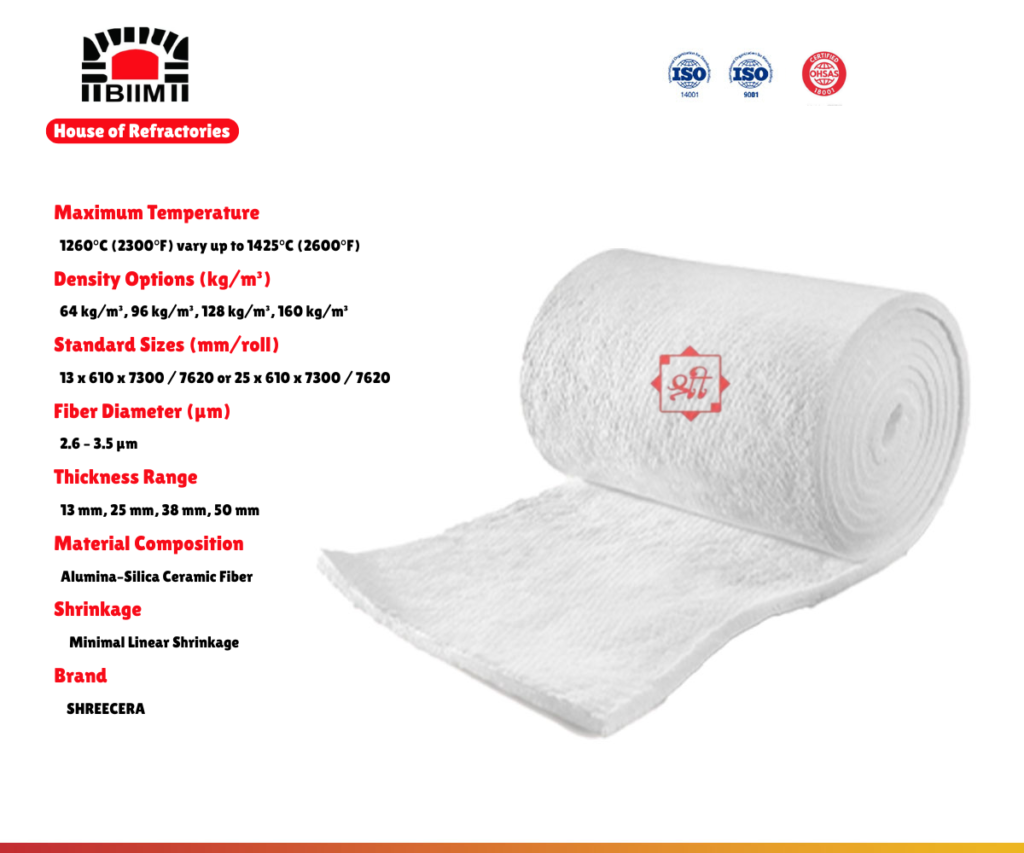
Ceramic fiber insulation is usually made up of aluminum oxide (Al₂O₃) and silicon dioxide (SiO₂), which are melted and then spun into fine fibers. The fibers are then processed into various forms, which are usually blankets, boards, and modules. The resulting material is porous and has excellent thermal insulation and flexibility. The ceramic fiber structure has a high efficiency in preventing heat transfer. The thermal conductivity is as low as 0.09 W/m·K at 500°C. This means that little heat is transferred through this material. The low thermal conductivity is one of the reasons why ceramic fiber is considered superior in high-temperature processes. Another reason why this material is considered superior is that it is resistant to chemicals. Ceramic fiber insulation is resistant to all types of acids, alkalis, and corrosive gases. This means that it can withstand extreme conditions and still perform as required. Lastly, ceramic fiber is considered lightweight compared to other materials. The average density of ceramic fiber blankets is between 96 and 128 kg/m³. This is significantly lower than other materials, which are usually heavy and can put too much load on equipment. The lightweight design is one of the reasons why ceramic fiber is considered superior in modern industries.Types of Ceramic Fiber Insulation Products
Ceramic Fiber Blankets
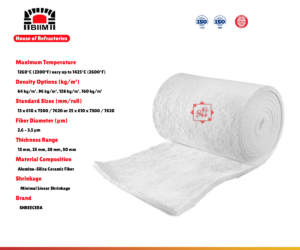
Ceramic fiber blankets are one of the most popular types of insulation materials in high-temperature applications. The ceramic fiber blankets are flexible, lightweight, and simple to install, which makes them suitable for insulating surfaces with irregular shapes, such as pipes, ducts, and furnace walls. To produce ceramic fiber blankets, ceramic fibers are simply needled together without using any binding materials. This gives them long-lasting characteristics, even in extreme temperatures. The ceramic fiber blankets can work within a temperature range of 1000°C to 1400°C. Due to this high-temperature capability, ceramic fiber blankets are often used in industrial furnaces, kilns, and high-temperature pipelines. Another significant advantage of using ceramic fiber blankets is their efficiency in installation. The ceramic fiber blankets are simpler to install compared to traditional refractory bricks. Studies have shown that ceramic fiber blankets can decrease heat loss up to 30% in high-temperature kilns, which increases efficiency. Firms looking to procure ceramic fiber blankets in Faridabad or ceramic fiber blankets in Delhi NCR can opt for companies like BM Enterprises, which offers high-quality ceramic fiber blankets and other thermal insulation materials.Ceramic Fiber Boards
Ceramic fiber boards are rigid boards of insulation material that are suitable for applications where structural strength is a prerequisite. Boards are not flexible like blankets and are thus suitable for applications where insulation is required, and structural strength is also a prerequisite. Boards are mostly suitable for furnace linings, kiln insulation, and fire protection systems. Boards are also suitable due to their ability to withstand heat since they are rigid and thus can maintain their shape even in extreme heat conditions. Ceramic fiber boards are also suitable due to their insulation ability, which is important in various industrial applications. Various thickness and density levels of ceramic fiber boards are manufactured to meet various industrial applications. For instance, high-density boards are suitable due to their structural strength, while low-density boards are suitable due to their insulation ability. Various companies are in search of a reliable ceramic fiber board manufacturer that is not only suitable but also of high quality and long-lasting. BM Enterprises is a suitable supplier of ceramic fiber boards that meet various industrial standards.Ceramic Insulation Blankets
Ceramic insulation blankets represent advanced insulation materials that have been designed for use with high-temperature equipment such as boilers, reactors, and heat treatment furnaces. They resemble ceramic fiber insulation blankets but may be customized for use in specialized industrial environments. Ceramic insulation blankets offer superior resistance to thermal shock; that is, they can be subjected to rapid heating and cooling without compromising performance. This is particularly essential in environments where equipment is often exposed to temperature variations. Besides offering thermal insulation benefits, ceramic insulation blankets offer benefits in terms of fire resistance and acoustic insulation. Their non-combustible qualities help in ensuring workplace safety in environments where industrial activity is particularly hazardous.Key Benefits of Ceramic Fiber Insulation
High Temperature Resistance: Ceramic fiber insulation is resistant to high temperatures and is often used in furnaces, kilns, and boilers. Low Thermal Conductivity: Ceramic fiber insulation is also used to reduce heat loss and increase efficiency in high-temperature applications. Lightweight Structure: Ceramic fiber materials are lightweight compared to traditional refractory materials. Thermal Shock Resistance: Ceramic fiber materials are also resistant to thermal shock. Durable and Chemical Resistant: Ceramic fiber insulation is also known for its long life and ability to withstand chemicals. Versatile Products: Ceramic fiber blankets, ceramic insulation blankets, and ceramic fiber boards are versatile materials.Industrial Applications of Ceramic Fiber Insulation
Ceramic fiber insulation is widely used across many industries, including:| Industry | Application | Benefit |
| Steel & Foundry | Furnace lining and ladle insulation | Heat retention and efficiency |
| Petrochemical | Reactor and pipeline insulation | Chemical resistance |
| Power Plants | Boilers and turbines | Energy efficiency |
| Ceramics | Kiln insulation | Stable temperature control |
| Aerospace | Engine heat shielding | Lightweight thermal protection |
Ceramic Fiber Blankets Manufacturer in Faridabad – BM Enterprises
For industries in North India looking for trustworthy insulation materials, BM Enterprises is known to be a trustworthy ceramic fiber blankets manufacturer in Faridabad and a refractory insulation products supplier. The company offers a variety of insulation materials, including:- Ceramic fiber blankets
- Ceramic insulation blankets
- Ceramic fiber boards
- High-temperature refractory materials