Buying a hog roast machine is a big decision. Whether you want one for backyard parties, weekend events, or a full blown catering business, you need to pick the right machine from day one. A wrong choice can cost you hundreds or even thousands of dollars in wasted money, frustration, and disappointing results.
But here is the good news. Once you know exactly what to look for, the decision becomes much easier.
In this guide, we will walk you through every important factor you need to consider before handing over your hard earned cash. By the end, you will know exactly which hog roast machine suits your needs, your budget, and your goals.
Let us dive right in.
1. Determine Your Purpose First
Before you even start browsing machines, ask yourself one simple question. What will I use this machine for?
Your answer changes everything.
If you plan to roast a pig once or twice a year at family gatherings, you do not need a heavy duty commercial unit. A smaller, more affordable machine will do the job perfectly. However, if you plan to cater weddings, festivals, and corporate events every weekend, you need something built for high volume, repeated use.
Here is a quick breakdown:
Personal or Home Use: A compact machine with basic features works fine. You will save money and storage space.
Semi Professional Use: You need a mid range machine with better build quality and consistent heat distribution.
Commercial or Catering Use: Invest in a heavy duty stainless steel machine with professional grade features. It will pay for itself quickly.
Knowing your purpose keeps you from overspending on features you will never use or underspending on a machine that cannot handle the workload.
2. Size and Cooking Capacity
Size matters more than most people think.
Hog roast machines come in various sizes, and you need to match the machine capacity to the size of the pig you plan to cook. A standard whole hog weighs anywhere from 30 kg to 80 kg. Some machines handle smaller pigs perfectly but struggle with larger ones.
Ask yourself these questions:
How many guests will I typically serve?
What size pig will I usually cook?
Do I need to cook side dishes or other meats at the same time?
A general rule of thumb is that one whole hog feeds about 80 to 120 people, depending on the size and serving portions. If you regularly serve larger crowds, look for machines with a bigger cooking chamber or ones that offer additional trays and racks for sides.
Also, do not forget about physical dimensions. Measure your storage space, your vehicle, and the areas where you will set up. A machine that does not fit through your gate or into your van is a problem you want to avoid.
3. Build Quality and Materials
This is where many buyers make their biggest mistake. They chase a low price tag and end up with a flimsy machine that rusts, warps, or breaks down after a few uses.
Always prioritize build quality.
The best hog roast machines use stainless steel for the cooking chamber, body panels, and internal components. Stainless steel resists rust, handles extreme heat without warping, and cleans up easily. It also looks professional, which matters if you are serving at public events.
Avoid machines made from thin, low grade mild steel. They may look fine in photos online, but they deteriorate fast, especially when exposed to grease, moisture, and high temperatures repeatedly.
Check the welds, hinges, wheels, and handles too. These small details reveal a lot about overall craftsmanship. A solid machine feels sturdy when you open the lid, push it around, and lock it into place. A cheap machine wobbles, creaks, and feels unstable.
Reputable suppliers like Sunshine BBQs build their machines with high grade stainless steel and focus on durability, which makes a noticeable difference in long term performance and reliability.
4. Heat Source Gas or Charcoal
Most modern hog roast machines run on gas, and for good reason. Gas gives you precise temperature control, consistent heat, and easy ignition. You turn a knob, light the burners, and set your temperature. Simple.
Charcoal machines deliver a more traditional smoky flavour, but they require more skill, attention, and effort. You will spend more time managing the fire and adjusting airflow. For beginners, this learning curve can lead to uneven cooking or dried out meat.
Quick comparison:
Gas offers excellent temperature control, very easy use, clean juicy flavour, high convenience, and moderate running cost.
Charcoal offers moderate temperature control, requires skill, smoky traditional flavour, lower convenience, and low running cost.
For most buyers, especially those entering the catering business, gas is the smarter choice. You get reliable results every single time without babysitting the fire for hours.
5. Temperature Control and Heat Distribution
A great hog roast machine distributes heat evenly across the entire cooking chamber. Uneven heat creates hot spots, which means one side of your pig cooks faster than the other. The result is dry overcooked meat in some areas and undercooked meat in others.
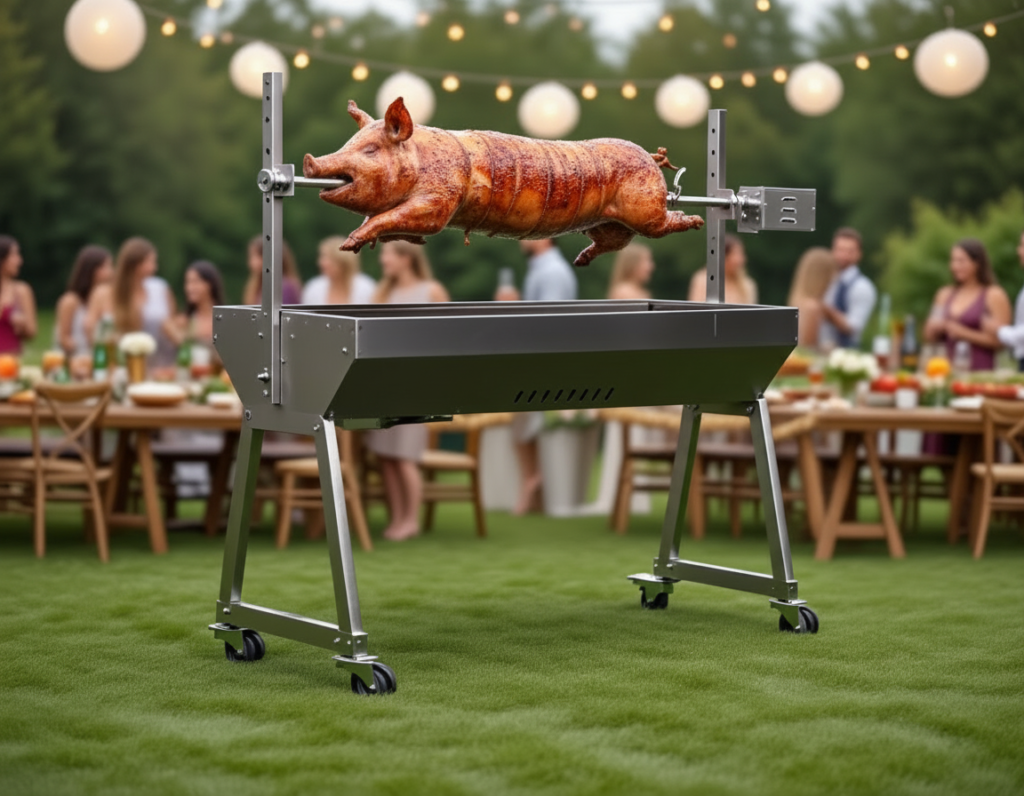
Look for machines with multiple burners spread across the base. This setup ensures heat reaches every part of the pig uniformly. Some premium machines also include a spit rotisserie mechanism that slowly rotates the hog, giving you crispy skin all around.
A built in thermometer is another must have feature. You need to monitor the internal temperature without constantly opening the lid. Every time you open the lid, you lose heat and extend the cooking time.
6. Portability and Mobility
Unless you plan to bolt your machine to one spot permanently, portability matters a lot.
A good hog roast machine sits on heavy duty lockable wheels that roll smoothly across grass, gravel, and pavement. You should be able to push it, steer it, and lock it in place easily.
Weight matters too. Commercial machines can weigh anywhere from 80 kg to over 200 kg. Make sure you can load it into your vehicle safely. Some machines feature foldable legs or detachable parts to make transport easier.
If you plan to cater at different locations every week, prioritize a machine designed for frequent travel. Reinforced corners, secure latches, and a compact footprint all make life easier.
7. Versatility
The best hog roast machines do more than just roast a whole pig.
Many high quality machines double as BBQ grills, chicken rotisseries, kebab cookers, and outdoor ovens. This versatility lets you offer a wider menu without buying separate equipment.
Look for machines that include:
Removable grill plates
Additional cooking racks or trays
Spit poles and attachments for different meats
Warming shelves for sides and sauces
A versatile machine earns its value many times over. You can serve pulled pork, roasted chickens, grilled burgers, sausages, and vegetable skewers from the same unit.
8. Ease of Cleaning
Cleaning is not fun, but it is essential.
Choose a machine with smooth non porous interior surfaces that wipe down easily. Stainless steel wins here because grease and residue do not stick like they do on rough surfaces.
Removable drip trays, grease channels, and detachable parts make cleaning faster and less messy. Some machines even include a drainage tap to remove excess fat and juices easily.
If a machine looks difficult to clean, it probably is. Skip it.
9. Price and Value for Money
Hog roast machines range from a few hundred dollars to several thousand. Focus on value, not just price.
A cheap machine that breaks after ten uses costs more than a quality machine that lasts ten years. Think about cost per use, not just the upfront price.
Typical budgets:
Home use: 500 to 1500 dollars
Semi professional: 1500 to 3500 dollars
Commercial catering: 3500 to 8000 dollars or more
Check what is included in the price. Some suppliers bundle accessories and delivery. Others charge extra. Brands like Sunshine BBQs often offer value packages with essential accessories included.
10. Warranty and After Sales Support
Never overlook the warranty.
A solid warranty shows the manufacturer stands behind their product. Look for at least one to two years on the body and key components.
After sales support matters too. Can you get replacement parts easily? Do they offer phone or email support? Read reviews and ask other buyers.
A company that disappears after the sale is not worth your business.
Final Thoughts
Buying a hog roast machine does not have to feel overwhelming. Focus on your purpose, prioritize build quality, choose the right size, and make sure your machine is easy to use, clean, and transport.
Take your time comparing options. Read reviews. Ask questions. Invest in quality over cheapness. A well built hog roast machine will serve you for years, deliver amazing results, and pay for itself faster than you think.