Tarps for Sale: How to Choose the Best Tarps for Protection and Performance
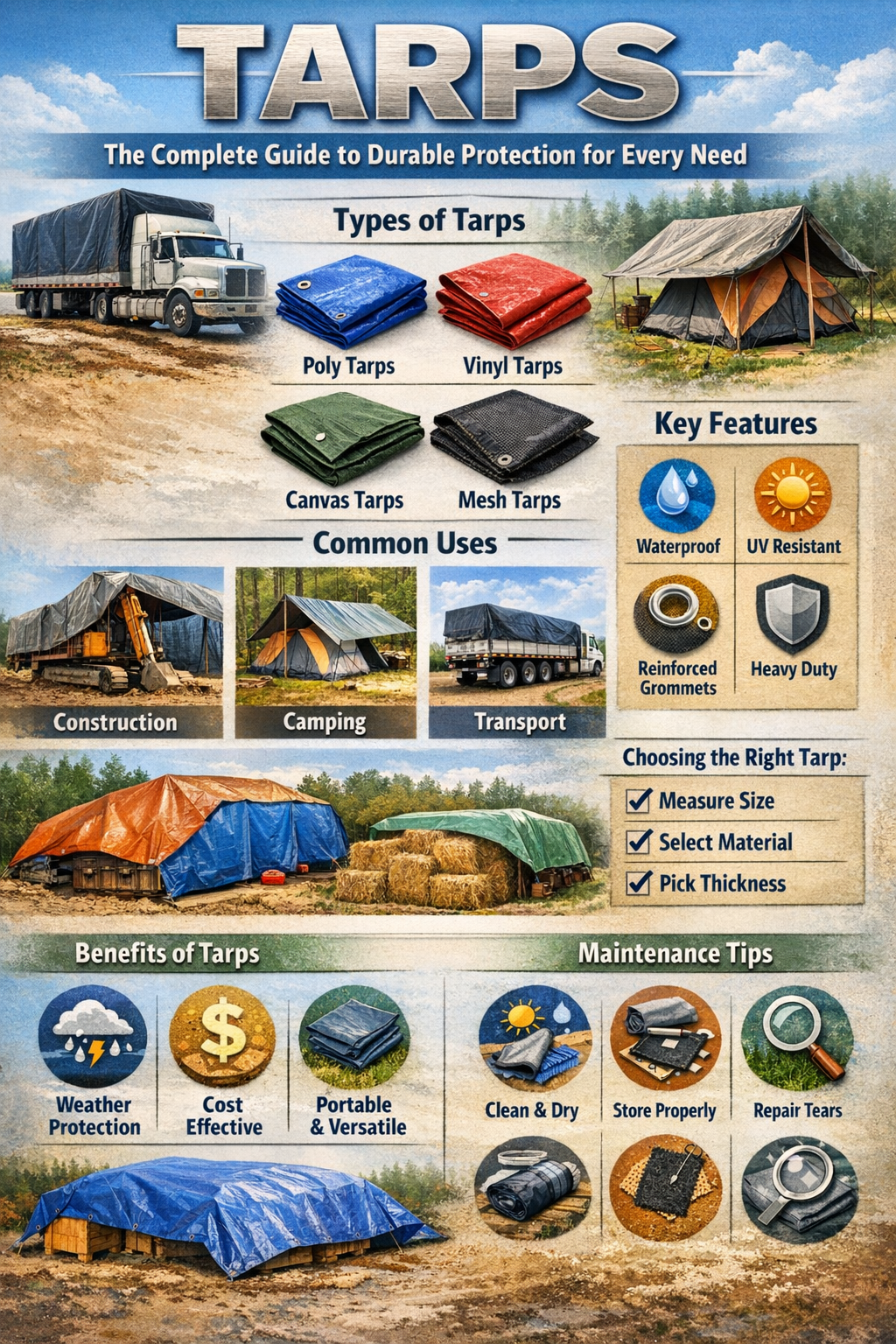
Tarps are one of the most essential protective tools used across homes, businesses, and industrial sites. Whether you need to cover construction materials, protect vehicles, or create outdoor shelter, finding the right tarps for sale ensures long-lasting durability and reliable coverage.
This detailed, skimmable guide explains tarp types, materials, features, and buying tips — helping you make the best purchase decision.
Why Tarps Are a Must-Have Protection Solution
Tarps are popular because they provide instant and affordable protection against environmental damage.
Key Benefits
-
Shields against rain and moisture
-
Protects from UV rays
-
Covers equipment and vehicles
-
Prevents dust and debris buildup
-
Offers temporary shelter solutions
Because of their flexibility, tarps are used in both short-term and long-term applications.
Common Uses of Tarps
Understanding how tarps are used helps determine which type is right for you.
Construction Projects
Tarps protect wood, cement, and tools from weather exposure and theft.
Trucking and Transportation
Flatbed trailers rely on heavy-duty tarps to secure cargo.
Agriculture and Farming
Farmers cover hay, grain, and machinery with durable tarps.
Camping and Outdoor Use
Tarps function as tents, ground covers, and rain shields.
Home Improvement
Perfect for roof repairs, painting, and landscaping cleanup.
This wide usage is why demand for tarps for sale continues to grow.
Types of Tarps Available
Selecting the correct tarp starts with choosing the right material.
Poly Tarps
Polyethylene tarps are the most commonly purchased.
Features include:
-
Waterproof coating
-
Lightweight design
-
UV resistance
-
Budget friendly
Best for general outdoor coverage.
Vinyl Tarps
Vinyl tarps are heavy-duty and industrial grade.
Ideal for:
-
Flatbed trucking
-
Equipment storage
-
Long-term outdoor exposure
They provide superior tear and abrasion resistance.
Canvas Tarps
Canvas tarps are breathable rather than fully waterproof.
Advantages:
-
Prevent condensation
-
Mildew resistant
-
Heat tolerant
Often used for machinery and painting projects.
Mesh Tarps
Mesh tarps allow airflow while blocking debris and sunlight.
Common uses:
-
Construction scaffolding
-
Dump trucks
-
Shade structures
They reduce wind stress while maintaining protection.
Key Features to Look for When Buying Tarps
When browsing tarps for sale, pay attention to quality indicators.
Thickness (Mil Rating)
Higher thickness means stronger durability.
Waterproof Capability
Essential for rain and moisture protection.
UV Treatment
Prevents sun damage and material breakdown.
Grommet Spacing
Closer grommets allow stronger tie-downs.
Reinforced Edges
Heat-sealed seams increase lifespan.
These features directly impact tarp performance.
Duty Grades Explained
Tarps are categorized by strength levels.
Light-Duty Tarps
-
Short-term use
-
Indoor projects
-
Budget friendly
Medium-Duty Tarps
-
Home improvement
-
Landscaping
-
Equipment coverage
Heavy-Duty Tarps
-
Industrial sites
-
Truck loads
-
Extreme weather protection
Choosing the right grade prevents early wear.
Weather Protection Advantages
Tarps provide reliable defense against environmental conditions.
Rain Protection
Waterproof coatings prevent leaks.
Sun Protection
UV resistance stops fading and cracking.
Wind Defense
Heavy tarps block debris during storms.
Snow Coverage
Prevents ice and snow accumulation.
This makes tarps essential for emergency preparedness.
How to Choose the Right Size
Correct sizing ensures full coverage.
Measurement Tips
-
Measure length and width
-
Add extra for draping
-
Allow tie-down space
Slightly oversized tarps provide better protection.
Maintenance Tips for Long-Lasting Tarps
Proper care extends tarp lifespan.
-
Clean with mild soap
-
Dry before storage
-
Fold neatly
-
Store in cool areas
-
Avoid sharp surfaces
Routine maintenance prevents mold and tearing.
Custom vs Ready-Made Tarps
Different projects require different solutions.
Ready-Made Tarps
-
Standard sizes
-
Lower cost
-
Immediate availability
Custom Tarps
-
Exact dimensions
-
Reinforced edges
-
Specialized materials
Custom options suit unique equipment or structures.
Mistakes to Avoid When Buying Tarps
Avoid these common errors:
-
Choosing the wrong material
-
Ignoring thickness ratings
-
Buying undersized tarps
-
Skipping UV protection
-
Selecting light-duty for heavy jobs
Smart buying decisions ensure long-term value.
Final Thoughts
With so many tarps for sale, choosing the right one comes down to your specific needs. From lightweight poly tarps to industrial-grade vinyl covers, each type serves a unique purpose.
By focusing on durability, material, size, and weather resistance, you can invest in tarps that deliver dependable protection for years. Whether for construction, transportation, agriculture, or home use, tarps remain one of the most versatile and cost-effective coverage solutions available today.