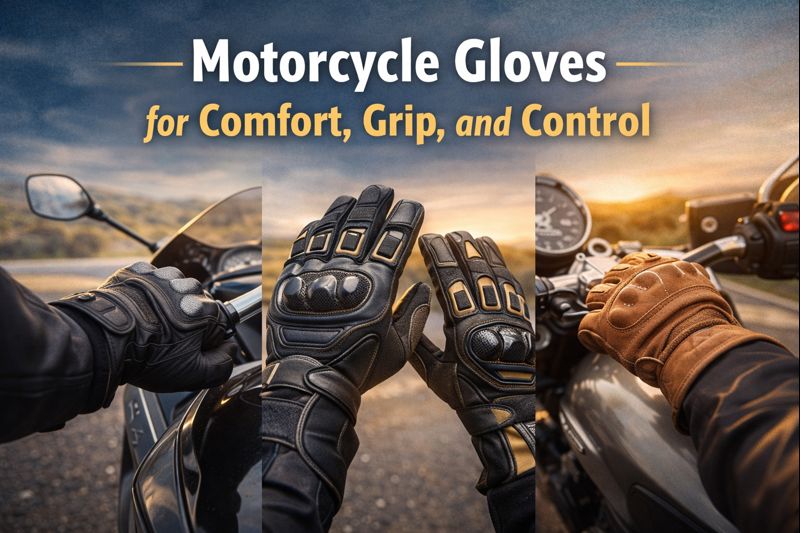
Motorcycle gloves are a fundamental component of rider safety and control, designed to protect the hands from impact, abrasion, vibration, and environmental exposure. Beyond protection, gloves significantly influence rider comfort, grip precision, and maneuverability, affecting overall riding performance. For riders of different genders and anatomical structures, selecting gloves tailored to fit, material requirements, and ergonomic design is critical for both safety and operational efficiency.
This article provides an in-depth, fact-driven analysis of motorcycle gloves, focusing specifically on leather fingerless gloves men and leather fingerless gloves Women. It examines materials, construction, safety features, ergonomic design, and practical applications, supporting informed, professional-level gear decisions.
The Role of Motorcycle Gloves in Rider Safety
Motorcycle gloves serve as an integral component of the personal protective equipment (PPE) system, complementing helmets, jackets, and boots. Their primary functions include:
-
Impact Protection: Reinforced knuckles and finger guards absorb shock during collisions.
-
Abrasion Resistance: Leather or synthetic overlays protect skin during slides.
-
Grip Enhancement: Textured palms, padding, and flexible materials improve throttle, brake, and clutch control.
-
Environmental Shielding: Protection against wind, rain, heat, and cold improves comfort and reduces fatigue.
Ergonomic design and material selection ensure gloves do not impede hand movement, maintaining precise control of motorcycle input devices.
Leather Fingerless Gloves for Men: Balance of Protection and Dexterity
Leather fingerless gloves men are engineered to combine protection with increased tactile sensitivity and airflow, offering an ideal solution for warm-weather riding or cruiser-style motorcycles.
Material Characteristics
-
Genuine Leather Shells: Provide abrasion resistance and durability.
-
Reinforced Palm and Knuckle Pads: TPU or leather overlays absorb impact.
-
Breathable Back Panels: Enhance airflow and reduce hand sweating during extended rides.
Functional Benefits
-
Enhanced grip on handlebars and control levers
-
Reduced hand fatigue due to lightweight construction
-
Increased comfort for short to medium-distance riding
Common Use Cases
-
Urban commuting and stop-and-go traffic
-
Cruiser and cafe-style motorcycles
-
Warm-weather and summer touring scenarios
Leather Fingerless Gloves for Women: Ergonomic Precision and Comfort
Leather fingerless gloves Women integrate ergonomic adaptations to accommodate female hand anatomy, ensuring proper fit without compromising safety or control.
Design Features
-
Narrower finger and palm profiles for accurate leverage and grip
-
Adjustable closures for secure fit and wrist support
-
Lightweight construction for reduced fatigue
Protective Elements
-
Reinforced knuckles and padded palms
-
Double-stitched seams for increased durability
-
Flexible leather panels for unrestricted hand movement
Practical Applications
-
Commuting in urban or suburban settings
-
Short-distance touring or casual riding
-
Warm-weather riding where airflow and ventilation are priorities
Key Construction and Material Standards
Motorcycle gloves are designed to meet established industry standards for abrasion and impact resistance:
-
CE EN 13594:2015: Specifies performance levels for protective gloves in terms of impact absorption, abrasion resistance, and seam strength.
-
ISO and ASTM Guidelines: Provide additional testing protocols for leather durability and protective padding.
Compliance with these standards ensures gloves maintain protective performance in realistic riding conditions.
Expert Insights and Best Practices
Professional riders and gear specialists recommend the following:
-
Fit and Dexterity: Gloves should conform closely to the hand while allowing full mobility for throttle, clutch, and brake control.
-
Material Assessment: Leather should be flexible yet durable; reinforced padding should cover impact zones without compromising grip.
-
Ventilation Considerations: Fingerless designs are ideal for warm climates but may require supplemental protection in cooler or rainy conditions.
-
Maintenance: Regular cleaning and leather conditioning extend glove lifespan and maintain protective properties.
-
Gear Integration: Gloves must complement jacket sleeves, wrist closures, and control systems for seamless riding ergonomics.
Common Mistakes and Misconceptions
Misconception 1: Fingerless gloves provide minimal protection
High-quality leather fingerless gloves include reinforced knuckles, padded palms, and abrasion-resistant leather to mitigate impact risk.
Misconception 2: All gloves fit the same
Hand anatomy varies by gender and individual proportions; poor fit reduces grip precision and can lead to fatigue or injury.
Misconception 3: Ventilation reduces safety
Properly designed fingerless gloves balance airflow with reinforced protective zones to maintain safety while improving comfort.
Misconception 4: Leather requires no maintenance
Leather gloves require periodic cleaning and conditioning to preserve flexibility, durability, and protective performance.
Frequently Asked Questions (FAQs)
1. How do motorcycle gloves improve rider control?
They enhance grip on handlebars and levers while stabilizing hands during vibrations and sudden maneuvers.
2. Are fingerless gloves safe for highway riding?
Yes, for moderate speeds and warm weather; however, full-finger gloves offer superior protection at high speeds.
3. How should leather fingerless gloves fit?
Snugly around fingers and palms without restricting motion, ensuring optimal control and comfort.
4. What protective features should be prioritized?
Reinforced knuckles, padded palms, abrasion-resistant leather, and secure wrist closures.
5. Can women’s gloves be interchangeable with men’s gloves?
While possible, gender-specific ergonomics provide superior fit and control for female riders.
6. How do gloves affect fatigue?
Well-fitted, lightweight gloves reduce hand strain and maintain grip over long rides.
7. Are leather gloves weather-resistant?
Leather naturally resists wind and moderate moisture, but additional waterproofing is recommended for heavy rain.
8. How should gloves be maintained?
Clean with mild products, condition leather periodically, and inspect for wear in protective zones.
9. Do fingerless gloves impact braking and clutch operation?
Properly fitted gloves maintain tactile feedback, allowing precise lever control.
10. How often should motorcycle gloves be replaced?
Replace when leather shows excessive wear, padding compression, or after significant impact.
Conclusion
Motorcycle gloves are essential for protecting hands, enhancing grip, and improving control across diverse riding environments. Leather fingerless gloves men combine durability, tactile sensitivity, and airflow for long-term comfort and precise handling, while leather fingerless gloves Women integrate ergonomic adjustments for superior fit and control. Selecting gloves based on fit, material quality, protective features, and riding style ensures optimal hand protection, comfort, and control, forming a critical component of a complete rider safety system.