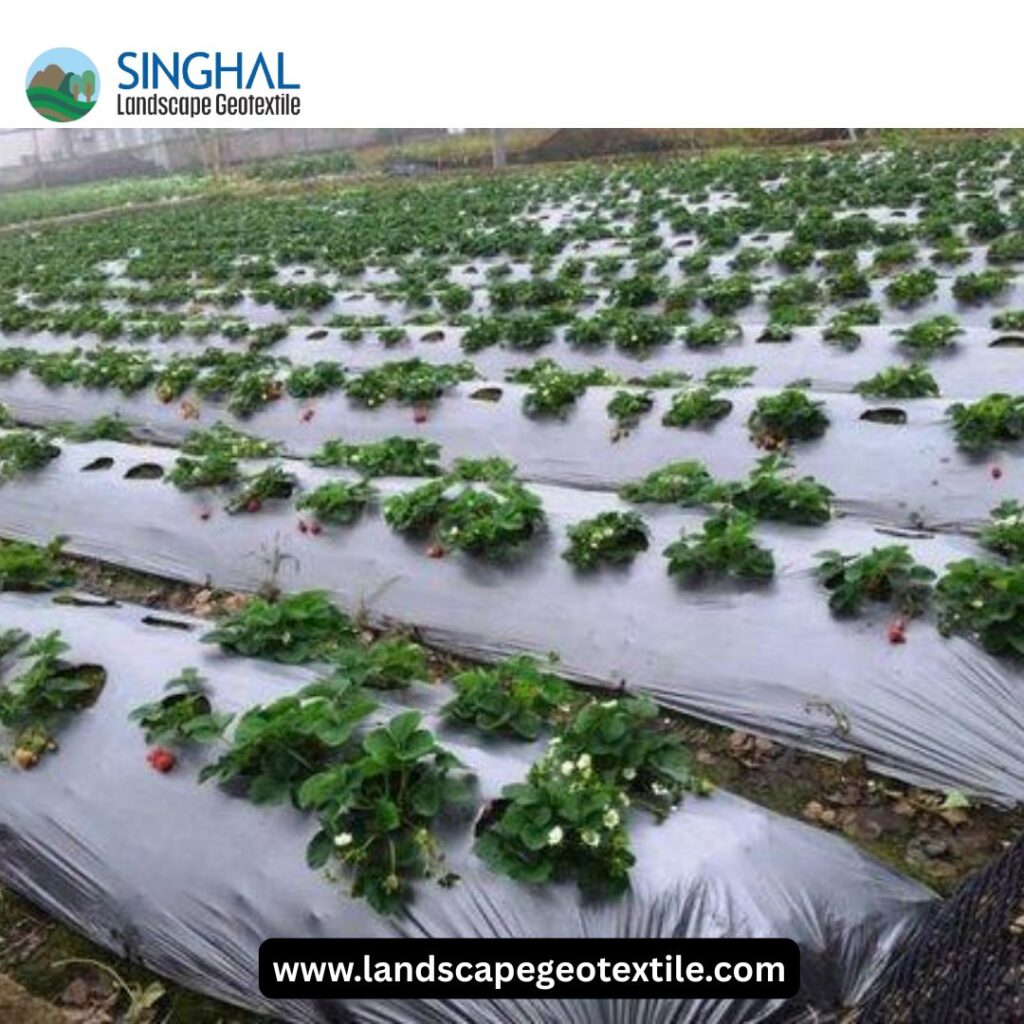
In the modern agricultural world, new approaches and sustainability innovations will be key if food security and the health of the planet are to be maintained. Of all these, the mulch film has been a trendsetter for the farmers across the globe. Called plastic mulch film, this thin sheet of polyethylene laid over the soil creates a microclimate that warms the soil in multiple ways beneficial to growing crops. Its major use is to suppress weed growth, maintain soil moisture, and increase soil temperature for higher yield production in agriculture. With increasing worldwide demand for “sustainable” agricultural practices, mulch film has taken centre-stage as a key tool to enhance productivity while being as green and clean an option the environment will allow.
Benefits of Mulch Film for Sustainable Farming
The Black plastic mulching film is also in accordance with the norms of sustainable agricultural practices. As a barrier, mulch film reduces the moisture evaporation from soil promoting greater use of water — an especially important feature during times of water-stress. It also inhibits weed growth, lowering reliance on chemical herbicides — good for the environment and farm workers’ health. In addition, the mulching film can keep the soil temperature in even level and promote the crop growth and maturity. These advantages enhance farm productivity and are an economy for eco-friendly farming operations that can even together reduce the carbon footprint of total agriculture system to minimum.
Exploring Types of Plastic Mulch Films
There are different types of plastic mulch films to meet the requirements of crops under various environmental conditions. Polyethylene mulch film is the most widely used, and it is highly desirable for its inexpensive cost and durability. There are different colors — black, white, reflective silver — that each perform certain tasks (weed suppression, soil warming and pest deterrence). In this context, biodegradable mulch films have recently been introduced in the market as environmentally friendly products that degrade naturally after use and no longer require to be physically removed from fields and disposed of. The suitable mulch film would vary according to the crop, climatic condition and the regulation for environment due to this it is necessary to select apt product as per respective agricultural settings.
The Growing Market for Mulch Film: Focus on India and the Philippines
India is one of the largest producers and consumers of mulch film, also there are many mulch film manufacturers in India. These companies serve the domestic market and makes exports as well, owing to India’s large agri terrains and its wide set of climatic conditions. The cost of mulching film in India differs as per quality, thickness and brand however it is cheap because agriculture is almost run on the massive scale. In the Philippines and other tropical countries, there is already a growing use of plastic mulch in the cultivation of horticultural crops, especially vegetable and fruit. The mulching film price in the Philippines is cost-effective, which based on local production, import and market requirements. You Might Be Interested Kalinga farmers ‘plant’ seeds into trash bags, sacks Farmers and agrarian reform beneficiaries in Butuan City learn veggie production KORIGAN launches biochar trial among Ilocos Norte home gardeners As the market keeps growing, affordable access to top quality mulch film is helping Filipino farmers thoroughly increase crop production and make farming more efficient.
Mulching Film Price Philippines is influenced by the following factors
Price of Polyethylene mulch film in the Philippines Depending on factors such as color, quality, thickness, UV resistance and eco-friendly it retails between 0.12-0.13 usd per square meter (PHP 6-7.00) Premium quality films however have UV stabilizers and are more tough, but they are a little expensive to buy though they last longer than normal and work better in harsh weather. Thicker films offer better weed suppression and soil protection, but are also more expensive. Furthermore, environmentally friendly biodegradable-mulch films will typically be more expensive because of advanced materials incorporated in the films. It is important for farmers to take these factors into consideration in order to select the mulch film that provides the best trade-off between cost and impact based on their crop and environmental conditions.
Innovations and Future Trends in Plastic Mulch Films
In conclusion, the prospects of mulch film look bright with many new developments continue to come out that will make those products more sustainable and effective. Developing biodegradable and compostable plastic mulch films that decompose on-site, eliminating some waste & pollution associated with disposal and recycling of used plastics. Progress has also been made in sensor films for the measurement of soil moisture, temperature or crop health for precision farming. In addition, the developed mulch films are being further customized in term of enhanced strength and UV resistance, as well as environmental friendliness to ensure that these hold true their promises for modern farming without significant ecological footprints. These advances will change the way farmers apply mulch films, which will become even more instrumental in sustainable farming.
Conclusion
In summary, Biodegradable mulch film manufacturers has become a vital factor in modern agriculture that increases CROPPYIELD from various aspects, saves practical resources and protects the environment. Farmers have a range of options to choose from— from standard plastic to degradable varieties — so they can select the type that best suits their crop, climate and budget. Conclusion The global significance of this technology can be seen in the number of mulch film producers in India and the growing availability of plasticulture including mulching films in the Philippines. With innovation still ongoing, environment-friendly and smart mulch films are expected for the sustainable future of agriculture worldwide.
Frequently Asked Questions
- What is mulch film used for in agriculture?
Mulching film is utilized to reduce weeds, protect against soil moisture loss, regulate temperature and to deter crops. - Are biodegradable mulch films better than traditional plastic?
Biodegradable mulch films are quite environmentally friendly because they degrade naturally, but it is relatively expensive. - How long does plastic mulch film last?
The life span depends on quality and environment, but it is typically one to three growing seasons. - Can mulch film be reused?
If undamaged, the film can be reused, although many growers like to use new films for best performance. - What precautions should be taken care of while selecting mulch film?
Consider crop type, climate, soil conditions, durability, cost, and environmental impact. - Who is the largest supplier of Mulch film?
Singhal Landscape Geotextile Supplier has a full range of mulch films including mulch film in black plastics. - Who is the largest exporter of Mulch Film?
Singhal Landscape Geotextile Exporter is a leading exporter of mulch film and sells quality products to a variety of countries. - Who is the largest manufacturers of Mulch Film?
Singhal Landscape Geotextile Manufacture is a recognized producer of mulch film, known for its quality products. - Is mulch film suitable for all crops?
It’s a double win for most crops: Again, suitability is dependent on particular crop needs and conditions. - What are the environmental concerns associated with plastic mulch film?
If films are not thrown away in a proper manner, then plastic pollution is certainly a risk; biodegradable choices help to address this particular issue.