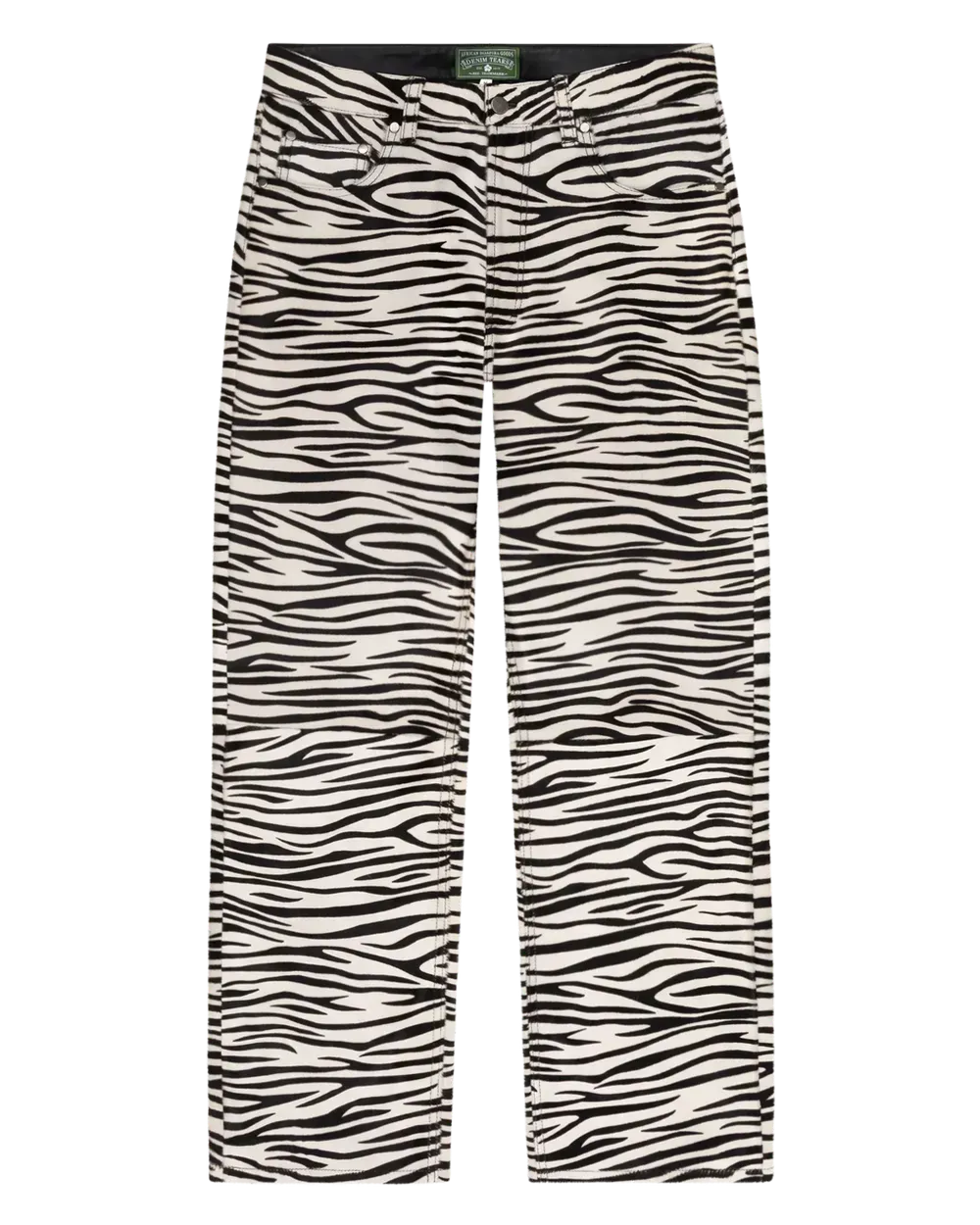
Denim Tears jeans are not just garments; they are visual essays stitched into cotton. At first glance, they may appear like another pair of fashion-forward denim, but a closer look reveals layers of history, identity, and cultural reflection. Created to speak where words often fall short, Denim Tears transforms jeans into a medium of storytelling—one that is deeply rooted in Black history, pain, resilience, and pride.
What makes Denim Tears jeans so striking is their intentionality. Every design choice feels deliberate, from the wash of the denim to the placement of symbols. The brand’s most recognizable motif—the cotton wreath—instantly reframes how we see both cotton and denim. Cotton, historically tied to slavery and exploitation, is reclaimed and recontextualized. Instead of being a symbol of oppression alone, it becomes a marker of remembrance and survival. Wearing Denim Tears jeans is not passive; it is an act of acknowledgment.
The beauty of these jeans lies in this tension between aesthetics and meaning. They are visually compelling—often minimal, clean, and thoughtfully composed—but they also carry emotional weight. The cotton wreath printed or embroidered on the denim is haunting in its simplicity. It invites questions. It asks the wearer and the viewer to sit with discomfort, to recognize history, and to understand that fashion does not exist in a vacuum. Denim Tears proves that clothing can be both beautiful and confrontational at the same time.
From a craftsmanship perspective, Denim Tears jeans stand out for their quality and attention to detail. The denim often features classic cuts—straight-leg, relaxed, or vintage-inspired silhouettes—that nod to timeless American workwear. This choice is important. Denim itself is a fabric deeply intertwined with American history, labor, and identity. By using traditional denim forms, the brand grounds its message in something familiar, making the story even more powerful. The jeans feel lived-in yet intentional, modern yet rooted in the past.
Another reason Denim Tears jeans resonate so strongly is their cultural relevance. In a fashion landscape that often borrows from Black culture without credit or context, Denim Tears does the opposite. It centers Black experience unapologetically. These jeans are not designed to chase trends; they exist to tell truths. As a result, they have become highly sought after—not just because of scarcity, but because people connect with what they represent. Wearing Denim Tears is a statement of awareness, respect, and alignment with a deeper narrative.
Stylistically, Denim Tears jeans are incredibly versatile. They can be worn simply—with a white T-shirt and sneakers—allowing the design to speak for itself. Or they can be layered into more expressive outfits, paired with jackets, boots, or accessories that echo their message. Regardless of how they are styled, the jeans remain the focal point. They don’t need loud branding or excessive embellishment. Their power comes from restraint and meaning.
There is also a quiet emotional beauty in Denim Tears. For many, they evoke reflection—on ancestry, on inherited trauma, on progress still unfinished. Fashion rarely invites this level of introspection, yet Denim Tears does so effortlessly. The jeans feel personal, almost intimate, as if they are carrying stories not just from the designer, but from generations before. This emotional resonance is what elevates them beyond luxury or streetwear into something closer to wearable art.
In a world where fashion is often reduced to consumption and hype, Denim Tears jeans offer a pause. They remind us that clothing can be purposeful, that style can be ethical, historical, and poetic. Their beauty is not just in how they look, but in what they make us feel and think. They challenge the wearer to engage with history rather than ignore it, to wear memory rather than erase it.
Ultimately, Denim Tears jeans are beautiful because they are honest. They do not try to soften the past or disguise its impact. Instead, they honor it—boldly, thoughtfully, and with care. In every thread, there is remembrance. In every design, there is intention. Denim Tears shows us that jeans can be more than fashion; they can be truth, stitched and worn with pride.