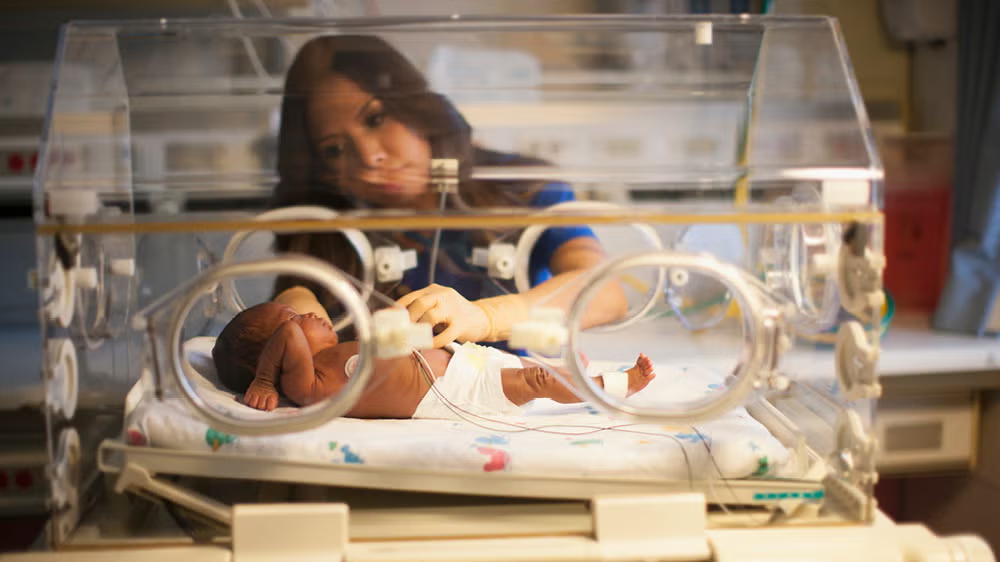
Fetal Viability by Week
Fetal viability means the stage in pregnancy when a baby can survive outside the mother’s womb, with or without medical support. This is an important topic for expectant parents, doctors, and intended parents using surrogacy. Understanding fetal viability by week helps families prepare emotionally and medically for different pregnancy situations.
In this article, we’ll explain the viability of fetus by week, what affects survival, and how modern medicine and surrogacy care — including services at a surrogacy clinic in Ukraine — play a role in healthy outcomes.
What Is Fetal Viability?
Fetal viability is the point when a fetus has developed enough organs — especially the lungs, brain, and heart — to live outside the womb. Before this stage, survival is extremely unlikely, even with medical help. Doctors usually measure fetal development in weeks of pregnancy, starting from the first day of the mother’s last period.
Fetal Viability by Week: A Simple Guide
Here’s a general breakdown of fetal viability by week:
Weeks 20–21
- Survival chance: Very low (less than 5%)
- Lungs and brain are still too immature
- Babies born this early usually cannot survive, even with intensive care
Weeks 22–23
- Survival chance: 10–30%
- Some babies may survive with advanced neonatal care
- High risk of long-term health problems
Weeks 24–25
- Survival chance: 50–70%
- This is often considered the early viability stage
- Babies need intensive care but have better outcomes than earlier weeks
Weeks 26–27
- Survival chance: 80–90%
- Lungs and nervous system are more developed
- Lower risk of severe complications
Weeks 28–30
- Survival chance: Over 95%
- Babies usually do very well with short-term medical support
- Most grow up healthy
Weeks 31–34
- Survival chance: Almost 100%
- Babies may need brief hospital care
- Long-term health issues are rare
This shows how the viability of fetus by week improves quickly as pregnancy progresses.
What Affects Fetal Viability?
Several factors influence whether a baby can survive outside the womb:
1. Gestational Age
The more weeks a baby has developed, the higher the chance of survival.
2. Birth Weight
Heavier babies usually do better because they are more physically developed.
3. Lung Development
The lungs are one of the last organs to mature. Babies born too early often need breathing machines.
4. Medical Technology
Modern neonatal intensive care units (NICUs) save many premature babies who would not have survived in the past.
5. Overall Health
Infections, birth defects, or pregnancy complications can reduce survival chances.
Why Fetal Viability Matters in Surrogacy
For intended parents using surrogacy, understanding fetal viability is especially important. Pregnancy monitoring, medical checkups, and proper care all help ensure the baby reaches a healthy stage of development.
Many families choose a surrogacy clinic in Ukraine because of:
- Advanced fertility technology
- High-quality prenatal care
- Well-regulated legal systems
- Affordable surrogacy cost compared to other countries
Clinics in Ukraine closely monitor fetal growth, track fetal viability by week, and provide immediate medical support if early delivery becomes necessary.
Surrogacy Cost and Medical Care in Ukraine
Ukraine is a popular destination for international surrogacy due to its balance of affordability and quality healthcare.
Surrogacy cost in Ukraine usually ranges from €35,000 to €60,000, depending on:
- Number of IVF cycles
- Egg donor services
- Pregnancy complications
- Neonatal care needs
- Accommodation and legal services
These packages often include:
- IVF treatment
- Surrogate compensation
- Prenatal monitoring
- Delivery services
- Legal documentation
- Post-birth support
This comprehensive care helps maximize healthy outcomes and improve fetal viability at all stages.
Emotional Impact of Fetal Viability
For parents, waiting for a baby to reach a safe stage of development can be emotionally intense. Each new week brings more hope and relief.
Many intended parents feel:
- Anxiety during early pregnancy
- Hope as the baby reaches 24–28 weeks
- Deep joy once full-term pregnancy is achieved
Support from doctors, counselors, and clinic coordinators can make this journey easier and more reassuring.
Final Thoughts
Understanding fetal viability by week helps parents make informed medical and emotional decisions. While survival is rare before 22–23 weeks, modern medicine now gives premature babies a real chance starting around 24 weeks. The viability of fetus by week improves dramatically as pregnancy continues.
For intended parents considering international surrogacy, choosing a reliable surrogacy clinic in Ukraine offers strong medical support, transparent surrogacy cost, and expert pregnancy monitoring — all of which improve the chances of a healthy baby.
One trusted name in this field is The Embryon Family, a clinic known for combining advanced medical care with compassionate support throughout the surrogacy journey.