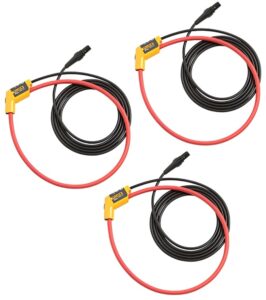
Fluke Rogowski Coil Set
As electrical panels get denser and loads get heavier, measuring current becomes both harder and more risk sensitive. A Fluke Rogowski Coil Set is designed for high AC current checks in tight spaces, helping technicians capture accurate readings without forcing a bulky clamp into crowded conductors. It is also a strong fit for technicians who need consistent results across shifts, sites, and service teams.
What a Rogowski coil set does
A Rogowski coil is a flexible current sensor that wraps around a conductor and senses the magnetic field created by AC current. The coil’s signal is processed by an integrator so compatible test tools can display current clearly. Because the loop is flexible, it fits around large busbars, bundled cables, and awkward routing where traditional jaws struggle.
Why flexibility improves real measurements
When the sensor fits properly, you spend less time repositioning and you reduce errors from partial closure or poor alignment. As a result, the reading is easier to repeat across phases, feeders, and panels, which is crucial for diagnostics and reporting.
Where the Fluke Rogowski Coil Set shines in the field
A flexible coil is most valuable when access is limited, downtime is expensive, and safety procedures must be followed.
Switchgear, contactors, and protective devices
Industrial cabinets often pack contactors, fuses, and switches into tight layouts. With a flexible loop, you can measure current on individual conductors without disturbing wiring or disconnecting cables. This supports faster fault isolation when a breaker trips, a motor overloads, or a circuit runs hotter than expected.
Power quality surveys and long logging sessions
Rogowski coils are commonly used with power quality instruments to capture load profiles and compare phases over time. They help identify unbalanced loading and shifting demand. Pair current data with thermal checks to confirm whether heat issues are caused by load, loose connections, or damaged connectors.
Modern electronics inside industrial systems
Plants blend power circuits with control electronics that include sensors, LEDs, microcontrollers, and controllers. Current measurements can confirm that power stages behave as expected, especially after changes to drives, soft starters, or control logic.
Key benefits buyers look for
A product relevant message should focus on outcomes that matter to maintenance teams and procurement.
-
Faster setup around crowded cables and busbars
-
Safer measurements with less hand exposure near energized conductors
-
Repeatable readings for comparisons across phases and feeders
-
Less disruption because conductors usually stay connected
-
Good fit with professional tools used for audits and troubleshooting
Choosing the right coil length and rating
Selection is mainly about fit and the current range you expect to see.
Coil length and conductor size
Longer coils wrap around thicker busbars or grouped cables. Shorter coils are easier to place in compact panels. Think about typical cable diameter, spacing, and whether you work mostly in switchgear or open trays.
Current range and resolution
If you routinely check heavy industrial loads, choose a coil set rated for high current with a stable integrator response. If you work on smaller distribution panels, resolution at moderate currents may matter more. In both cases, match the coil to the instrument input range and measurement mode.
Jobsite exposure
Work areas may include oils, dust, and vibration. A rugged jacket and dependable connectors help in industrial conditions. When heat is part of the problem, combine current readings with thermal tools or thermal pads on enclosures to track hotspots safely.
Setup habits that keep readings reliable
Even premium tools benefit from consistent technique.
-
Wrap the coil evenly and ensure it is fully closed
-
Keep the coil centered on the conductor when possible
-
Avoid enclosing multiple conductors unless measuring combined current
-
Route coil cables away from sharp edges and moving components
-
Confirm the tool setting matches the coil type and range
Quick validation after maintenance
After tightening lugs, replacing a contactor, or repairing damaged cables, a fast current check confirms the load is back to normal. If you also scan the area with thermal equipment, you can verify temperature stabilization and reduce repeat call outs.
How it supports broader maintenance decisions
Current measurements help justify preventive actions. For example, readings can reveal overload conditions that accelerate insulation aging, or show phase imbalance that increases heat. They can also support decisions around replacing capacitors in correction banks, upgrading worn connectors, or improving cable routing. During documentation, technicians often capture results on laptops as part of service records, commissioning notes, or compliance reports.
Care and storage for long term performance
Store the coil loosely to avoid kinks, keep the contact surfaces clean, and inspect the jacket for cuts or abrasions. If your workflow includes formal reporting, follow your internal calibration or functional verification schedule so measurements remain defensible over time.
Final thoughts
If your work involves high current AC measurements in tight electrical environments, flexibility and speed are not optional. A Fluke Rogowski Coil Set provides an efficient way to wrap around conductors, capture dependable readings, and support troubleshooting, power quality checks, and maintenance planning with a strong safety mindset.