aerial power cable
In the modern power transmission landscape, reliability, efficiency, and safety are paramount. One of the key components ensuring these standards is the aerial power cable. Designed for overhead power distribution, these cables are essential for utilities, industrial projects, and urban infrastructure. At HNBF Power, a global manufacturer of overhead conductors and power cables, we provide high-quality solutions that meet international standards and support large-scale power transmission projects.
What Is an Aerial Power Cable?
An aerial power cable is a type of overhead conductor used to transmit electricity over long distances without the need for underground installation. These cables are engineered to withstand environmental challenges such as wind, rain, ice, and UV radiation, making them ideal for outdoor installations in urban, rural, and industrial settings.
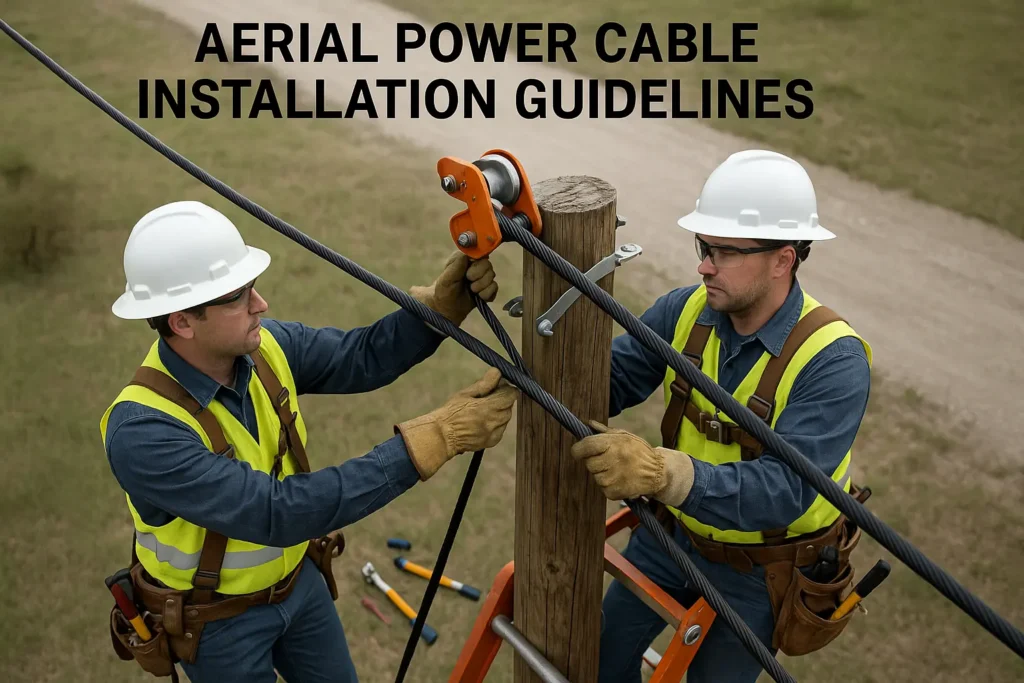
Unlike underground cables, aerial power cables are suspended from poles or towers, which reduces installation costs and allows for easier inspection and maintenance. Depending on the project’s voltage requirements, HNBF Power offers a variety of aerial cables, including AAC (All Aluminium Conductor), AAAC (All Aluminium Alloy Conductor), and ACSR (Aluminium Conductor Steel Reinforced), each designed to meet specific mechanical and electrical needs.
Key Advantages of Using Aerial Power Cables
1. High Reliability
Aerial power cables from HNBF Power are manufactured under strict quality control protocols to ensure durability and consistent performance. Their robust design minimizes the risk of power outages, ensuring reliable electricity supply even in harsh weather conditions.
2. Cost-Effective Installation
Installing aerial power cables requires less excavation and civil work compared to underground cables. This translates into reduced project timelines and lower overall costs, particularly in remote or challenging terrains.
3. Easy Maintenance
Since aerial cables are visible and accessible, routine inspections and maintenance are straightforward. Early detection of wear or damage helps prevent large-scale disruptions and extends the cable’s operational life.
4. Versatile Applications
Aerial power cables are widely used in utilities, industrial parks, renewable energy projects, and urban power grids. HNBF Power offers customized solutions tailored to project requirements, ensuring optimal performance across different voltages and load capacities.
Types of Aerial Power Cables Offered by HNBF Power
At HNBF Power, we manufacture a comprehensive range of aerial power cables designed for maximum efficiency and safety:
AAC (All Aluminium Conductor)
Ideal for low to medium voltage distribution, AAC cables offer excellent conductivity, corrosion resistance, and lightweight design. They are widely used in urban and rural electrification projects.
AAAC (All Aluminium Alloy Conductor)
AAAC cables provide superior strength-to-weight ratio compared to AAC, making them suitable for longer spans and areas exposed to harsh weather conditions.
ACSR (Aluminium Conductor Steel Reinforced)
For high-voltage transmission, ACSR cables combine aluminium’s conductivity with steel’s tensile strength. These cables are perfect for long-distance power lines and high-load applications.
ABC (Aerial Bundle Cable)
ABC cables consist of insulated conductors bundled together, offering a safer alternative for residential and commercial areas. They reduce the risk of short circuits and allow for closer pole spacing.
Key Considerations for Selecting Aerial Power Cables
When choosing aerial power cables for a project, engineers and procurement teams should consider:
-
Voltage and Current Requirements: Ensure the cable can handle the project’s load without overheating.
-
Mechanical Strength: Evaluate the cable’s ability to withstand wind, ice, and other environmental stressors.
-
Corrosion Resistance: For coastal or industrial environments, select cables with enhanced protection against corrosion.
-
Maintenance Needs: Consider accessibility for routine inspections and repairs.
HNBF Power provides detailed technical specifications and consultation services to help clients select the most suitable cable type for their project.
Why Partner with HNBF Power
With decades of experience in manufacturing overhead conductors and power cables, HNBF Power is committed to delivering quality, innovation, and reliability. Our aerial power cables are designed for performance, safety, and long-term durability, ensuring your power transmission projects operate efficiently and reliably.
We combine advanced manufacturing processes with international standards compliance, offering engineers and procurement professionals a trusted source for high-performance aerial power cables.
Frequently Asked Questions (FAQs)
Q1: What is the lifespan of an aerial power cable?
A: A well-maintained aerial power cable from HNBF Power can last 25–40 years depending on environmental conditions and load factors.
Q2: Can aerial cables be used in coastal areas?
A: Yes, our cables are engineered with corrosion-resistant materials suitable for coastal and high-humidity environments.
Q3: What are the advantages of ABC over traditional ACSR cables?
A: ABC cables reduce the risk of short circuits, are safer for residential areas, and allow for closer pole spacing.
Q4: How do I choose the right aerial cable for my project?
A: Consider voltage, current, span length, environmental conditions, and maintenance accessibility. HNBF Power provides expert consultation for all these factors.
Q5: Does HNBF Power offer customized solutions?
A: Yes, we provide tailor-made aerial cable solutions based on project specifications, ensuring optimal performance and reliability.
Contact HNBF Power for Your Aerial Cable Needs
Reliable power transmission starts with the right aerial power cable. At HNBF Power, we offer high-quality, durable, and efficient overhead cables tailored to meet the needs of utilities, industrial projects, and urban infrastructure.
Contact us today to discuss your project requirements and explore customized aerial cable solutions that ensure maximum efficiency and long-term reliability.