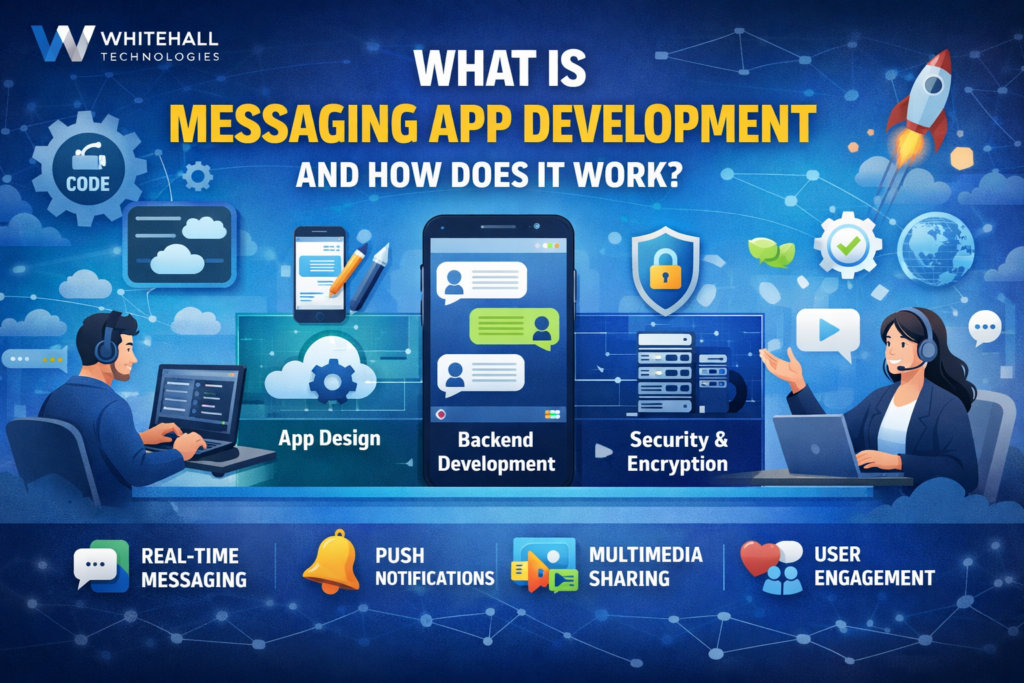
Messaging App Development
At this point, instant communication isn’t a luxury it’s muscle memory. We message without thinking, expecting replies in seconds, not hours. That everyday habit is exactly why messaging app development has become such a cornerstone of modern digital products. From casual chats to mission-critical business conversations, these apps quietly power how people connect, collaborate, and share information in real time. But behind that effortless “sent” and “delivered” experience lies a surprisingly complex system worth understanding.
Messaging App Development: What It Really Means
At a high level, messaging app development is the process of designing and building platforms that allow users to exchange messages instantly and securely over the internet. Simple enough, right? Well yes and no.
On the surface, users see text bubbles, emojis, voice notes, or shared files. Underneath, however, the app is juggling servers, databases, security layers, and real-time communication protocols, all while trying not to break a sweat. The goal is to make conversations feel natural and uninterrupted, even when thousands or millions of users are chatting at the same time.
These apps can range from basic one-to-one chat tools to robust platforms supporting group conversations, media sharing, voice calls, and video interactions.
Messaging App Development: How the Process Works Step by Step
Although users experience messaging as instant, messaging app development follows a carefully staged process. Each layer builds on the last, ensuring speed, reliability, and privacy.
Here’s how it typically comes together:
- User authentication and profiles
Every conversation starts with identity. Secure login systems verify users and manage profiles. - Message transmission
Messages are sent through real-time communication protocols that ensure low latency and fast delivery. - Server processing
Servers route messages, handle delivery status, and store conversation history when needed. - Notification handling
Push notifications alert users without draining battery life or overwhelming devices. - Data synchronization
Conversations stay consistent across multiple devices, even when users switch phones or reconnect after being offline.
All of this happens in millisecondsmout of sight, out of mind, and exactly how users like it.
Core Features That Define a Successful Messaging App
While every messaging platform has its own personality, the most successful ones share a common foundation.
Key features often include:
- One-to-one and group chats
- Media sharing (images, videos, documents)
- Message status indicators (sent, delivered, read)
- Voice notes and reactions
- Searchable chat history
These elements aren’t just bells and whistles they’re expectations. Leave one out, and users notice immediately.
The Role of Real-Time Technology
Real-time communication is the heartbeat of any messaging platform. Without it, conversations feel laggy and disjointed.
To keep things snappy, developers rely on:
- WebSockets or similar real-time protocols
- Cloud-based servers for scalability
- Load balancing to handle traffic spikes
When everything works in harmony, users don’t think about the tech at all. They just talk and that’s the point.
Security and Privacy: The Silent Dealbreaker
People may not talk about security every day, but they absolutely expect it. One breach, one leak, and trust evaporates.
Modern messaging platforms prioritize:
- End-to-end encryption
- Secure key management
- Controlled data storage policies
These measures ensure conversations stay private, even from the platforms hosting them. In a world obsessed with data, privacy has become a competitive advantage.
Why Businesses Rely on Messaging Platforms
Messaging apps aren’t just for social chatter anymore. Businesses lean on them heavily for speed and clarity.
They’re used for:
- Customer support conversations
- Internal team communication
- Real-time updates and alerts
Compared to email, messaging feels lighter, faster, and more human. It cuts through noise and gets straight to the point.
Scalability: Planning for Growth Without Panic
An app that works for 1,000 users might buckle under 100,000 if scalability isn’t planned early.
Scalable systems focus on:
- Modular architecture
- Cloud infrastructure
- Efficient database management
This forward-thinking approach ensures performance stays smooth as user numbers climb no last-minute scrambling required.
Challenges Developers Must Navigate
Of course, it’s not all smooth sailing. Building messaging platforms comes with its fair share of hurdles.
Common challenges include:
- Handling high message volumes simultaneously
- Maintaining performance across regions
- Managing security without slowing things down
The trick is balance keeping systems robust without making them heavy or complicated.
The Evolution of Messaging Apps
Messaging platforms don’t stand still. They evolve as user behavior changes.
Recent shifts include:
- AI-powered chat moderation
- Smart replies and chatbots
- Voice and video-first communication
These innovations aim to make conversations faster, smarter, and more intuitive sometimes before users even realize they want them.
Why Messaging Apps Feel So “Human”
There’s a reason messaging apps dominate daily screen time. They mimic natural conversation quick exchanges, informal tone, instant feedback.
That human rhythm keeps people engaged. It feels less like using software and more like talking, which is exactly why messaging platforms continue to thrive.
Conclusion
Messaging apps may look simple on the surface, but they’re powered by intricate systems working tirelessly in the background. By combining real-time technology, thoughtful design, and strong security, these platforms make digital communication feel effortless and natural. As expectations for instant connection continue to rise, messaging apps won’t just support communication they’ll shape how people and businesses interact in the years ahead.