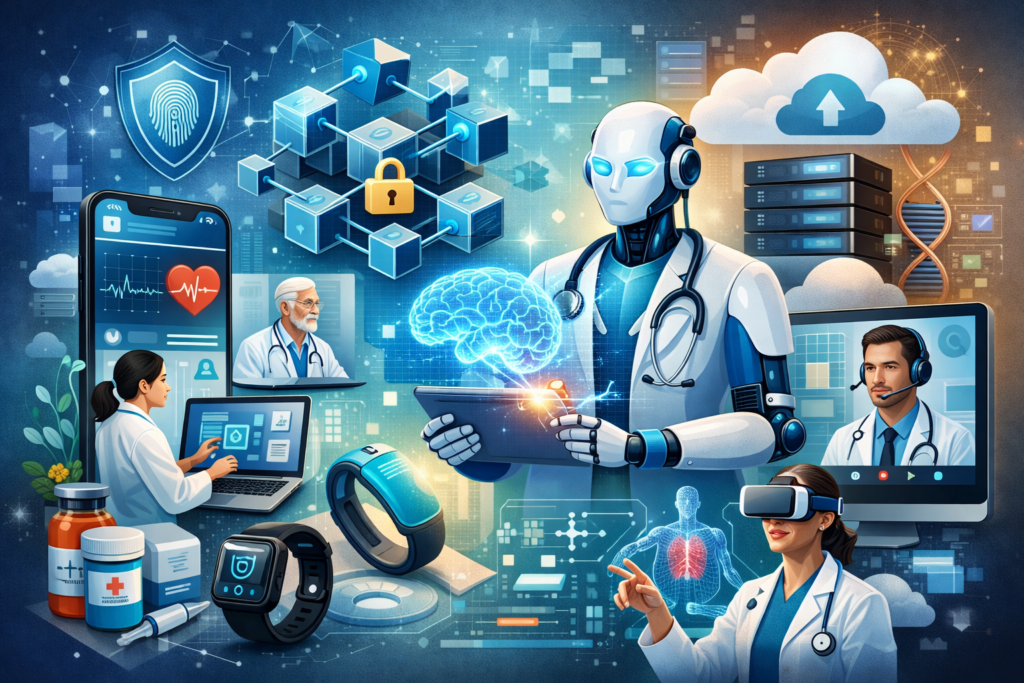
The healthcare industry in the United States is undergoing a massive digital transformation. Mobile applications are no longer just an added convenience; they have become a core part of patient care, hospital operations, and medical innovation. From virtual consultations to AI-powered diagnostics, healthcare apps are reshaping how providers and patients interact. To stay competitive and compliant, a Healthcare Mobile App Development Company in USA must adopt the latest technologies that improve efficiency, security, accuracy, and user experience.
In this article, we will explore the most advanced technologies currently being used in healthcare mobile app development, why they matter, and how they are transforming the future of digital healthcare.
1. Artificial Intelligence (AI) and Machine Learning (ML)
Artificial Intelligence and Machine Learning are among the most influential technologies in modern healthcare mobile apps. These technologies enable apps to analyze massive volumes of medical data and deliver smarter, faster, and more personalized experiences.
Key Applications of AI and ML in Healthcare Apps
-
Predictive diagnostics to identify potential diseases early
-
Medical image analysis for X-rays, MRIs, and CT scans
-
Chatbots and virtual health assistants for 24/7 patient support
-
Personalized treatment recommendations
-
Risk assessment and patient monitoring
AI-powered healthcare apps can reduce diagnostic errors, improve clinical decision-making, and support physicians with data-driven insights. Machine learning models continue to improve as more data is processed, making these applications increasingly accurate over time.
2. Internet of Medical Things (IoMT)
The Internet of Medical Things (IoMT) refers to a network of connected medical devices and sensors that collect and transmit health data in real time. IoMT plays a critical role in remote patient monitoring and chronic disease management.
Common IoMT Use Cases
-
Wearable devices tracking heart rate, oxygen levels, and sleep patterns
-
Smart insulin pumps and glucose monitors
-
Remote monitoring systems for elderly patients
-
Connected hospital equipment and patient beds
Healthcare mobile apps integrated with IoMT allow doctors to monitor patients remotely, reduce hospital readmissions, and provide continuous care beyond clinic walls.
3. Telemedicine and Virtual Care Technologies
Telemedicine has become an essential component of healthcare delivery in the U.S. Mobile apps now support real-time virtual consultations that offer convenience for both patients and healthcare providers.
Core Telemedicine Technologies
-
High-quality video and audio conferencing
-
Secure in-app messaging
-
Appointment scheduling and digital waiting rooms
-
E-prescriptions and digital medical records
-
Remote diagnostics tools
These technologies enable patients to receive care from anywhere while reducing wait times and operational costs for healthcare providers.
4. Blockchain Technology
Blockchain is gaining traction in healthcare app development due to its ability to provide secure, transparent, and tamper-proof data management.
Benefits of Blockchain in Healthcare Apps
-
Enhanced data security and privacy
-
Secure sharing of electronic health records (EHRs)
-
Improved interoperability between healthcare systems
-
Transparent audit trails
-
Reduced data breaches and fraud
By decentralizing data storage and ensuring encryption, blockchain technology helps healthcare apps meet strict regulatory standards while maintaining patient trust.
5. Cloud Computing
Cloud computing is a backbone technology for scalable and efficient healthcare mobile apps. It allows apps to store, process, and access large volumes of healthcare data without relying on physical infrastructure.
Advantages of Cloud-Based Healthcare Apps
-
Scalable data storage
-
Faster app performance
-
Real-time data access for patients and providers
-
Reduced infrastructure and maintenance costs
-
Improved disaster recovery and backup solutions
Cloud platforms also support seamless integration with other healthcare systems, making them ideal for modern mobile health applications.
6. Big Data Analytics
Healthcare generates vast amounts of data every day, including patient records, lab results, wearable device data, and insurance information. Big Data analytics helps convert this information into actionable insights.
How Big Data Is Used in Healthcare Apps
-
Population health management
-
Clinical decision support
-
Predictive analytics for disease outbreaks
-
Personalized treatment planning
-
Operational efficiency improvement
With advanced analytics, healthcare apps can identify trends, predict outcomes, and support evidence-based care.
7. Augmented Reality (AR) and Virtual Reality (VR)
AR and VR technologies are transforming medical education, training, and patient engagement. These immersive technologies are now being integrated into healthcare mobile apps.
Applications of AR and VR
-
Surgical training simulations
-
Medical education for students and professionals
-
Patient education and therapy
-
Pain management and mental health treatment
-
Rehabilitation and physical therapy
These technologies enhance learning experiences and improve patient outcomes by offering interactive and immersive environments.
8. Natural Language Processing (NLP)
Natural Language Processing allows healthcare apps to understand and interpret human language. This technology is particularly useful for improving communication and documentation processes.
NLP Use Cases in Healthcare Apps
-
Voice-to-text medical documentation
-
Smart search within medical records
-
Symptom-checking chatbots
-
Automated clinical notes
-
Patient feedback analysis
NLP reduces administrative burdens for healthcare professionals while improving data accuracy and accessibility.
9. Wearable Technology Integration
Wearable devices are becoming an integral part of healthcare ecosystems. Mobile apps now seamlessly integrate with smartwatches, fitness trackers, and medical wearables.
Key Benefits
-
Continuous health monitoring
-
Early detection of medical issues
-
Patient engagement and self-care
-
Real-time alerts for abnormal readings
This integration empowers patients to take control of their health while providing healthcare providers with valuable real-time data.
10. Cybersecurity and Advanced Data Protection
With increasing digitalization, cybersecurity has become a top priority in healthcare app development. Healthcare data is highly sensitive, making it a prime target for cyberattacks.
Advanced Security Technologies Used
-
End-to-end encryption
-
Multi-factor authentication
-
Biometric security (fingerprint, facial recognition)
-
Secure APIs and firewalls
-
Compliance with HIPAA and other regulations
Strong security frameworks protect patient data, maintain compliance, and build trust among users.
11. Cross-Platform App Development Frameworks
To reach a broader audience, healthcare apps are often developed using cross-platform technologies that allow deployment on both iOS and Android devices.
Popular Frameworks
-
Flutter
-
React Native
-
Xamarin
These frameworks reduce development time and costs while maintaining high performance and consistent user experiences.
12. Interoperability Standards and APIs
Interoperability is essential for healthcare apps to communicate with electronic health record systems, pharmacies, insurance platforms, and medical devices.
Common Standards and APIs
-
HL7 and FHIR
-
Secure REST APIs
-
Healthcare data exchange platforms
Interoperable apps improve care coordination, reduce errors, and enhance overall healthcare efficiency.
Conclusion
The healthcare app development landscape in the United States is rapidly evolving, driven by cutting-edge technologies that improve patient care, operational efficiency, and data security. From artificial intelligence and blockchain to IoMT and telemedicine, these innovations are redefining how healthcare services are delivered.
A forward-thinking Healthcare Mobile App Development Company in USA leverages these latest technologies to create scalable, secure, and user-friendly solutions that meet the growing demands of patients and healthcare providers alike. As technology continues to advance, healthcare mobile apps will play an even more critical role in shaping the future of digital health.